
Dispensing automation expertise at Robotics and Automation 2026
On June 16 and 17, we will be exhibiting at Robotics and Automation 2026 at the MTC, Coventry. Our team will be demonstrating how robotic dispensing technology can enhance repeatability and throughput in a cost-effective way for manufacturers of electronics, medical devices, aerospace, automotive, and other products. Visitors to our stand on the upper floor […]
Read More
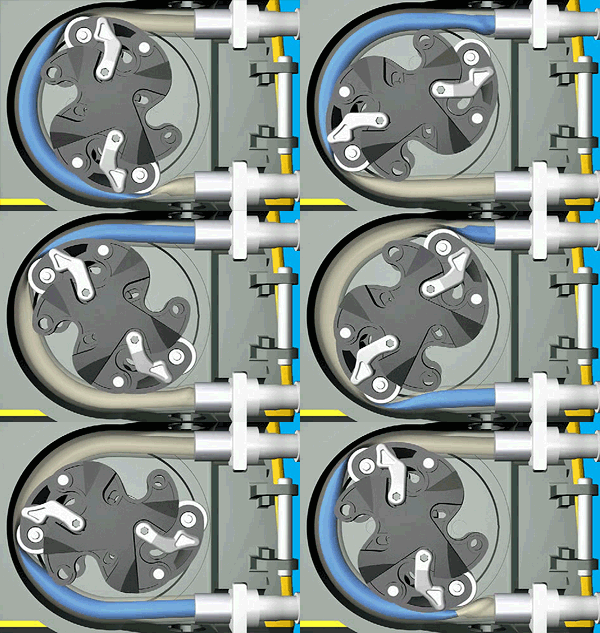
Intertronics Academy: What is a peristaltic pump?
A peristaltic pump uses a turning rotor to squeeze plastic tubing and push fluid along inside the tubing. It is one of the simplest pumps you can buy, finding use in many places including hospitals inside kidney dialysis machines, in advanced manufacturing setups to precisely dispense adhesives, and in mines and quarries where large industrial […]
Read More
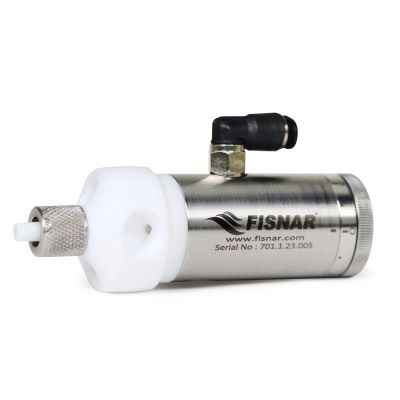
Better control for reactive and difficult-to-dispense fluids and liquids
For many manufacturing processes, a simple pneumatic dispensing machine is the starting point. They are affordable, flexible, and capable of surprisingly good repeatability. We sell 100’s of them. But as production demands increase, you can discover the limits of basic time/pressure dispensing. Materials string or drip. Dispense volumes begin to vary with temperature changes. Reactive […]
Read More
Adhesive bonding is about more than the adhesive
A new White Paper It is very interesting when two of our suppliers get together and do some work which shows the value that some synergy can bring to understanding our technology. In this case, Dymax (adhesives and curing equipment) and Brighton Science (surface measurement) have produced a white paper called The Science of Bonding: […]
Read More
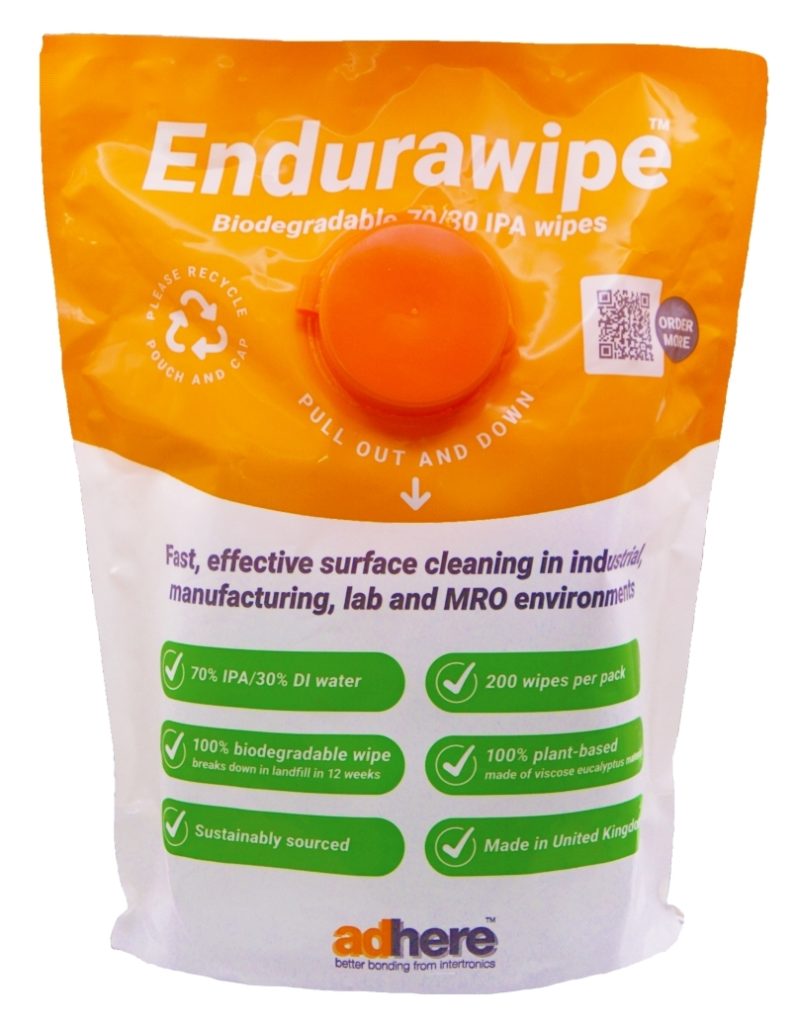
The plastic wet wipes ban: what industrial manufacturers need to know
The UK government has confirmed a ban on the supply and sale of plastic-containing wet wipes in an effort to reduce plastic pollution and the long-term environmental damage caused when wipes enter waterways and sewage systems. The legislation is primarily aimed at consumer wipes, but it reflects a broader shift in how single-use disposable products […]
Read More
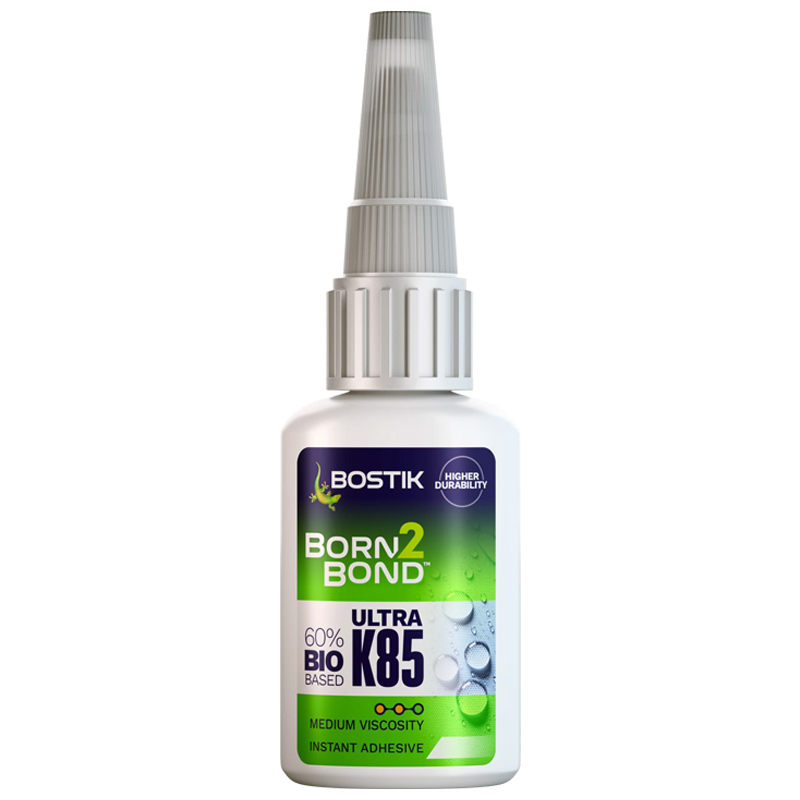
Award-winning adhesive tackles heat, humidity, and sustainability – Ultra K85
When a new adhesive wins at the Adhesive and Sealant Council Innovation Awards, it’s worth paying attention. We sat up and took notice, because the entries are judged independently on technical merit, real-world impact, and how far they move the state of the art – it’s not just a PR exercise. The 2026 winner, from […]
Read More

35 years in, still moving forward: a visit to Dymax in Wiesbaden
We were invited to attend the grand opening of Dymax’s expanded European facility in Wiesbaden, Germany. For me, the visit had an added layer of meaning. This year marks 35 years since Intertronics was first appointed as a Dymax distributor in the UK. That kind of longevity doesn’t happen by accident. It reflects a relationship that […]
Read More
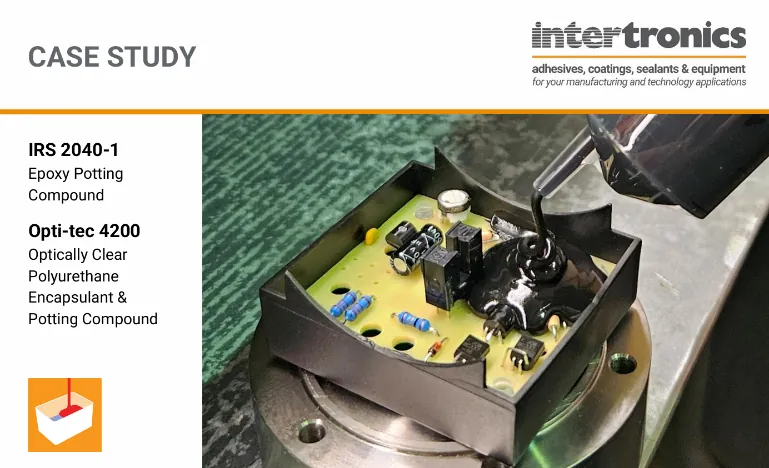
Case study: From supply risk to production growth with a new potting compound
When Rotech Systems and Encoders discovered that its existing potting compound was being discontinued, the problem exposed a deeper constraint in its production system. Uncertain material supply had already been limiting output of the rotary encoders and vibration sensors used in harsh mining environments. Without reliable access to encapsulation materials, the company could not confidently […]
Read More
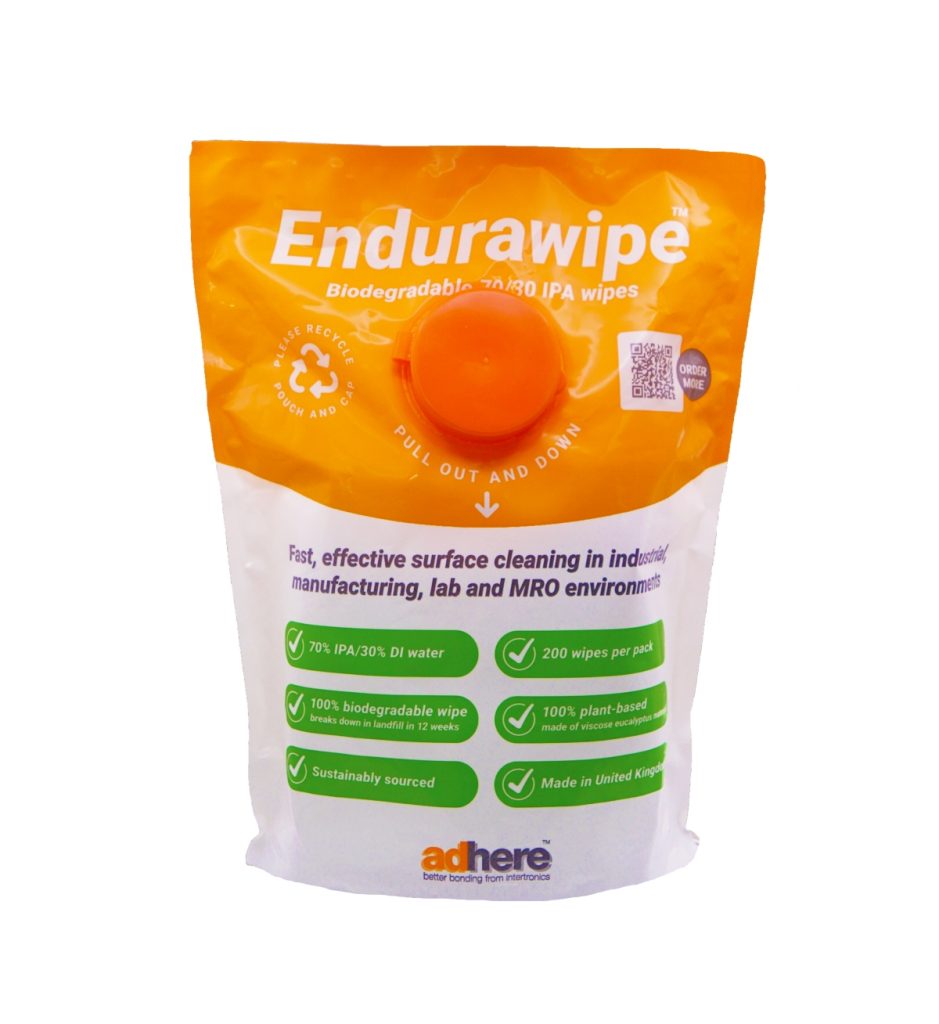
Five facts about eucalyptus and lower-impact cleaning wipes
This is a eucalyptus tree. We have recently got excited about the eucalyptus tree, and not because we are koala fans. Well, not just because we are koala fans. Here are five facts to get you excited too. Fact 1 – eucalyptus grows fast, by forestry standards Many eucalyptus species reach harvest maturity in around […]
Read More
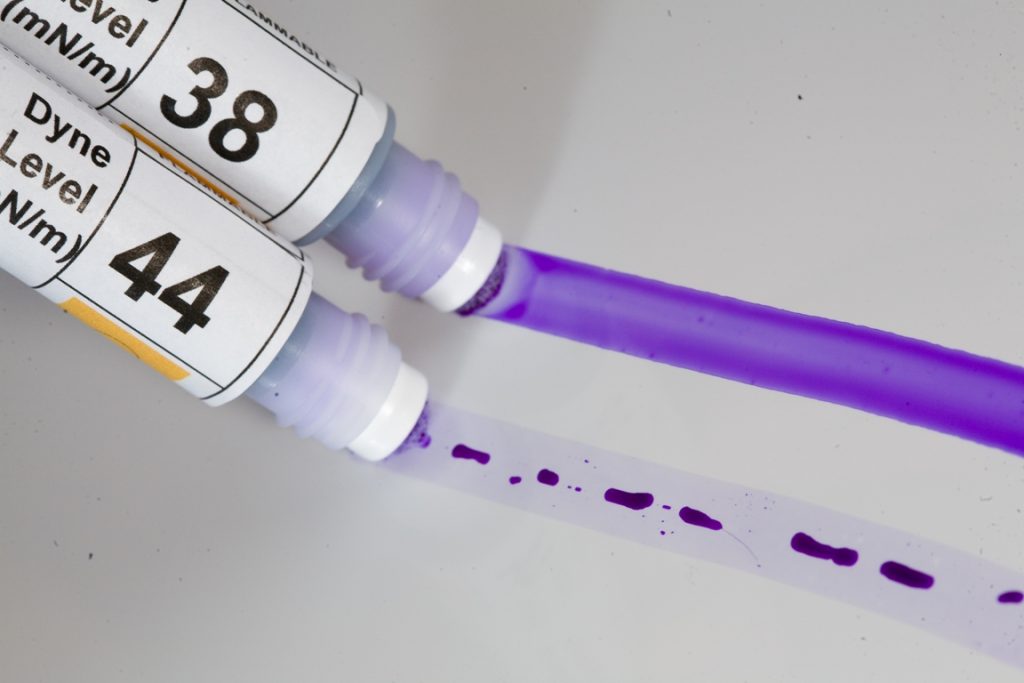
Plasma treatment kit includes Dyne Testing Dyne Test Pens
Our Relyon Plasma PiezoBrush PZ3 professional set now includes a set of our Dyne Testing Dyne Test Pens as standard. Plasma treatment improves wetting and adhesion by increasing surface energy. The PiezoBrush PZ3 makes this easy to achieve, but the result is not visible to the naked eye. You cannot tell how much wetting has […]
Read More

Dymax 9773: low outgassing UV adhesive for electronics
In high-reliability electronics, material selection is rarely simple. This is especially true in aerospace, satellites, defence, drones, and other mission-critical applications. Engineers must balance contamination control, electrical stability, thermal endurance, and long-term reliability. Increasingly, they must do so without sacrificing production practicality, efficiency, or speed. That is exactly the space Dymax 9773 was developed for. […]
Read More
Seasons Greetings, from all of us
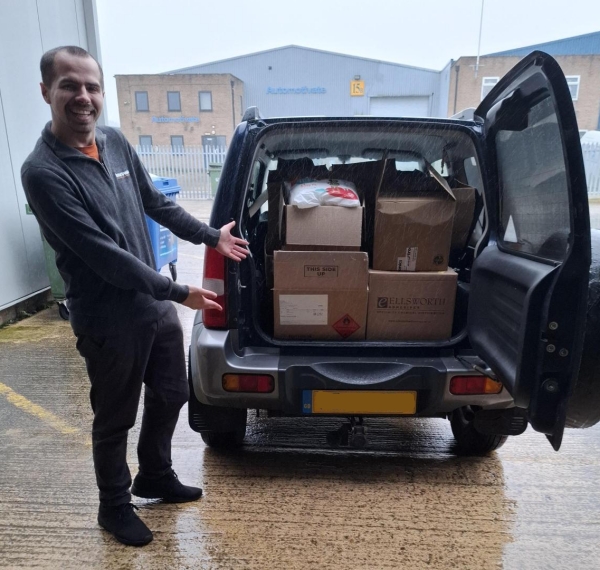
Thank you for working with us in 2025. Whether you have been solving long-standing production challenges, bringing new products into manufacture, or refining established processes, we appreciate the trust you have placed in us. 2025 has been a challenging business year for most of us. Geopolitical uncertainty has continued to shape the wider business environment, […]
Read More
Behind the scenes: the making of our new company video
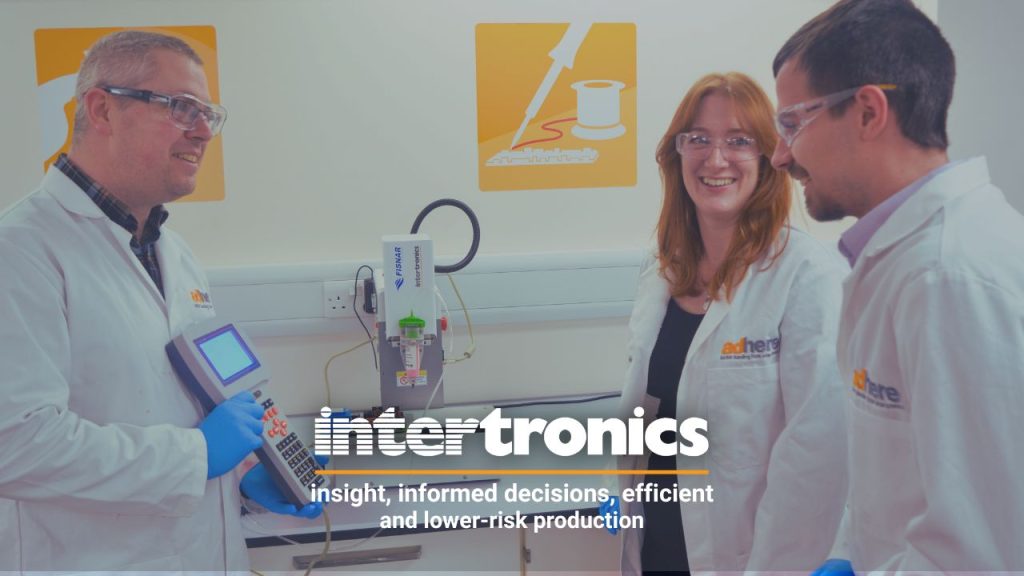
Setting out to create a company video is a little daunting. There are so many bad examples out there. We wanted to capture the essence of who we are and how we work with our customers — without falling into the usual clichés and buzzwords. It’s not easy. But we knew we needed a video […]
Read More
Choosing the Right Plasma Module for PiezoBrush PZ3 and PZ3-i
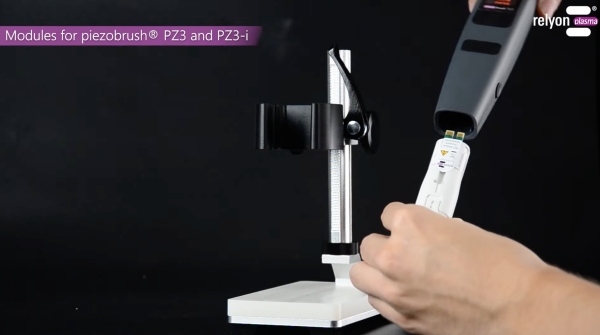
Like 100’s of existing users who are interested in improving adhesion, you might be looking at our handheld plasma devices; the PiezoBrush PZ3 Handheld Plasma Surface Treatment or the PiezoBrush PZ3-i Plasma Surface Treatment for semi-automated or automated use. There are five different plasma modules available, all plug and play interchangeable and suitable for both […]
Read More

A flat screen, a lesson, and what we really sell
Sometime in the late 1990’s, at a trade exhibition, we decided to display our products by showing a rolling PowerPoint presentation. We used one of the very first flat screen computer monitors. This was new to almost everybody. It wasn’t very large, about 15 inches I guess, and not black and sleek like they are […]
Read More

Inclusivity in youth rugby: Darren Rea is honoured at UK Coaching Awards
Last week at the UK Coaching Awards in Leeds, our colleague, Darren Rea was recognised for his inspirational work coaching young people with Special Educational Needs and Disabilities (SEND). Darren was named winner in the Inclusive Coaching category which honours a coach, project/programme or intervention that uses great coaching to encourage more people from diverse […]
Read More
Which robot is right for your dispensing process? A look into cobots, cartesian robots, and ISO 10218-2:2025
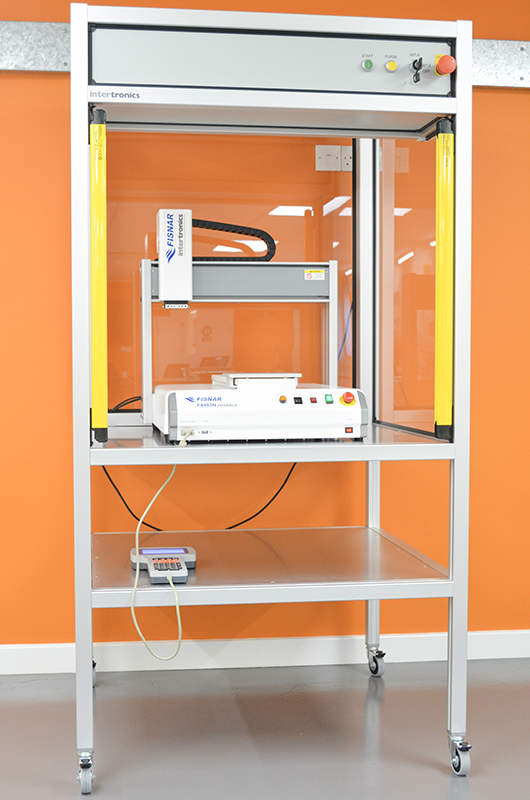
Benchtop cartesian or cobot? These days, manufacturers exploring automation for liquid and fluid dispensing usually end up weighing two options: collaborative robots (cobots) and benchtop cartesian robots. Both types can raise throughput, consistency, and quality in the application of adhesives, coatings, encapsulants and sealants – but maybe they do so in different ways. Which risks, […]
Read More
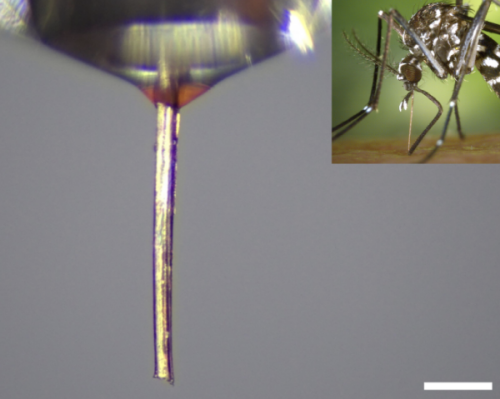
What a mosquito can teach us about precision dispensing
A story broke last week about engineers using a mosquito proboscis as a 3D printing nozzle. The female mosquito’s feeding tube is only about 20 µm in diameter, and the team at McGill University showed it can extrude very fine bio-inks with surprising accuracy. It highlights a simple truth in dispensing: the tool that delivers […]
Read More
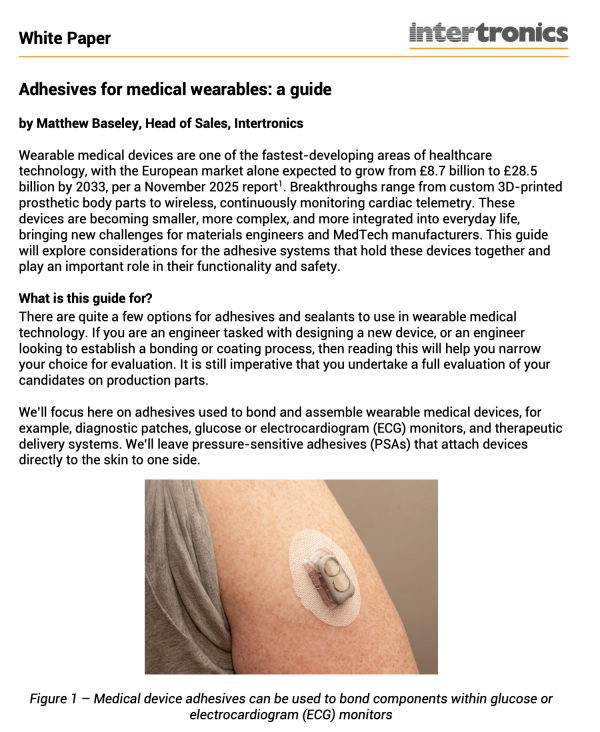
Adhesives for medical wearables: a guide
Wearable MedTech is a booming sector. The technology is breathtaking in its expanse and potential. Products like continuous blood pressure monitors, wearable pulse oximeters, respiratory and spirometry wearables, glucose sensors, insulin delivery pods, neuromodulation wearables, wearable temperature and hydration sensors, cardiac telemetry patches, smart wound-care sensors, activity and gait-analysis wearables used in rehabilitation, EEG headbands […]
Read More
Getting reliable adhesion on hard-to-bond plastics in medical devices
Medical device designs increasingly rely on polymers like nylons, PEBAs and COC/COP cyclic olefin polymers. These plastics can give you strength, flexibility, chemical resistance and clarity. They also have very low surface energies, which means adhesives tend to bead up rather than wet. If you have ever tried to bond a glossy nylon tube, you […]
Read More
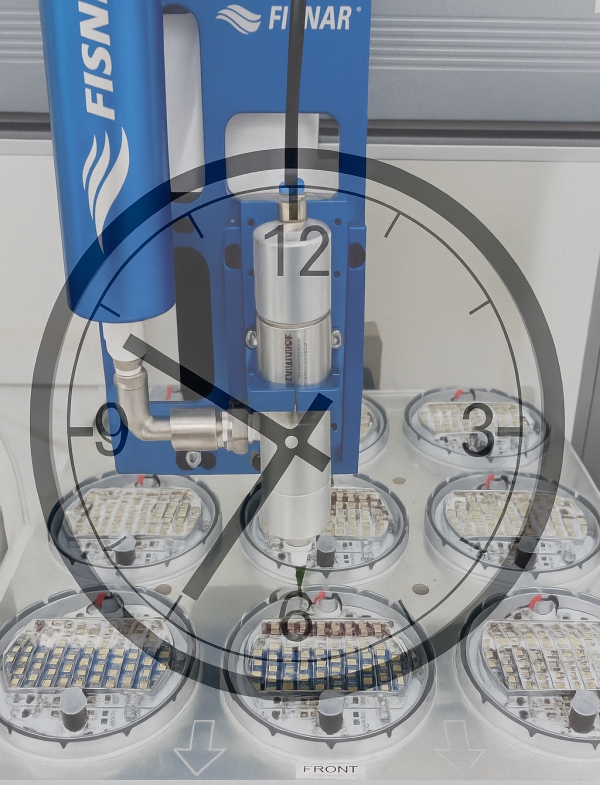
Intertronics academy: adhesives and takt time
Every production line has a rhythm. In lean manufacturing, that rhythm is called takt time – the rate at which a finished product must be completed to meet customer demand. The word takt comes from the German for “beat” or “cycle”, a reminder that an efficient process moves like well-timed music. Too fast, and you […]
Read More
Inspiring the next generation of women in STEM: our workshop with Gosford Hill students
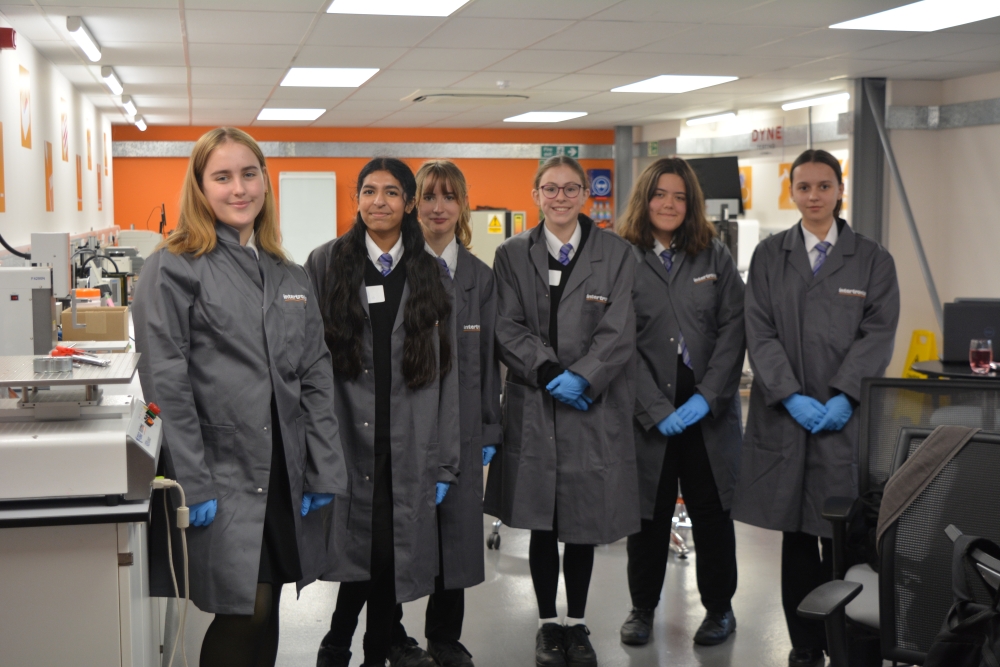
Last week we welcomed six Year 9 students from our local secondary school, Gosford Hill, to spend a day exploring the science behind our adhesives technologies and engage in discussions about career pathways and managing setbacks. How it all began The relationship with Gosford Hill School began earlier this year when we visited Headmaster, Nigel […]
Read More
Why JOSCAR accreditation matters in UK defence and aerospace manufacturing
Rolls-Royce, BAE Systems, and Babcock are some of our customers investing heavily to meet the surge in UK defence manufacturing. With AUKUS submarine projects underway and export demand accelerating, the defence, aerospace, security and space sectors now contribute over £38 billion a year to the UK economy — up 50 per cent in the last […]
Read More

Glue v nails v screws: why manufacturers make a choice
I am a fan of Seth Godin, the author who is is often provocative and insightful about marketing, business, and the way we think. Seth’s blog post today, entitled Nails, glues and screws, uses these fastening methods as a metaphor for how we build things. Nails are quick but temporary. Screws need more effort but […]
Read More
When can an adhesive be used for potting, and when can a potting compound act as an adhesive?
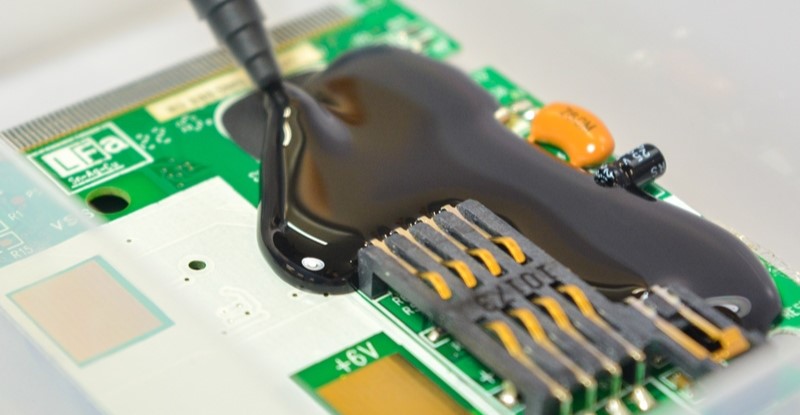
Engineers sometimes ask us whether they can use an adhesive as a potting compound, or whether a potting material could double as an adhesive. The answer lies in the chemistry and in the way these materials are tested and profiled. The question typically revolves around epoxy and polyurethane products. Head of Learning and Development Kevin […]
Read More
Case study: how electronics potting expertise helped bring subsea wireless communication to market
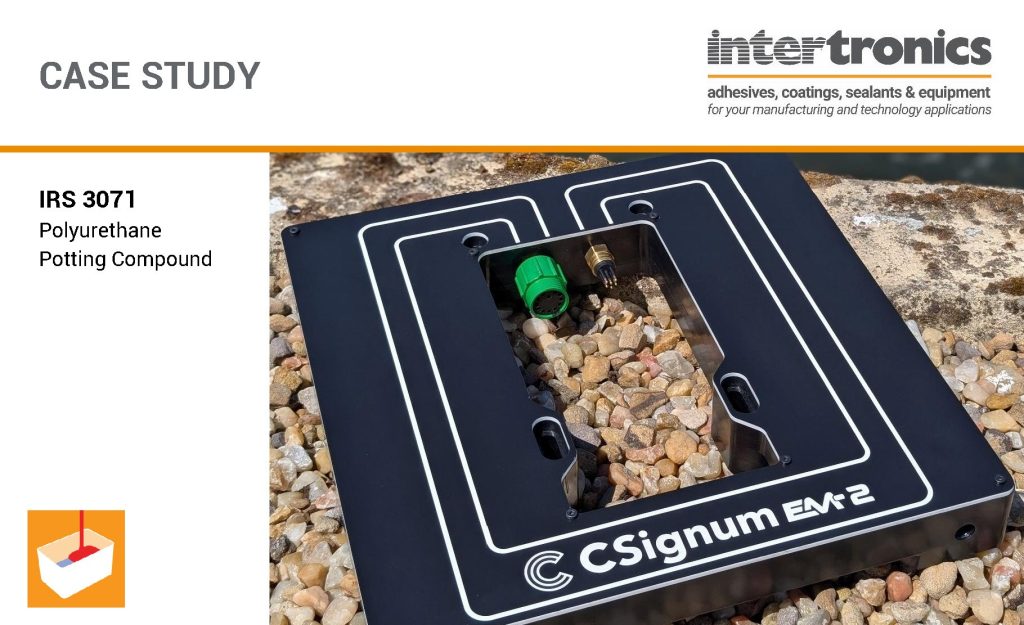
When CSignum set out to develop the EM-2, a groundbreaking subsea wireless device, they faced a challenge familiar to many technology manufacturers: how to protect sensitive electronics in an unforgiving environment without going back to the drawing board. Instead of a costly redesign, CSignum worked with Intertronics to find a practical solution. With advice from […]
Read More
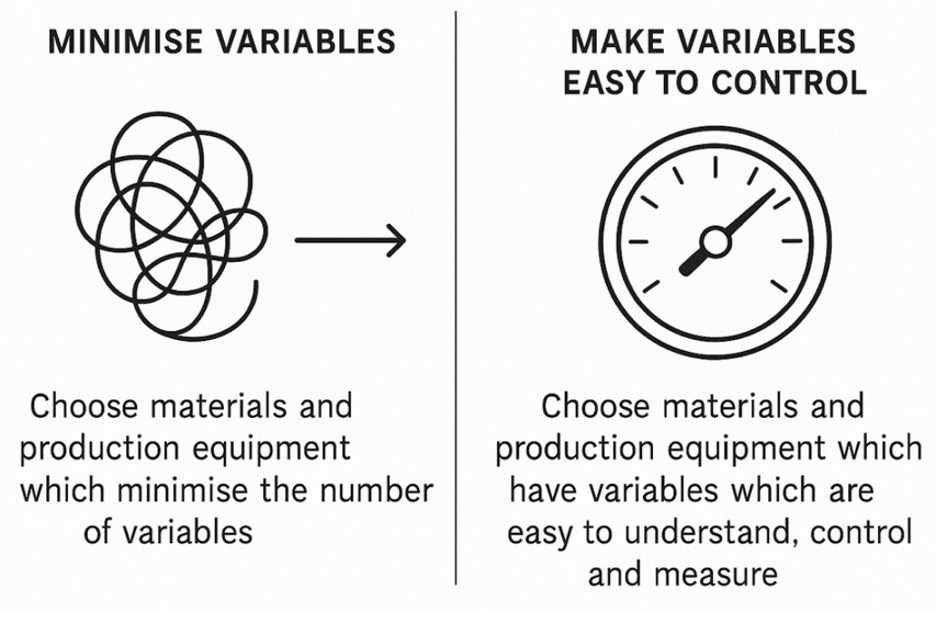
White Paper: Process validation in medical device bonding
The medical device manufacturing world doesn’t have room for “good enough.” Patient safety is on the line, regulators are watching closely, and your reputation depends on every bond holding as intended. Yet when it comes to adhesive bonding, many manufacturers face the same challenge: how do you validate a process you can’t destructively test every […]
Read More

EU Regulations Around TPO: What Does it Mean for You?
As of September 2025, customers buying Dymax UV curing adhesives containing Trimethylbenzoyl Diphenylphosphine Oxide (TPO) may notice an additional hazard sign on the product labels. What is TPO (Trimethylbenzoyl Diphenylphosphine Oxide)? TPO is a photoinitiator, a chemical compound that absorbs light and generates reactive species (like free radicals or cations) to start a polymerisation or curing […]
Read More
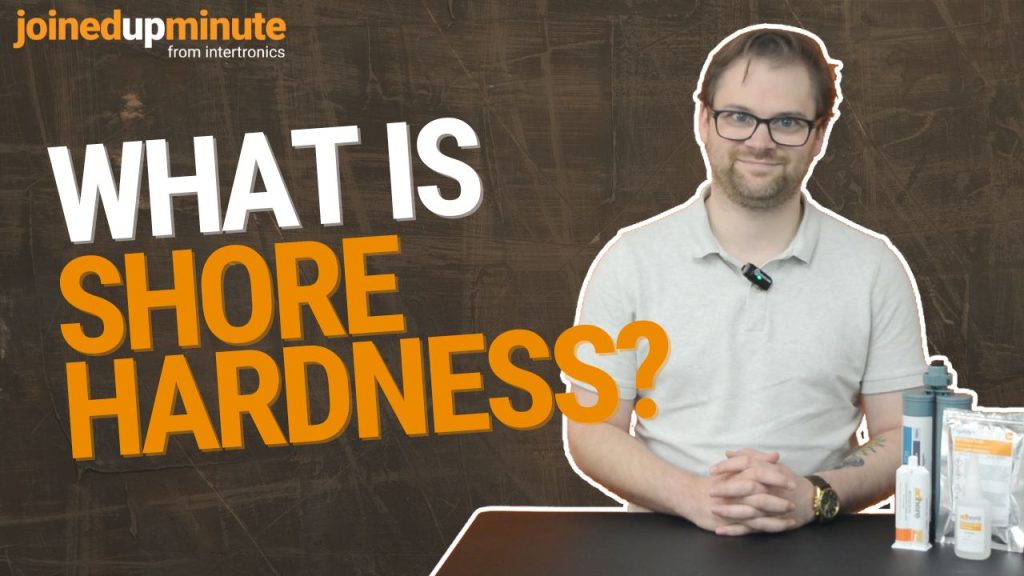
What is Shore hardness? – a JoinedUpMinute video
What does the Shore hardness number on your adhesive’s datasheet actually mean? In this JoinedUpMinute, Craig explains how hardness is measured and why it matters when selecting a material. You’ll learn: What Shore hardness tells you about resistance to indentation The differences between Shore 00, A, and D scales If you’re choosing a material based on […]
Read More
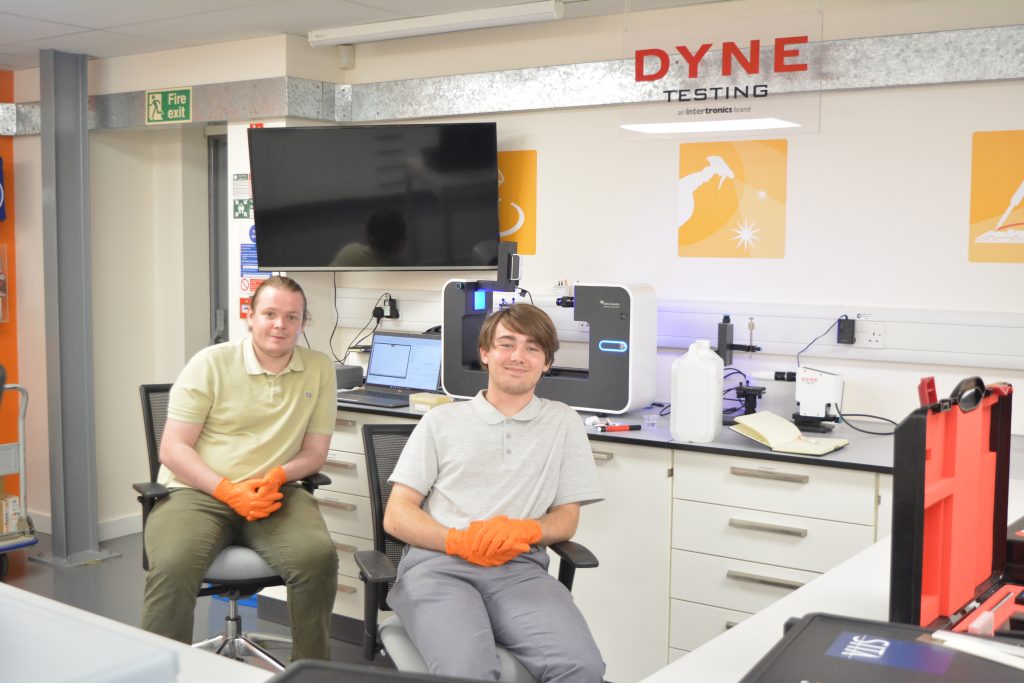
From classroom to workplace: Roan’s week at Intertronics
We recently welcomed Roan, a Year 12 student from Saint Bartholomew’s School in Oxfordshire, to join us for a week of work experience. Local to our Kidlington office, and a keen chemistry and physics student, Roan was mentored by our resident physics graduate and Dyne Testing Sales Specialist, Conor. He also spent time with different […]
Read More
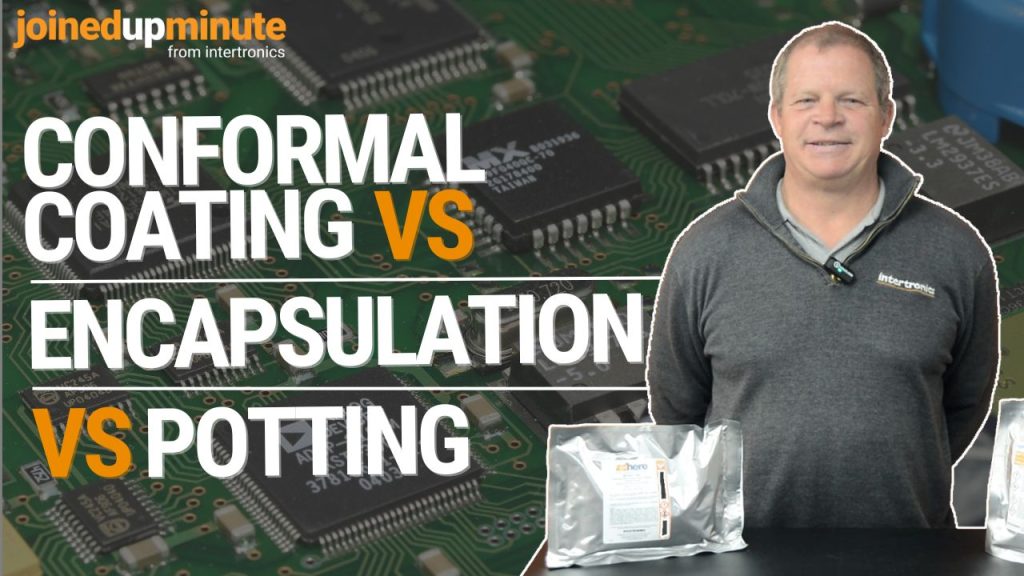
Conformal coating vs. encapsulation vs. potting – a JoinedUpMinute video
Coating, encapsulation, or potting – which is right for protecting your electronics? In this JoinedUpMinute, Ian explains the key differences between three common protection methods: Coating (aka conformal coating) — a thin protective film over a PCB assembly Encapsulation (sometimes called ‘glob topping’) — a thicker layer over specific areas Potting — filling an enclosure […]
Read More
White Paper: Could you eliminate the need for your adhesive primer?
New White Paper explores how to streamline your adhesive bonding process When designing an adhesives process, applying a primer is rarely top of the wishlist. Primers are often used to promote bonding with low surface energy plastics or difficult-to-bond metals—but they add complexity, introduce health and safety considerations, and may create process variability. Our latest […]
Read More
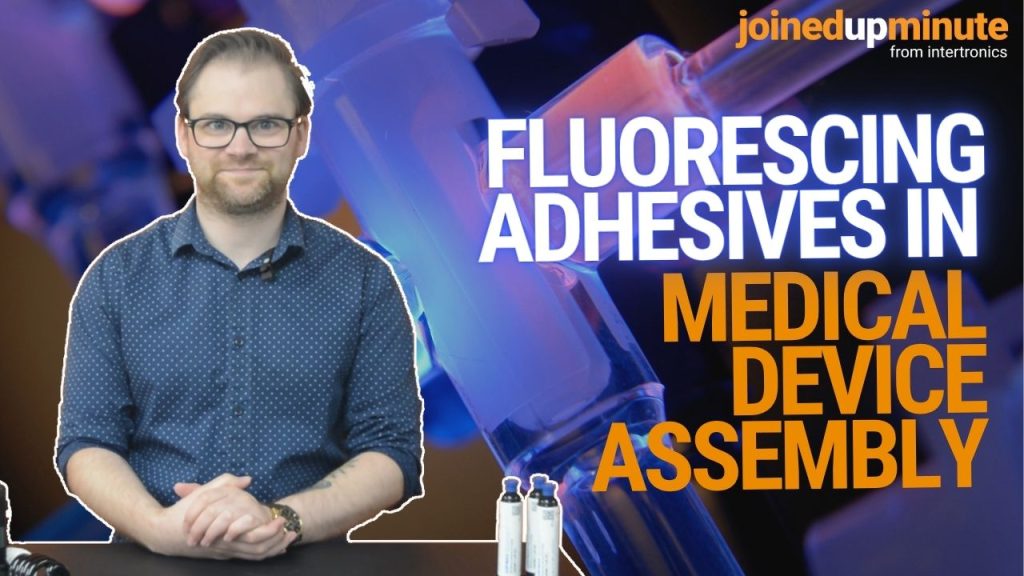
Fluorescing adhesives in medical device assembly – a JoinedUpMinute video
Struggling to see your adhesive on clear parts? Fluorescing adhesives can light the way—literally. In this JoinedUpMinute, Craig explains how fluorescence can support visual process control in medical device manufacturing. You’ll learn: What fluorescence is and how it works How it helps confirm adhesive placement and coverage Why red-fluorescing adhesives can be easier to inspect […]
Read More
White Paper: What is a medical adhesive?
What makes a medical adhesive? Medical device manufacturing demands precision, performance, and compliance – and at the heart of many assemblies is the adhesive doing the unseen but vital work. But not all adhesives are created equal, and in this highly regulated field, the wrong choice can have serious consequences. In this article entitled What […]
Read More
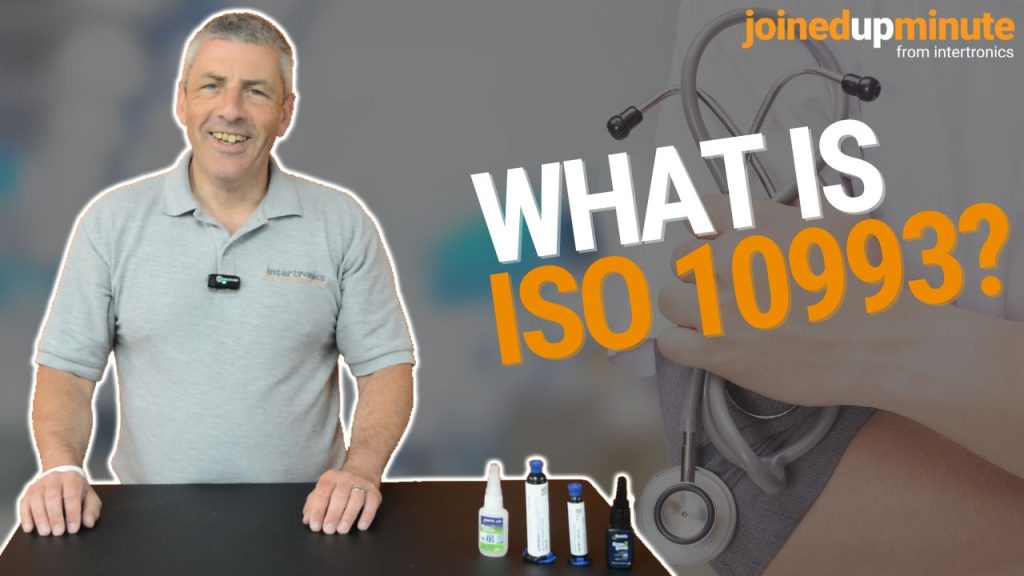
What is ISO 10993? – a JoinedUpMinute video
If your product touches the human body—or goes inside it—biocompatibility matters. In this JoinedUpMinute, Darren explains ISO 10993: What it is and why it’s important The types of tests it includes, like irritation and sensitisation Why choosing pre-tested materials can streamline medical device approvals Working on a medical application? We’ve got materials that meet ISO […]
Read More

Gurit and medmix partner to deliver sustainable bonding – available from Intertronics
Two of our principals have teamed up! A leader in high-precision delivery devices, medmix has partnered with Gurit, a manufacturer and supplier of advanced composite materials, in our launch of BondPro, the next-generation, two-component epoxy adhesives engineered by Gurit. BondPro is dispensed using the MIXPAC™ greenLine™ cartridge system from medmix, combining Gurit’s innovation in adhesive […]
Read More
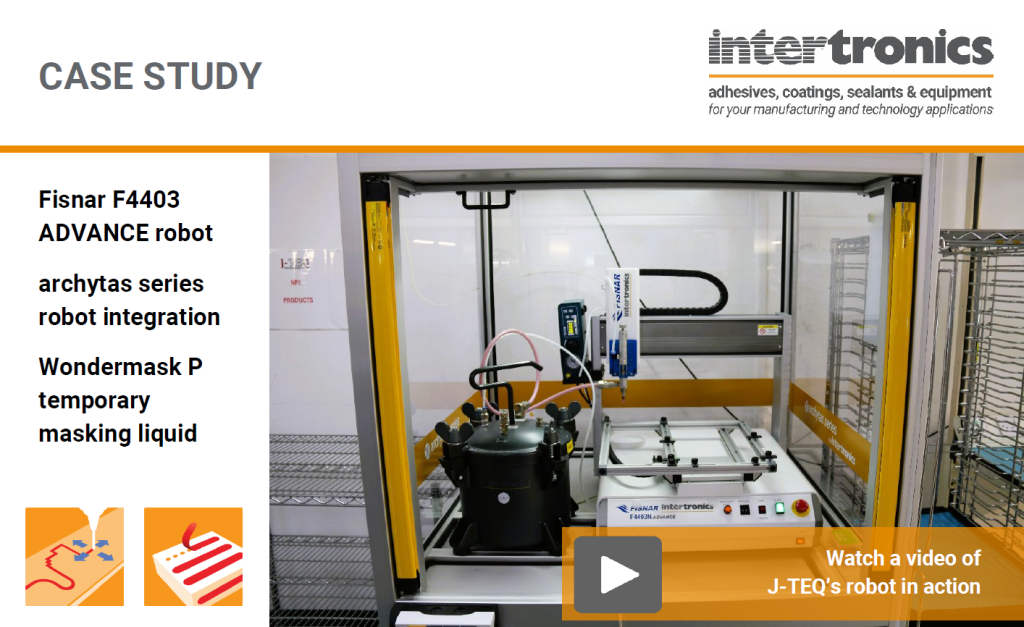
Case study: automated liquid pcb masking pays for itself in one year
What if a small change on your production line could pay for itself in under a year? Could you accomplish this with automated liquid pcb masking? That’s exactly what happened at J-TEQ EMS Solutions when they automated the application of Wondermask© P Peelable Temporary Solder Mask using a Fisnar ADVANCE benchtop dispensing robot. The result? Greater […]
Read More
Cure-in-Place vs Form-in-Place gaskets – a JoinedUpMinute video
Don’t blow a gasket over the difference between cure-in-place and form-in-place gaskets. Just watch Kevin explain in this JoinedUpMinute. In 66 seconds, you’ll learn: What liquid gaskets are used for How form-in-place and cure-in-place methods differ The benefits and behaviours of each approach Watch here: JoinedUpMinute is our weekly minute-long video sharing insights from our […]
Read More
Do you need specific adhesives for wearable device manufacturing? – a JoinedUpMinute video
When adhesives come into contact with skin—directly or indirectly—choosing the right one becomes even more important. In this JoinedUpMinute, Matt looks at adhesives in wearable devices and why skin sensitivity matters. You’ll learn: Where adhesives are used in wearables Which ingredients may cause irritation (like IBOA and TPOs) What to look for—such as ISO 10993-10 […]
Read More

Leadership update: Matt Baseley steps into Head of Sales role
Matt Baseley has been appointed Head of Sales at Intertronics. Matt has been working with us for 10 years, and in that time has built considerable technical knowledge alongside nurturing excellent customer relationships. Here’s what a couple of our customers had to say about Matt: • You ring Matt, whether it’s on Teams or his […]
Read More

What is 85/85 testing? – JoinedUpMinute video
Harsh environments can take their toll on bonded products – but how do you test for that without waiting years? In this JoinedUpMinute, Darren explains the 85/85 test: 🔸What it is and how it works 🔸Why it’s used to simulate long-term heat and humidity exposure 🔸Why this test is tough on adhesive bonds 🔸How engineered […]
Read More
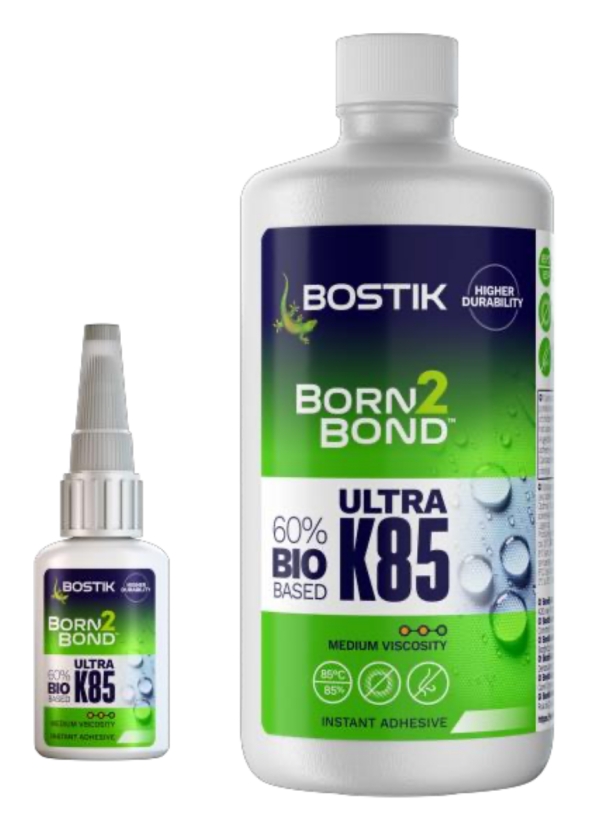
Ultra K85 enables new uses for cyanoacrylate adhesives
We would like to present Born2Bond™ Ultra K85 cyanoacrylate adhesive, a fast curing, single-part adhesive – the first ‘instant’ adhesive to withstand up to 1,000 hours at 85°C and 85% relative humidity. It can bond a wide range of substrates including plastics, rubbers, and metals and is applicable to applications in sectors like consumer electronics, […]
Read More

The future of work – a view
I was asked to contribute to a book which was published in conjunction with the inaugural Oxfordshire Business Summit, which took place at Blenheim Palace in May 2025 and was organised by B4. Entitled From Oxfordshire to the Future: Leadership Insights for a Changing World, the book’s themes were based on a look into the […]
Read More
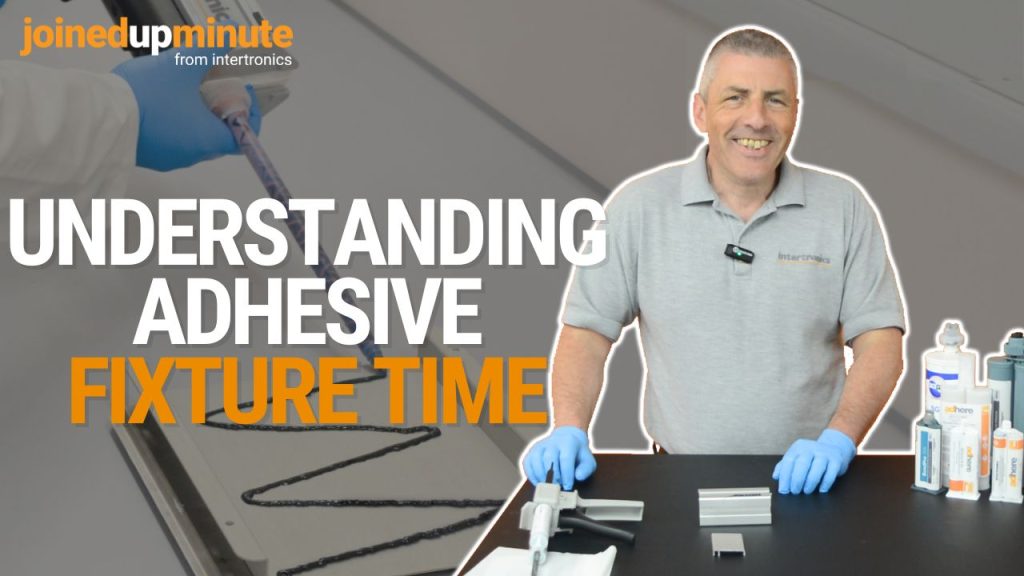
Understanding adhesive fixture time – JoinedUpMinute video
How long should you wait before handling your bonded parts? In this JoinedUpMinute, Darren explains why fixture time matters and how it differs from full cure time. In this video, you’ll learn:🔸 What fixture time really means🔸 Why it’s different from full cure time🔸 How handling parts too soon can affect bond strength🔸 How understanding […]
Read More
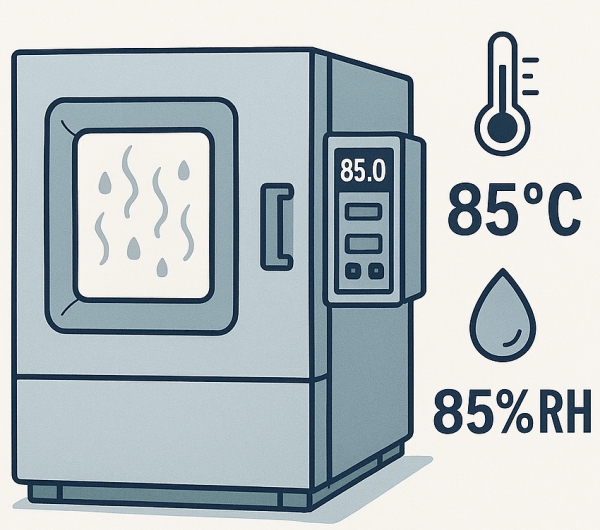
Intertronics academy: what is 85/85 testing?
The 85°C/85% RH test is a standardised environmental reliability test in which a product or material is exposed to a constant temperature of 85°C and a relative humidity of 85% for an extended period, typically up to 1,000 hours. This test is designed to simulate harsh, real-world environmental conditions and is widely used to assess […]
Read More

From desks to deadheading – Leila, Conor and Steve’s volunteer day
One of the perks of working at Intertronics is the opportunity to take a paid day off each year to volunteer for a good cause. Swapping their usual work tools for trowels and wheelbarrows, Conor, Leila and Steve put that time to good use by heading to Restore – our charity of 2025 – to […]
Read More
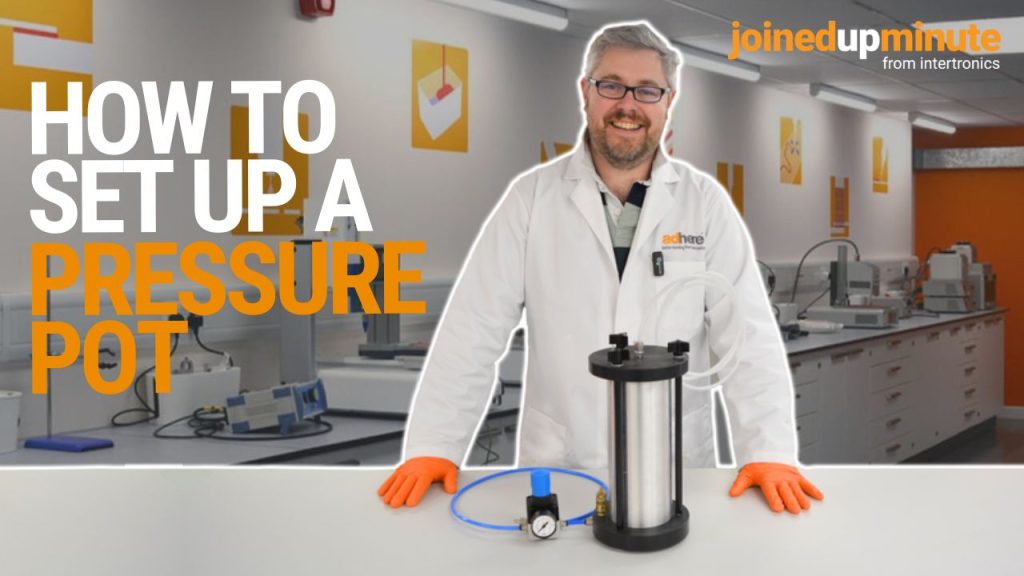
How to set up a pressure pot – JoinedUpMinute video
Here’s this week’s JoinedUpMinute video, with Kevin walking you through how to set up your pressure pot for dispensing. You’ll learn: Step by step instructions for setting up a dispensing reservoir Tips for minimising clean-up when you’re done dispensing Let’s go! JoinedUpMinute is our weekly minute-long video sharing insights from our world. You can catch […]
Read More
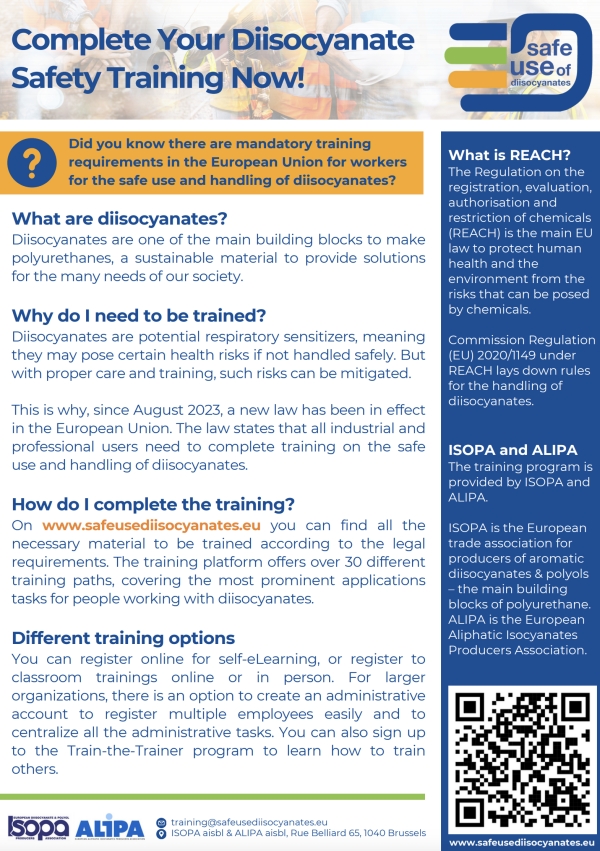
Safe use and handling of diisocyanates (polyurethanes)
As you may know, since August 2023 minimum training requirements for the safe use and handling of diisocyanates for professional and industrial users have become mandatory in the European Union and the UK. Diisocyanates are one of the main building blocks to make polyurethanes, including some of our adhesives and potting compounds. A new flier has been […]
Read More

“Ultimate 3 Peaks for Sue” – a charity event for UK Sepsis Trust
Climbing three tall mountains and cycling over 500 miles – not a feat for the faint-hearted! Friend of Intertronics Danny James is leading a team up the classic Three Peaks (Ben Nevis, Scafell Pike, and Snowdon) with a mere 500 miles of cycling between the mountains driving up the difficulty level. The challenge will take […]
Read More
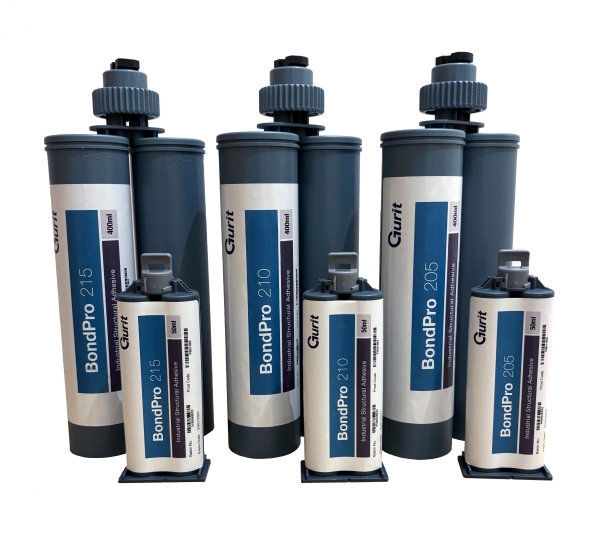
Intertronics becomes distributor of Gurit BondPro adhesives
We have made an agreement with advanced composites supplier Gurit to distribute its high performance, two-component BondPro Epoxy Adhesives, designed for applications that require strong, reliable bonding in industries like automotive, transportation, industrial, and construction. Gurit BondPro are high-strength two-part structural epoxy adhesives designed for long-lasting durability. With a selection of working and fixture times, […]
Read More
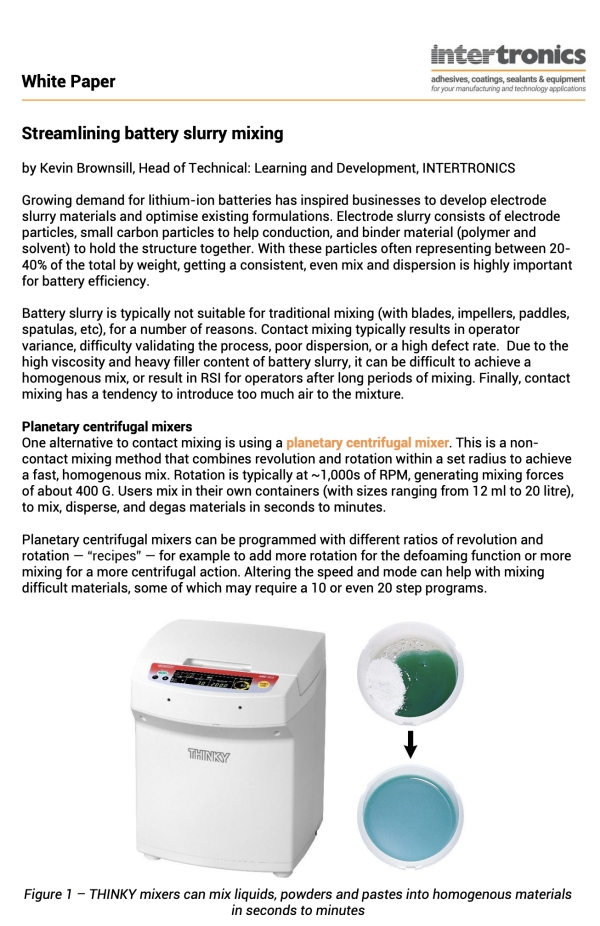
White Paper: Streamlining battery slurry mixing
Streamlining battery slurry mixing is the title of our latest White Paper by Kevin. Growing demand for lithium-ion batteries has inspired businesses to develop electrode slurry materials and optimise existing formulations. Electrode slurry consists of electrode particles, small carbon particles to help conduction, and binder material (polymer and solvent) to hold the structure together. With […]
Read More
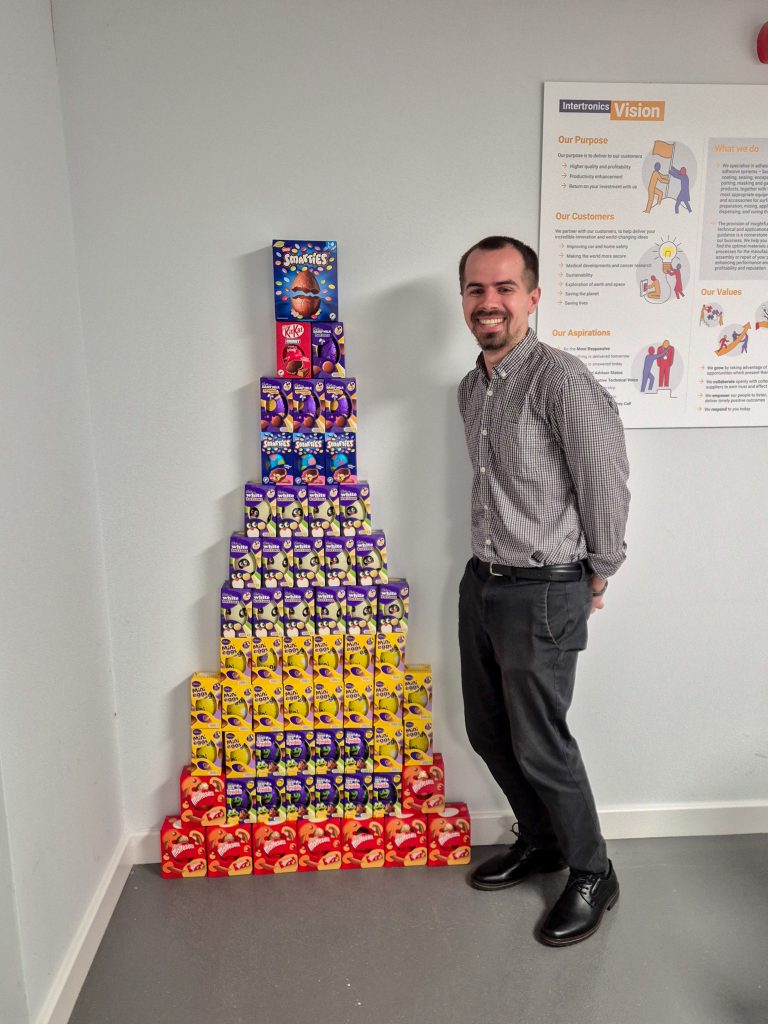
A local donation to make children egg-static!
As part of our continued support of North Oxfordshire Foodbank, we’ve come together as a team to donate a whopping 61 Easter eggs to families who may not have been able to wake up to one this Easter. Commenting on the donation, the Foodbank said: “The amazing delivery of Easter eggs to the Foodbank means […]
Read More
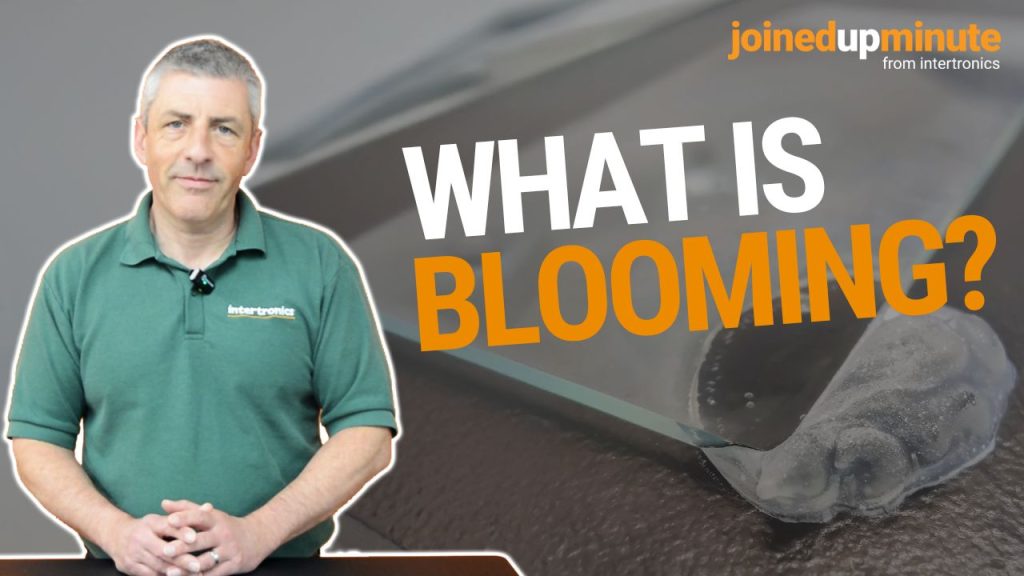
What is blooming? – a JoinedUpMinute video
Blooming might not weaken a bond, but it can certainly spoil the look. In this JoinedUpMinute video, Darren explains blooming: What it is and why it happens Why it’s a common issue with cyanoacrylate (CA) adhesives How you can help reduce or eliminate it Check it out! You can dig deeper into this topic by […]
Read More

MMA structural adhesives in vehicle manufacture
Methyl methacrylate adhesives (MMAs) have found many successful applications in the manufacture of vehicles like cars, trucks, caravans and trailers. They can be used for bonding sun visors, sealing windows, cabins and dashboards, front grilles, bumper end caps, headlight surrounds, door extensions, brackets, panel bonding, trailer load lockers, trailer capping, trailer roofs and roof spoilers. […]
Read More
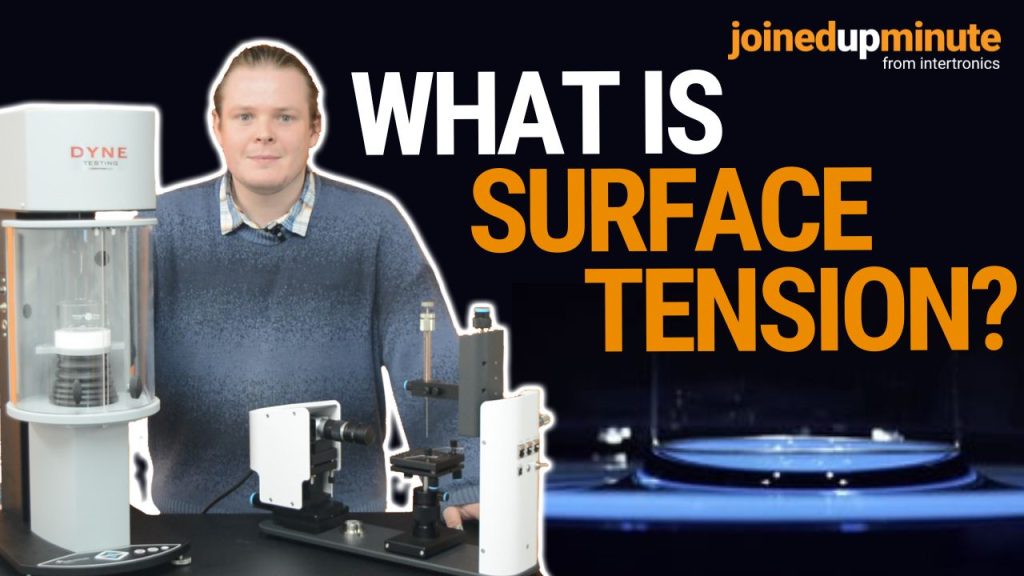
What is surface tension? – JoinedUpMinute video
Surface energy can make or break your adhesive, coating, or printing process. But what exactly is it? In this JoinedUpMinute, Conor explains: 🔸 What is surface energy 🔸 Its impact on your materials and processes 🔸 How we measure it Want to understand the difference between surface energy and surface tension? Check out our whitepaper. […]
Read More
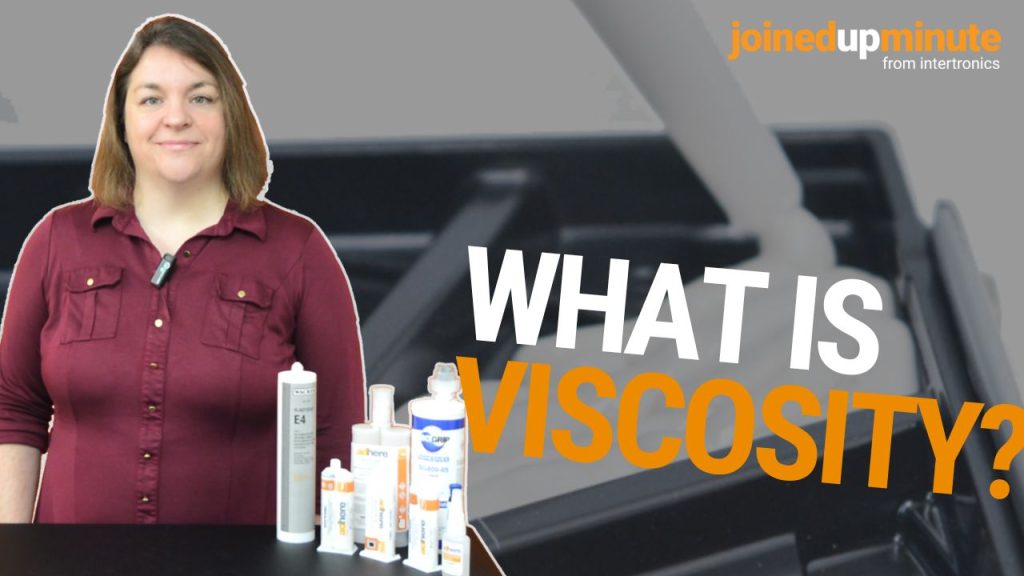
What is viscosity? – JoinedUpMinute video
Material datasheets list viscosity values ranging from single digits to hundreds of thousands. But what do those numbers actually mean? In this JoinedUpMinute, Rachel demystifies viscosity and breaks down what it is and why it matters. In this video, you’ll learn:🔸 How viscosity is measured🔸 How different viscosities behave🔸 Why viscosity is a key factor […]
Read More
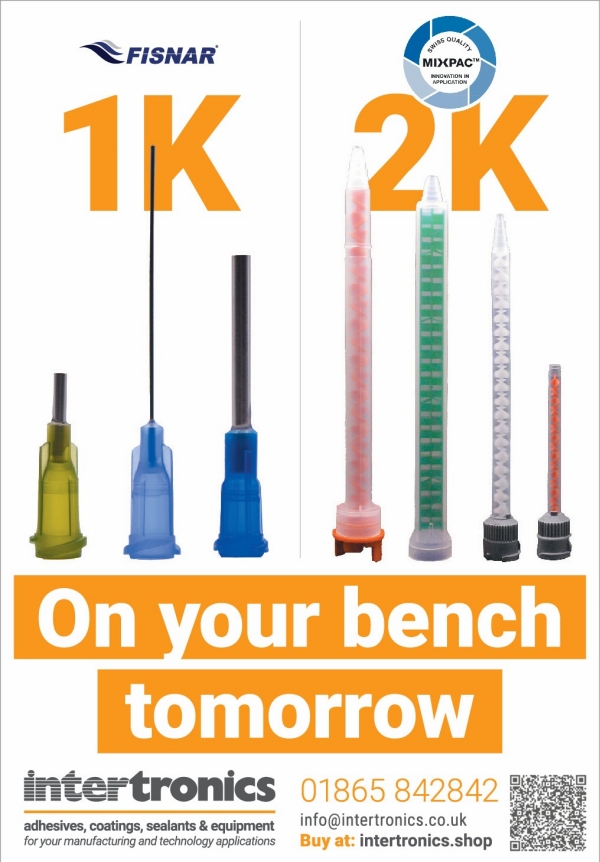
For sale: 1K needles and 2K nozzles
You may be seeing our latest advertisement in the trade press in the coming months. We are promoting our Fisnar dispensing needles and our MIXPAC mixing nozzles. We differentiate these as being for “1K” or “2K” – one-part or two-part material systems. The “K” in this nomenclature comes from the German word “komponente”, which means […]
Read More
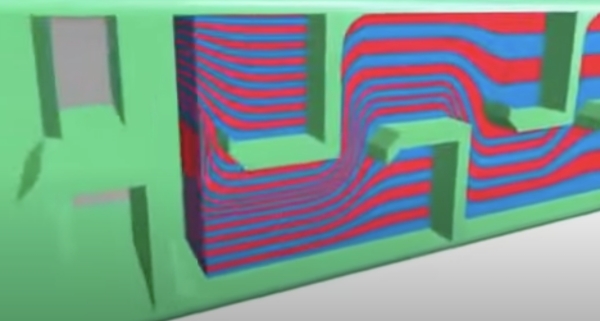
Have you ever wondered why some mixing nozzles are square?
Have you ever wondered why some mixing nozzles are square? Well, there is a reason why medmix MIXPAC Quadro nozzles are often preferred to their round helical alternatives. The Quadro system is designed to mix two-part epoxy, polyurethane, and methyl methacrylate adhesives and sealants, packaged in twin cartridges, more efficiently. The advanced geometry of the […]
Read More

Tesla: it is not the adhesive’s fault
A high profile adhesive failure has hit the news in the last few days. The story has been widely reported – for example: Nearly All Cybertrucks Have Been Recalled Because Tesla Used the Wrong Glue. Reports suggest that Tesla will recall 46,000 Cybertrucks to repair a stainless steel trim panel that could come off the […]
Read More
How to prepare a two-part cartridge for dispensing – JoinedUpMinute video
In this JoinedUpMinute, Matt walks you through the key steps for preparing a two-part cartridge before dispensing. You’ll learn: The correct preparation process for two-part cartridges How skipping steps can affect your chances of success Let’s go! Read more about this topic in our blog How to prepare two-part cartridges for dispensing. JoinedUpMinute is our […]
Read More
What is UV light? – JoinedUpMinute video
What, actually, is UV light? Today’s JoinedUpMinute video features Peter exploring: Where UV falls on the electromagnetic spectrum The difference between visible and UV light What UV light is made of And… can you see it? Ride the wave(length): Read more about this topic in our blog Can you see UV light? JoinedUpMinute is our […]
Read More
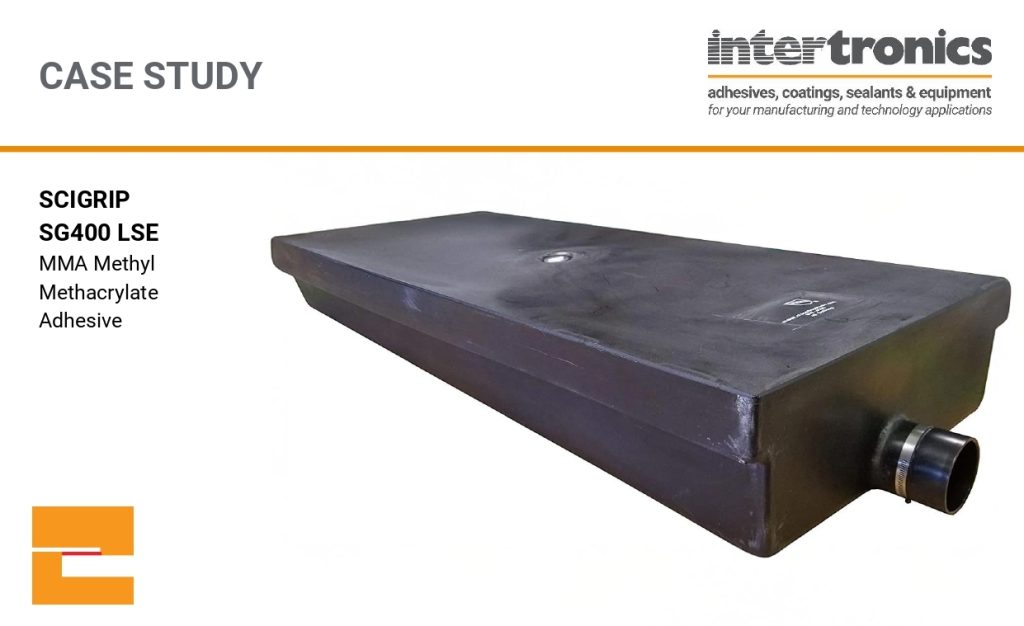
Case study: bonding and sealing polyethylene tanks using MMA adhesive
Our partner, IPS Adhesives, worked with a rotational moulding company to repair blow holes frequently occurring in their low density polyethylene (LDPE) tanks using our methyl methacrylate adhesive (MMA), SCIGRIP SG400LSE. The manufacturer of tanks used for things such as water and wastewater collection was frequently discovering blow holes in their tanks, sometimes up to […]
Read More
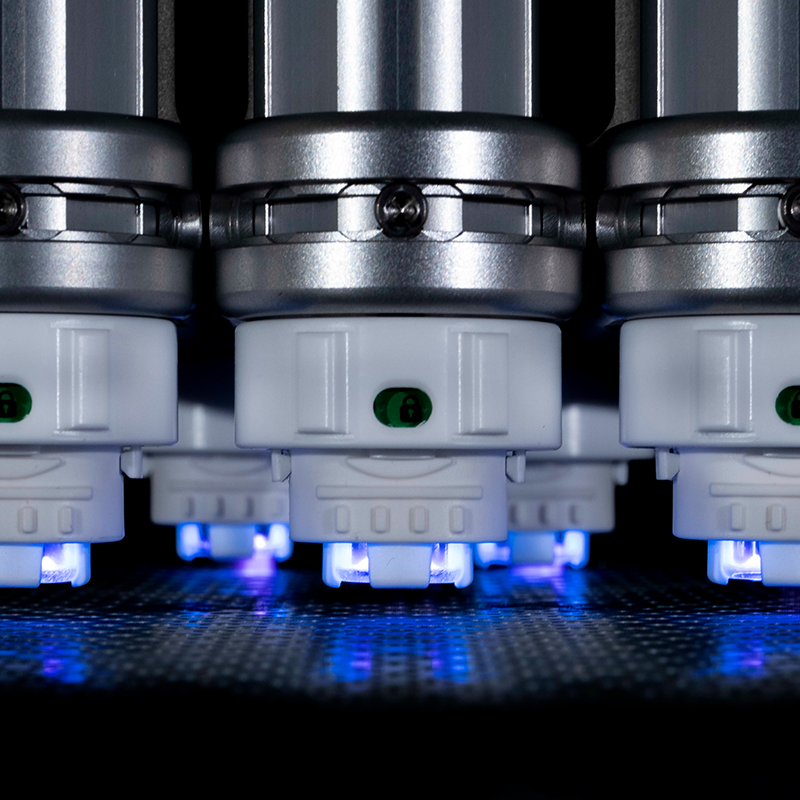
Getting under the surface of surfaces
Successful, strong and reliable bonding and coating processes start with understanding of adhesion, and that means understanding your surface. No matter what you’re bonding, the effectiveness of adhesion is influenced by properties of the surface like cleanliness, roughness, and energy. Since acquiring Dyne Testing Ltd, our interest in – and understanding of – surface science […]
Read More
What is a structural adhesive? – JoinedUpMinute video
What makes an adhesive “structural”? Here’s Kevin to explain in this week’s JoinedUpMinute video. You’ll learn: What a structural adhesive is What adhesive chemistries are typically structural What each of those chemistries are particularly good at How to select a structural adhesive for your application Have a look! Download our Structural Adhesive Selector Guide here […]
Read More

Precision in liquid dispensing – the DC100 MAX dispensing controller
The Fisnar DC100 MAX Benchtop Digital Liquid Dispensing Controller is a versatile, high precision dispenser suitable for a wide variety of critical dispensing applications; from microdot deposits, lines, to potting and encapsulation. The advanced user-friendly dispense software features a wide range of intelligent functions, allowing the user to maximise the accuracy, control, and monitoring of […]
Read More
What is the difference between pot life and working life? – a JoinedUpMinute video
Here’s this week’s JoinedUpMinute video, with Holly talking about the difference between pot life and working life (also known as open time). You’ll learn: What is pot life What is working life Why understanding these properties affects the quality of your process Let’s go! For further information on this topic, have a read of our […]
Read More
Why is my UV adhesive tacky? – JoinedUpMinute video
Sometimes, UV cured materials may have a tacky surface after curing. Here’s Simon to explain in this week’s JoinedUpMinute video. You’ll learn: What can cause a tacky surface on UV-cured materials What it looks like How to rectify the problem Check it out! You can also read our blog post on achieving a tack-free cure […]
Read More

What does thixotropic mean? – JoinedUpMinute video
Peter might have odd taste in sandwich fillings, but thixotropy helps him along the way. In this JoinedUpMinute video, he answers: What ‘thixotropic’ means—with examples from your kitchen The concept of shear thinning How thixotropic materials impact dispensing The benefits of thixotropic materials in manufacturing Have a look: JoinedUpMinute is our weekly minute-long video […]
Read More
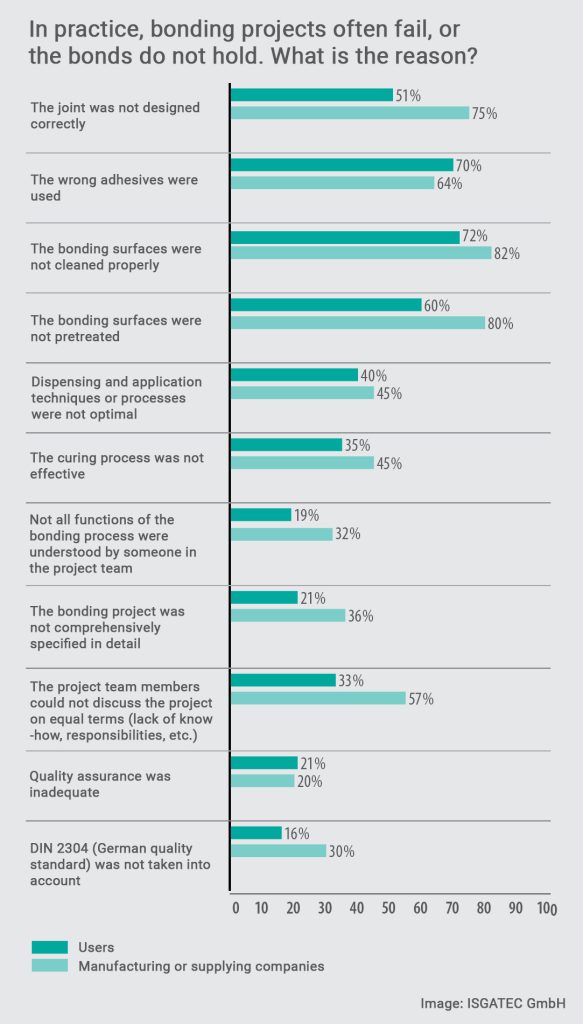
Why did the adhesive process fail?
An article in the German trade magazine Dicht! (focused on sealing, bonding and polymers), asked both users and manufacturers of adhesives what the leading causes are of bond failure. While users and manufacturers had slightly different perspectives and perceptions of adhesive process failure, they are on similar wavelengths. The results present a useful list of […]
Read More
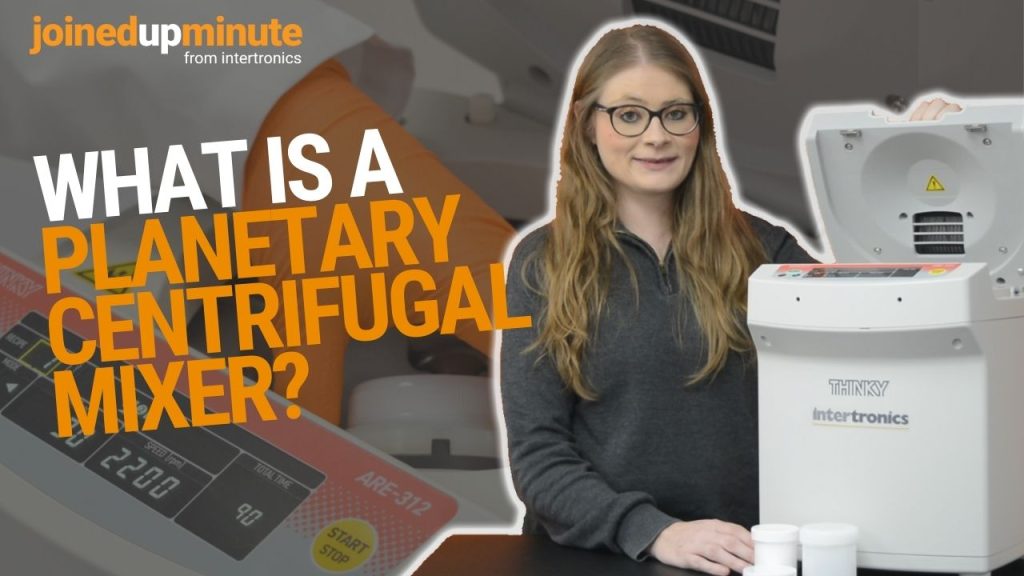
What is a planetary centrifugal mixer? – JoinedUpMinute video
We’re mixing it up in this week’s JoinedUpMinute video, where Allie gets to the bottom of planetary centrifugal mixers. She’ll explain: How planetary centrifugal mixers work What they’re best at mixing The benefits over other types of mixers Here’s Allie to tell you more: If you’d like to explore the topic further, here are some […]
Read More
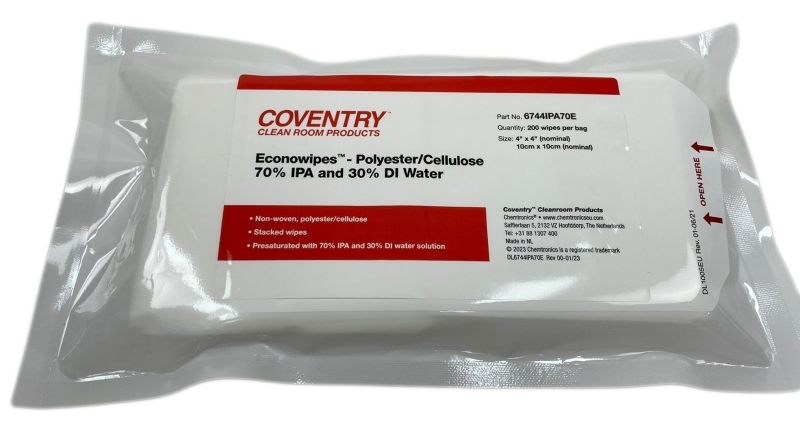
Coventry Econowipes – for your clean room or controlled environment
We have added Coventry Econowipes to our product range, to complement our other cleaning wipes and swabs. The Coventry brand is highly respected in industrial and precision cleaning sectors for delivering exceptional quality and performance in critical cleaning applications. They are renowned for cleanroom wipes that are engineered for extremely sensitive applications, including: Electronics manufacturing […]
Read More
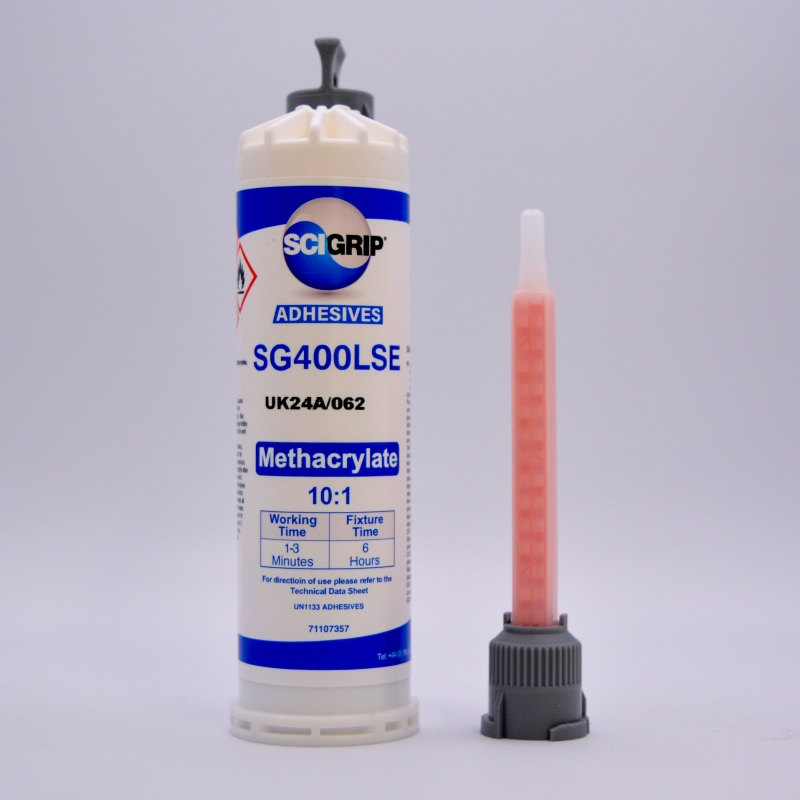
Adhesive strength test report on polypropylene
Low surface energy (LSE) substrates are notoriously difficult to bond. These substrates have a low affinity for other substances which result in poor wetting properties. As a result, traditional adhesives often fail to adhere to these substrates securely. To overcome this, several strategies can be employed including surface treatment, primer or adhesion promoter, and mechanical […]
Read More
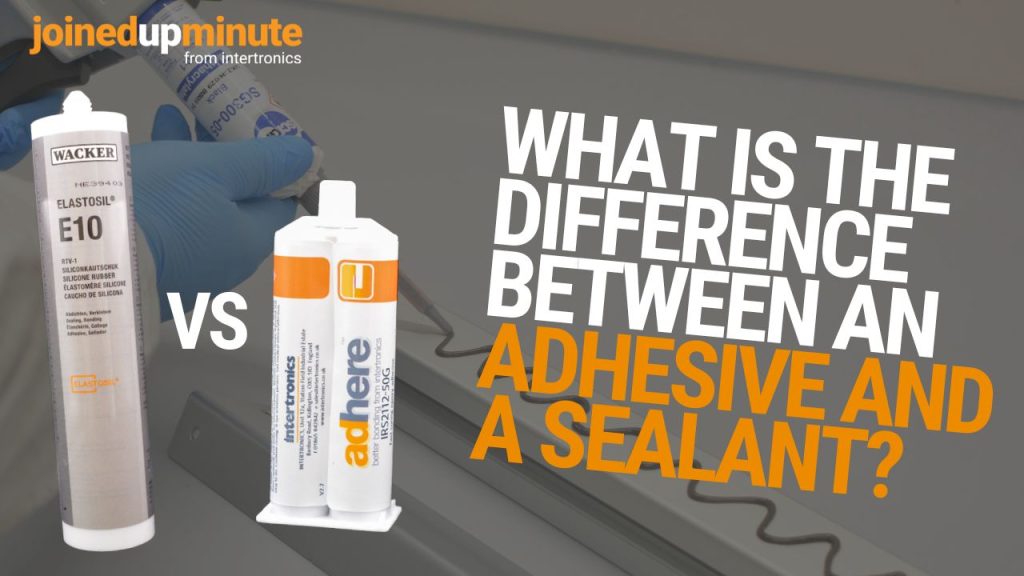
What’s the difference between adhesives and sealants? – JoinedUpMinute video
Adhesives versus sealants – aren’t they kind of the same thing? Spend a minute with Kevin today while he explains: What is a structural adhesive What is a sealant What is the common ground between adhesives and sealants Get stuck in! If you like Kevin’s style and want him to provide you with a tailored […]
Read More

Regulation provides improved H&S, and challenges to adhesive suppliers
There have been recent reports (Paris 2024 offers new Olympic medal after Huston says bronze looks ‘like it went to war’) that more than 100 winners from the 2024 Summer Olympic Games have seen rust and flaking on their winner’s medals. They have been returning them to the mint that made them for replacing. The […]
Read More
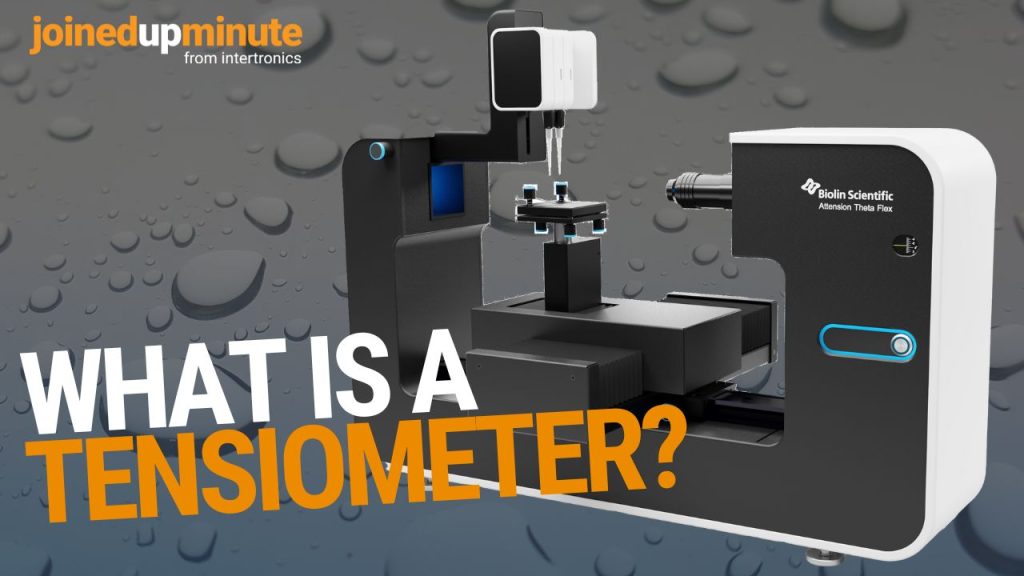
What is a tensiometer? – JoinedUpMinute video
Today, we’re talking about surface science – specifically about tensiometers – courtesy of Alison. She explains: What tensiometers are able to measure Different types of tensiometers, such as force tensiometer, bubble tensiometer, or optical tensiometer (also known as contact angle meter) Check it out! You can find out more about specific types of tensiometers on […]
Read More
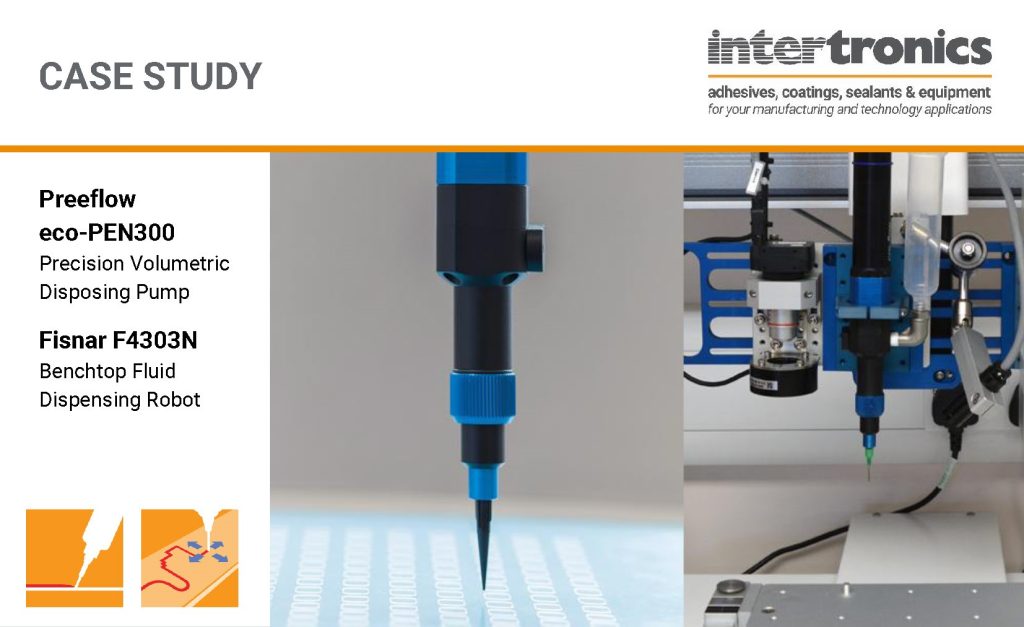
Case study: dispensing for particle sampling
Apacor, a medical diagnostics manufacturer, had a dispensing conundrum. They needed to accurately apply a liquid onto a glass substrate, dispensing droplets in the microlitre range in an array for their particle sampling product. Both the amount of liquid and the positioning of the droplets needed to be within some fine tolerances. They were seeking […]
Read More
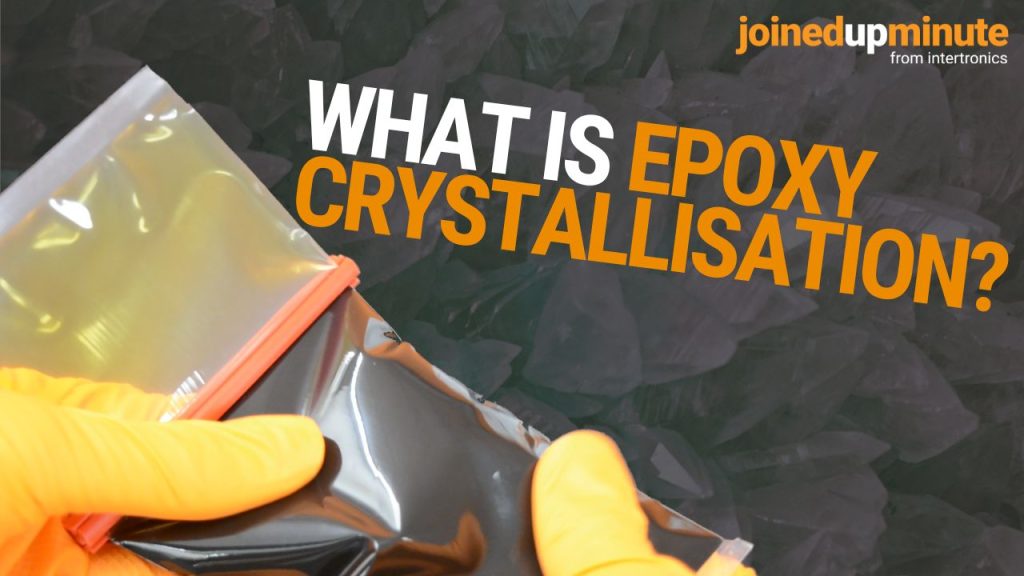
What is epoxy crystallisation? – JoinedUpMinute video
Does your unmixed epoxy adhesive contain lumps or look a bit milky? Don’t throw it away! Just spare a minute for Kevin to explain epoxy crystallisation in this week’s JoinedUpMinute video. You’ll learn: Signs of epoxy crystallisation What causes epoxy crystallisation How to reverse the crystallisation so you can use the epoxy as usual Check […]
Read More
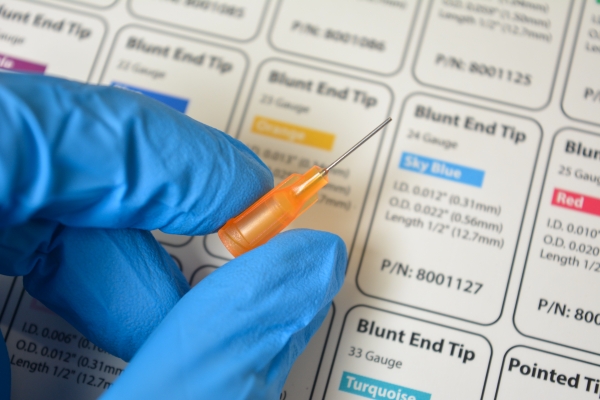
False economies and dispensing needles
I have suffered from the implications of my false economy many times; I expect you have too. Once, I tried to save money on a trip to Frankfurt by purchasing a flight from a low-cost carrier, and landed at “Frankfurt Hahn” airport – 125km from downtown Frankfurt. I ended up paying more for transport overall, […]
Read More
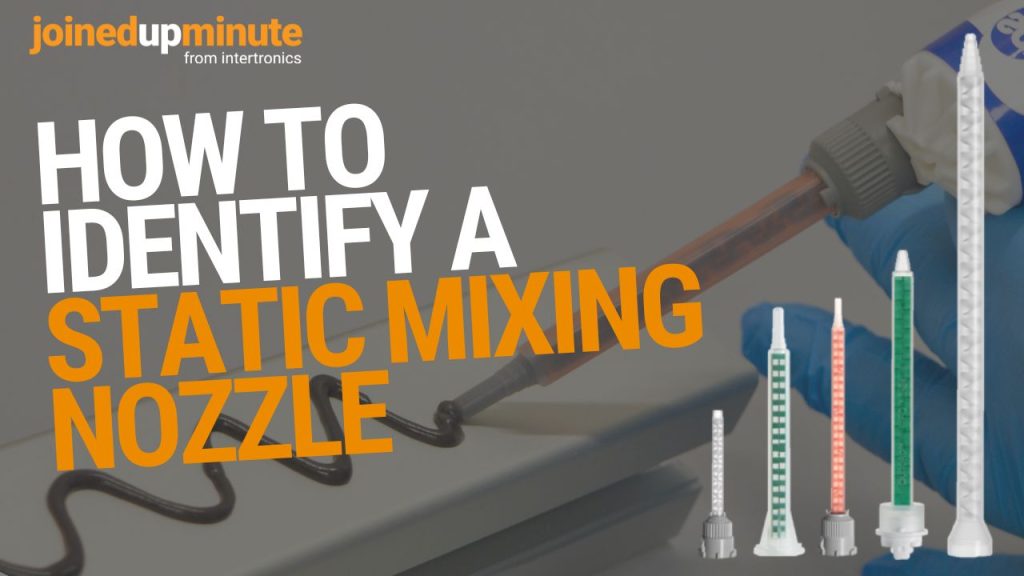
How to identify a static mixing nozzle – JoinedUpMinute video
Kevin graces our screens with his breakdown of static mixing nozzles and how to tell exactly which one you are holding. If you receive mixing nozzles with adhesive materials but don’t know what part number they are to order more, this JoinedUpMinute video was designed with you in mind. You’ll learn: Different mixing nozzle shapes […]
Read More
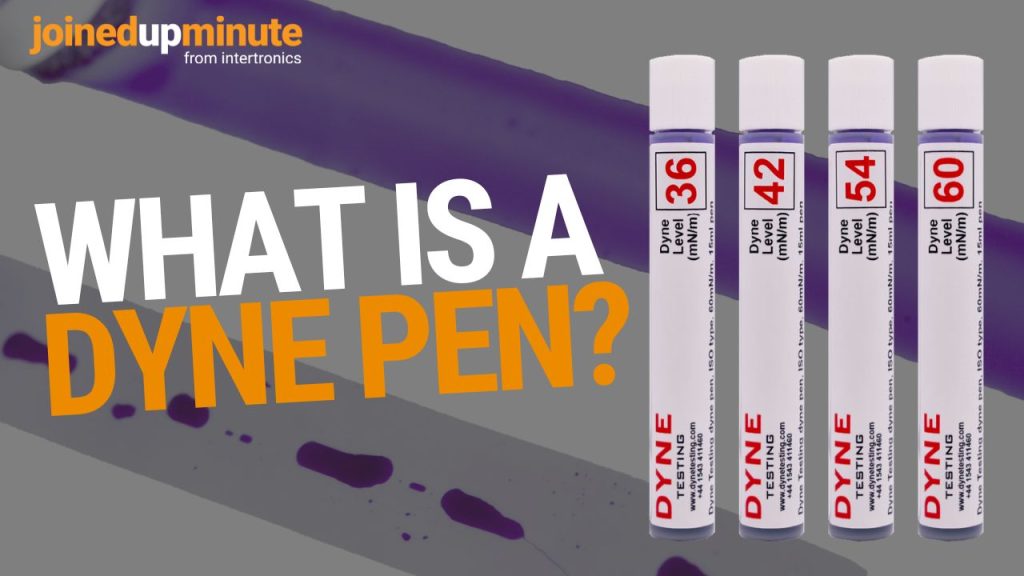
What is a Dyne pen? – JoinedUpMinute video
Happy new year, and welcome to our first JoinedUpMinute video of 2025. In this video, Alison gives a quick explanation of Dyne pens and measuring surface tension and energy. She covers: Measurement units for surface tension Surface tension versus surface energy How Dyne pens are used to indicate surface energy Have a look! JoinedUpMinute […]
Read More

Our Year in Numbers – 2024
It’s been a significant year in the life of Intertronics, with lots of big moments, steady growth, and an increasing appreciation for the incredible things that our customers do. Here are some of our favourite stats from 2024: 118 trials conducted for customers 300,550 dispensing tips shipped 5 instances of team members stranded at […]
Read More
Seasons Greetings: good tidings and great joy
With the holiday season on the near horizon, we’ve been counting down the days with both fun and goodwill. Amongst the Christmas quizzes, jumper days, carol singing, and our upcoming company bash, we’ve also been busy compiling food donations for the North Oxfordshire Community Food Bank and funds for Save the Children. This nicely rounds […]
Read More

Is “2025: (Finally) the Year of the Robots”?
2025: (Finally) the Year of the Robots is the title of an article by Richard Stone, friend and founder of our wonderful PR partners Stone Junction. In the piece, Richard argues that “Industry in the UK has been primed for increased use of industrial robots by several factors, from Brexit related labour shortages to rising […]
Read More
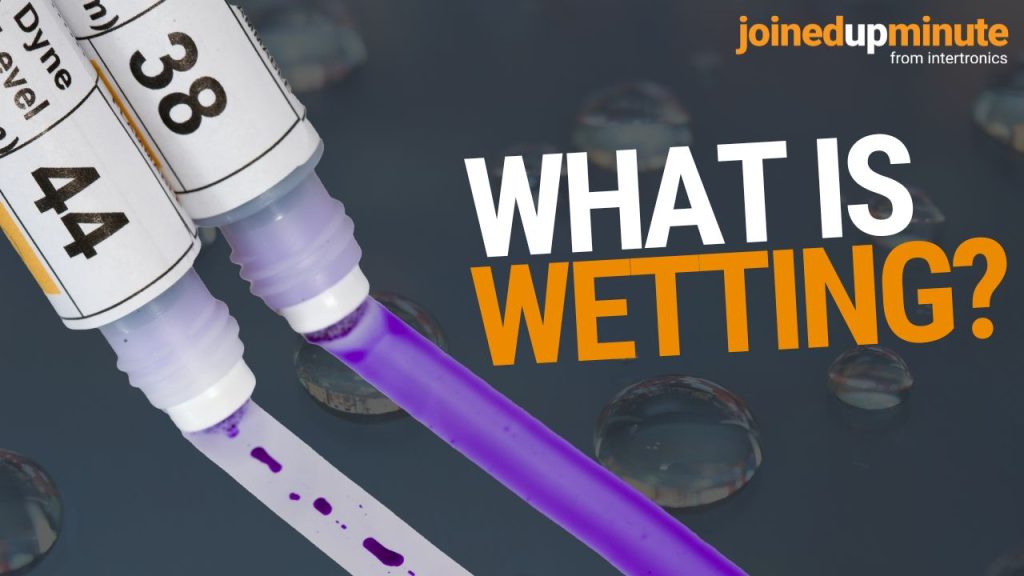
What is wetting? – a JoinedUpMinute overview
Our final JoinedUpMinute for 2024 is a speedy overview of wetting, courtesy of Alison. She explains: What wetting is and why it’s important How wetting relates to surface energy How to improve wetting Check it out! If you want to dive deeper into how to improve wetting, have a look at our video How […]
Read More

Visit from local MP Calum Miller to Intertronics
Last week, we welcomed Calum Miller MP, Member of Parliament for Bicester & Woodstock for a visit. He was drawn to us from news about our brilliant charity cycle ride this summer – we raised more than £5,000 for Emmaus Oxford, a charity providing a home and meaningful work for people who have experienced homelessness, […]
Read More
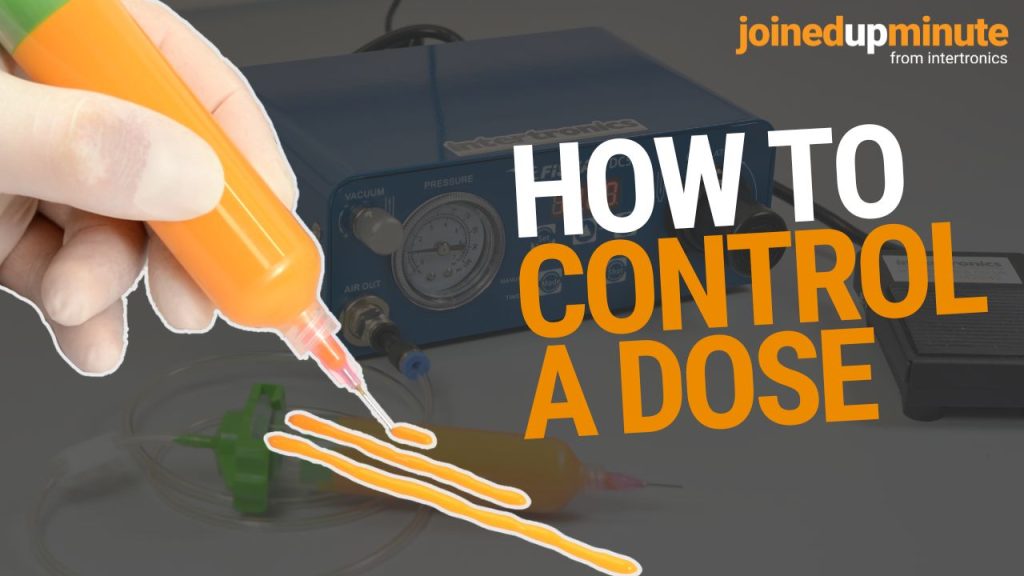
How to control a dose – JoinedUpMinute
Matt returns to our screens again in this week’s JoinedUpMinute video, outlining how to control a dose of material when using a time/pressure dispenser. In 58 seconds, he goes over what four major factors influence dosing control. Check it out! Find out more about these factors and get some other great dispensing insights by […]
Read More
What is exotherm? Hot takes in this JoinedUpMinute video
In this week’s JoinedUpMinute video, Craig gets to the root of what exotherm is and why it’s important. In just 57 seconds, he covers: What exothermic reaction is Why you should care about exotherm How exotherm can be helpful Have a look! JoinedUpMinute is our weekly minute-long video sharing insights from our world. You […]
Read More
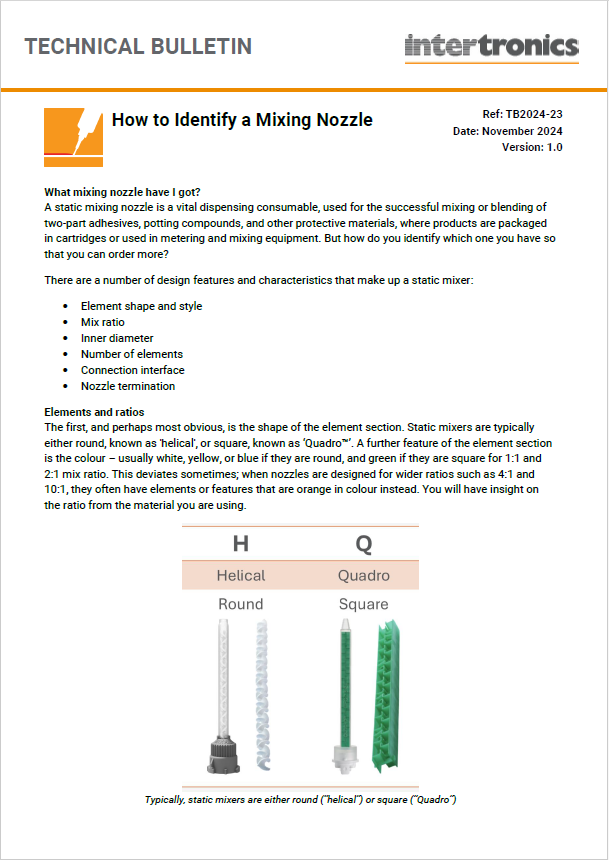
How to identify a static mixing nozzle
A static mixing nozzle or “mixer” is a vital dispensing consumable, used for the successful mixing or blending of two-part adhesives, potting compounds, and other protective materials, where products are packaged in cartridges or used in metering and mixing equipment. But how do you identify which mixing nozzle you have so that you can order […]
Read More
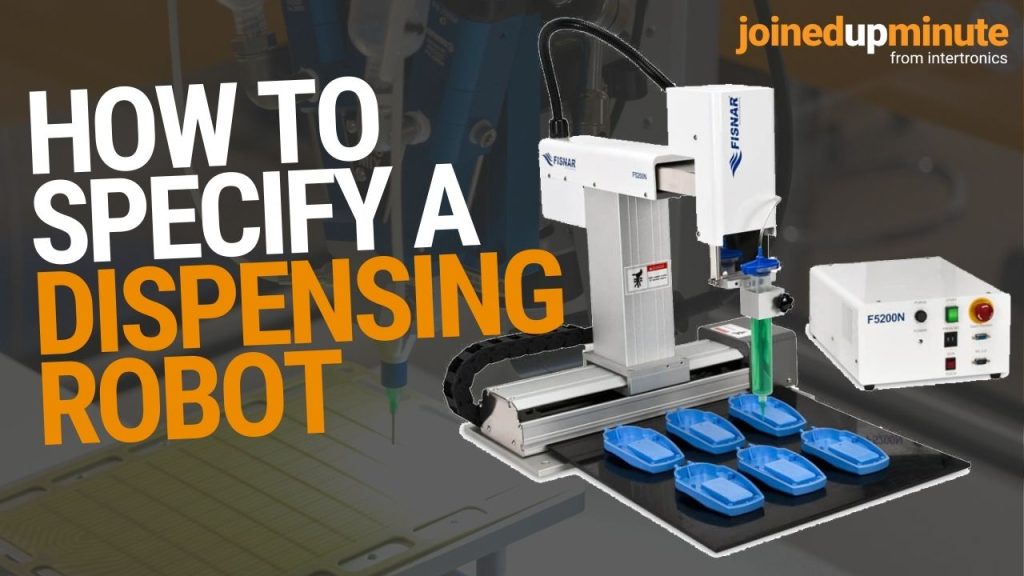
How do I specify a dispensing robot? – JoinedUpMinute
All the basics of what should be in your dispensing robot specification in a single minute! This week’s JoinedUpMinute video features Peter’s expert advice. You’ll learn: The 4 top factors, outside of the robot itself, that affect your robot specification What you need to consider about the rest of your dispensing process Feast your […]
Read More

The Budget & productivity
Business leaders in the UK are increasingly showing their unhappiness with the Budget a few weeks ago, where £25B of the £40B potential additional tax raise comes from employers. The top four sources of tax income come from employment and employers (income tax, National Insurance, VAT, and corporation tax). Logic might tell you to leverage […]
Read More

Intertronics sponsors Brackley FC Under 7s
We are thrilled to be sponsoring Brackley Athletic Football Club Under 7s this year. Our very own Matt Baseley played for the club, affectionately known as “The Jaffas” due to the orange and black strip, for more than ten years and is now coaching the young team to victory in the Witney and District League across Oxfordshire. […]
Read More
How does RTV silicone cure? – JoinedUpMinute video
This week, our JoinedUpMinute video is about how room temperature vulcanising (“RTV”) silicones cure, courtesy of Ben. You’ll learn: What’s the most important factor in curing for RTV silicones? What are the other variables at play? Have a look! For more information about curing, read “Adhesive Problem? What’s the Cure?”. And naturally, you’ll find product […]
Read More
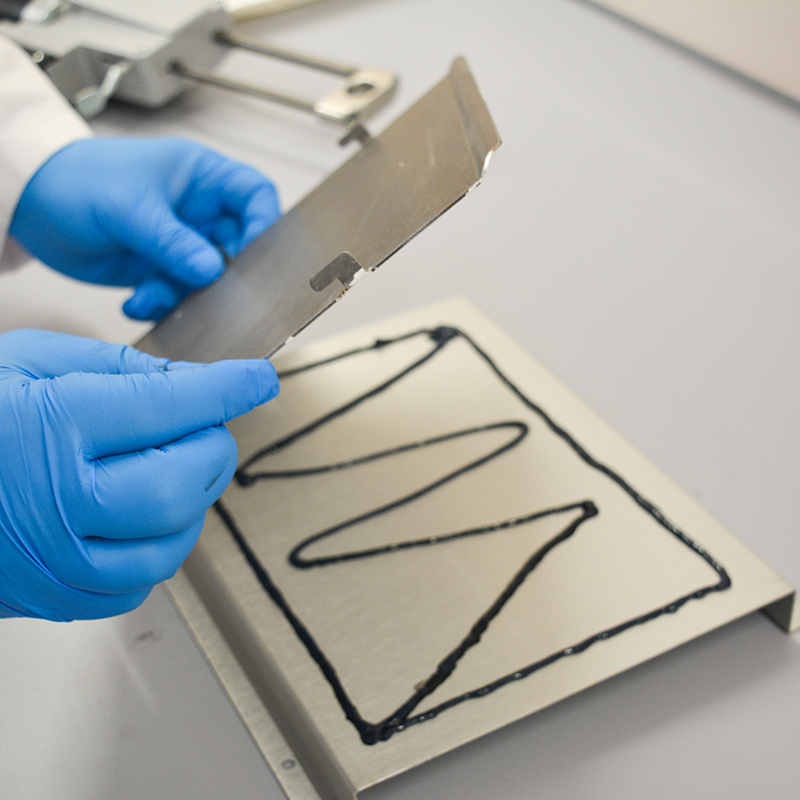
Why use a structural adhesive? – adhesives vs mechanical fastenings
In thousands of applications, structural adhesives are being used as a viable alternative to mechanical connections: screws, rivets, or spot welds. The use of adhesives to provide a structural bond can bring many advantages, including improved product performance, reliability improvements, greater design freedom, and reductions in manufacturing costs. Sometimes known as “chemical joining” — to […]
Read More
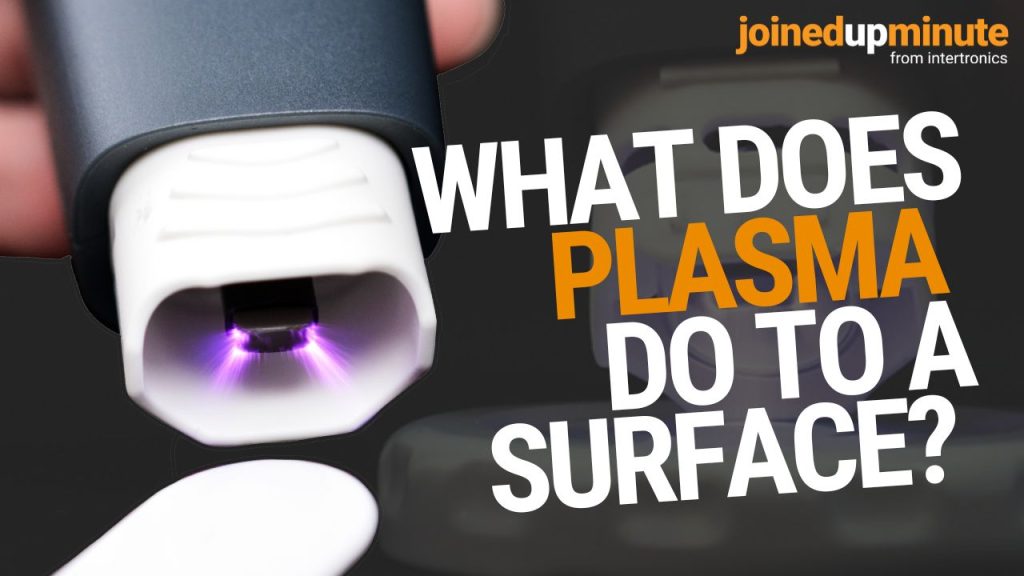
What does plasma do to a surface? JoinedUpMinute with Craig Geerthsen
In this week’s JoinedUpMinute video, Craig provides an overview of what plasma surface treatment accomplishes. You’ll learn: What is plasma? What are the various benefits of plasma in surface treatment? Check it out! For more information about improving surface treatment with plasma, here are some further resources: Video: How does plasma surface treatment improve adhesion? […]
Read More
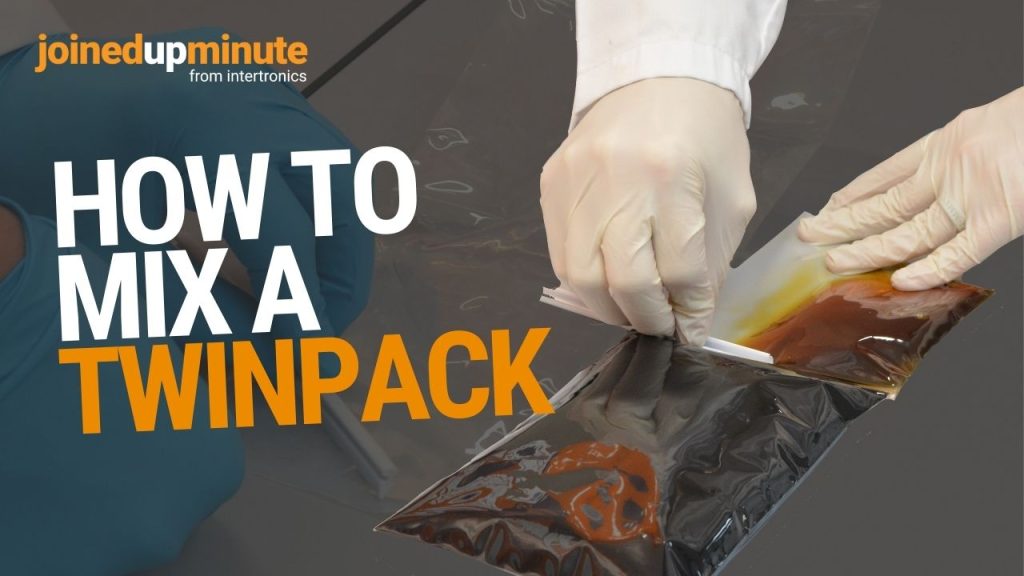
How to mix a twinpack: our first JoinedUpMinute video
We’re kicking off a new video series called JoinedUpMinute, and our inaugural clip features Matt giving a quick tutorial on how to mix a twinpack. He reviews: Basic mixing methods for twinpacks How to mix the material completely and thoroughly How to dispense material that comes in a twinpack Have a look! For further […]
Read More

Meeting the bonding requirements of rail component manufacturing: SCIGRIP SG300
Vibration. Expansion and contraction. Environmental aggravators such as heat and moisture. All of these present challenges to finding a suitable adhesive, but SCIGRIP SG300 Methyl Methacrylate Adhesive for rail applications performs very well in all of these circumstances, while offering fast curing speeds and easy processing. Designed to bond metal, but also adept at bonding […]
Read More
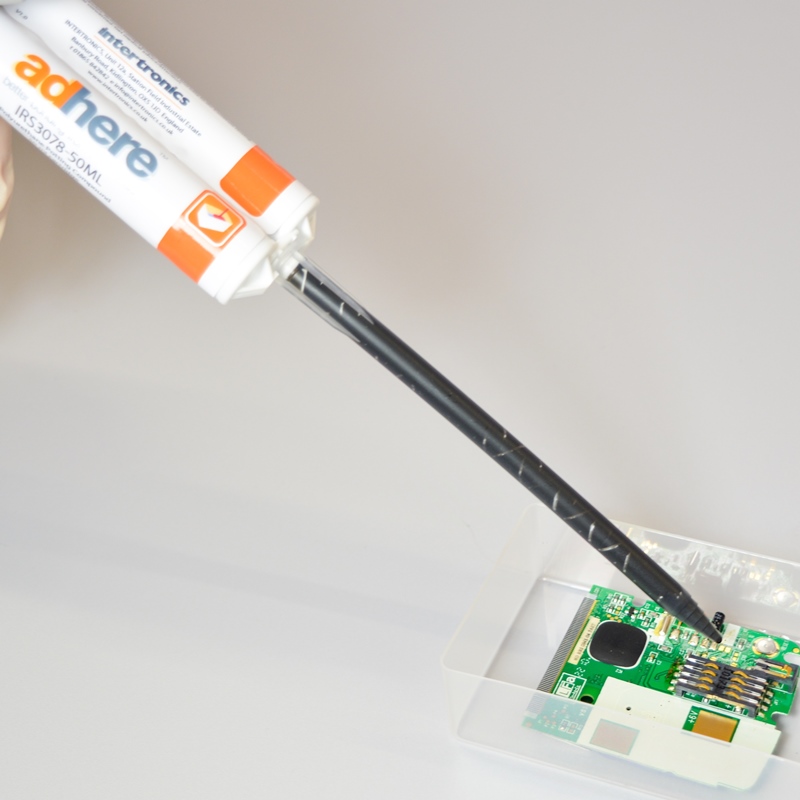
How to select a static mixing nozzle
Transforming two-part adhesives and potting compounds into homogeneously mixed, ready-to-use materials is often the job of the humble static mixing nozzle. Capable of blending materials quickly, these nozzles ensure that components are completely combined and ready for use in your specific application. In our newly released Technical Bulletin How to Select a Static Mixing Nozzle, […]
Read More
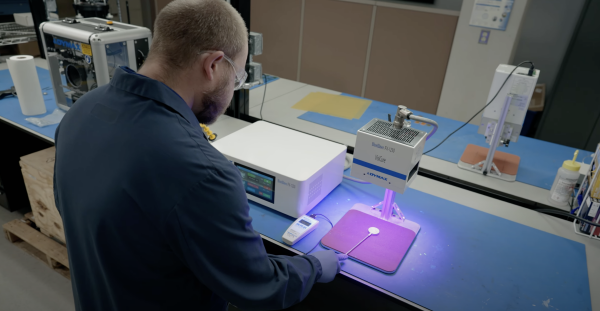
Why should I use a radiometer with my UV curing process?
Why should I use a UV light radiometer or intensity meter with my UV curing process? Our partners DYMAX have just released a video to answer that very question. In summary, the reasons are: To ensure you have enough dose or UV energy to cure your adhesive bonds properly To help you establish and maintain […]
Read More

Paul Whitehead retires!
Ben Swanson : I would like to wish my long standing colleague and friend Paul Whitehead all the very best, as he officially retired yesterday. I was delighted to get to spend most of the working day yesterday with a man who has taught me a great deal and has sculpted so much of what […]
Read More
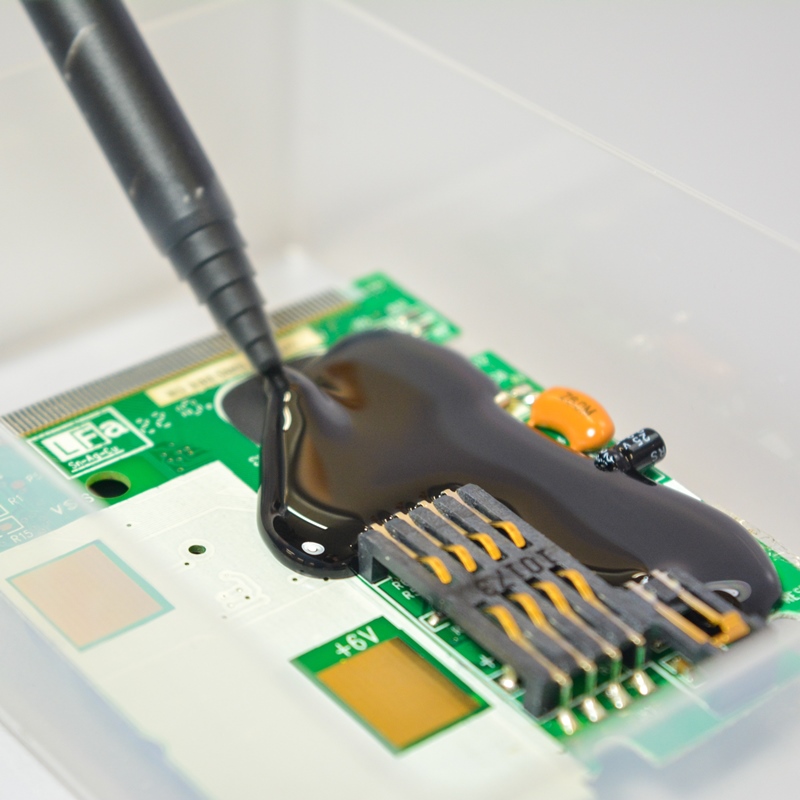
Intertronics academy: mix ratio – weight and volume and density
Two part adhesives, potting compounds and similar materials need to be mixed in the correct ratio of the two parts in order to achieve the properties stated on the product data sheet. In many cases, this is easy. Most of our two part structural adhesives are packaged in two-part cartridges with static mixing nozzles, so […]
Read More
Intertronics strikes distribution agreement with medmix
We have agreed a new distribution agreement with medmix, the leading system provider in mixing, dosing, and adhesives application for industrial applications, for its MIXPAC™ product range. Intertronics are now able to supply a wide variety of mixers, cartridges, and dispensers to our UK customers, serving multiple sectors, from electronics to construction. The new partnership […]
Read More
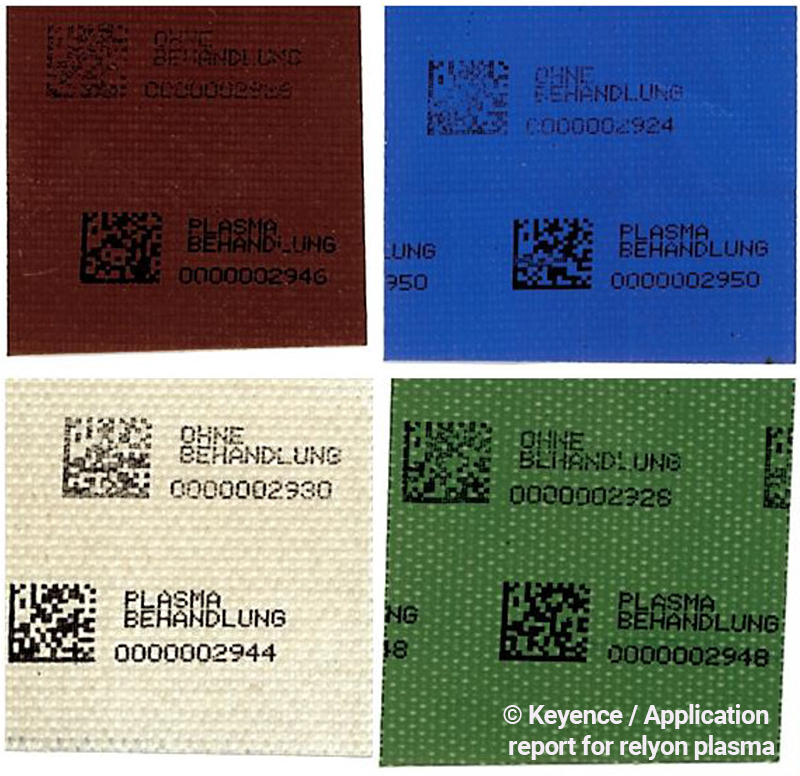
How plasma surface treatment improves print quality
Some high-performance plastics pose a problem during printing — their low surface energies make high-quality, reliable printing challenging. So, how can manufacturers address this challenge, and what can we learn from real life applications? Here we discuss the use of plasma surface treatment for printing onto low surface energy plastics. Wetting is a prerequisite of […]
Read More
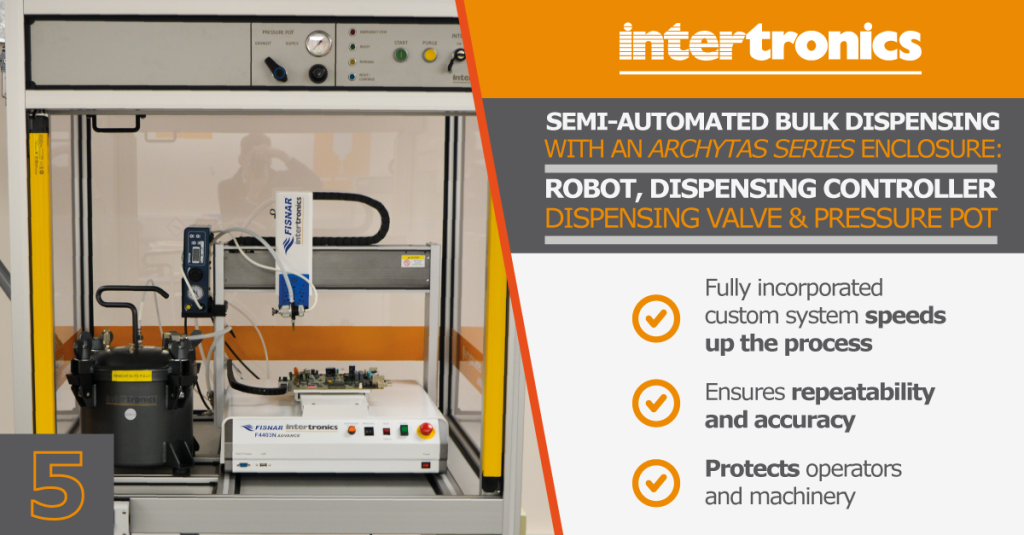
Incremental productivity and quality improvement: a worked example
In adhesives, sealants, and masking applications, increasing productivity and quality is often about small changes. By identifying the main pain or pressure points, be it quality, repeatability, or bottlenecks, you can plan a step-by-step approach that gets you where you want to be with minimal redundancy. Here is a hypothetical worked example of a dispensing […]
Read More
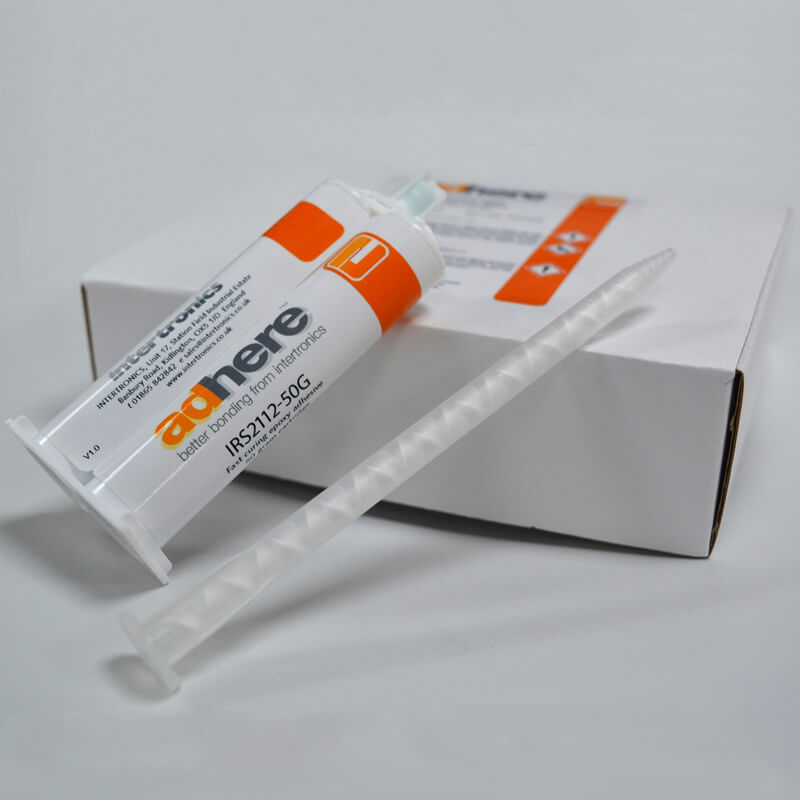
Intertronics academy: health and safety for two-part adhesives
Adhesives are chemicals; they require your respect when using them. You should consult and follow the SDS (safety data sheet) and the manufacturer’s recommendations before using to minimise risks from skin contact, inhalation of vapours, and exposure to other hazards – and conduct a risk assessment. Once cured, adhesives generally pose limited health and safety […]
Read More
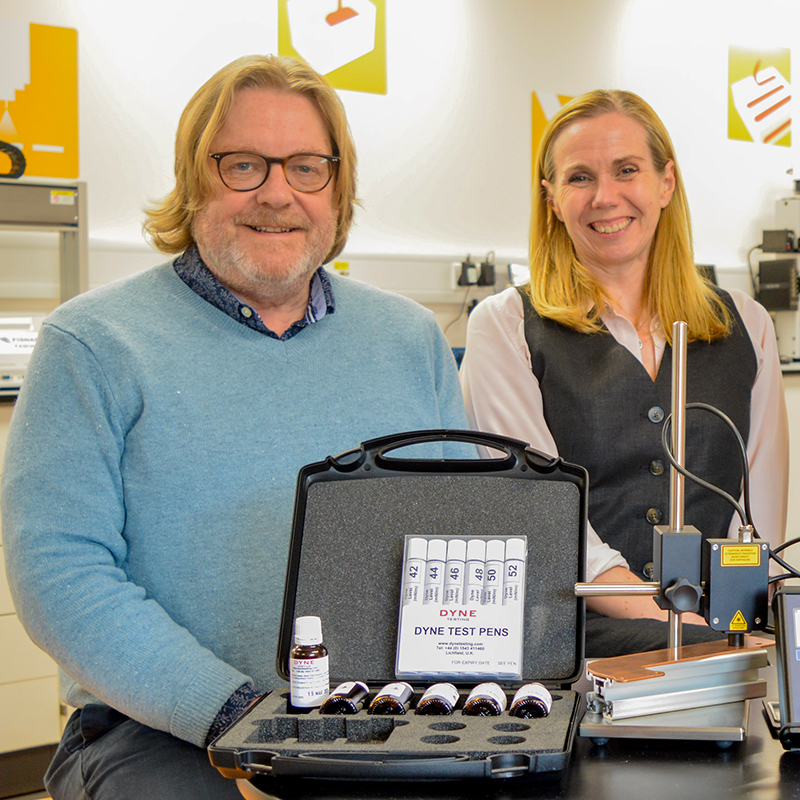
The UK’s surface measurement industry – an overview
Earlier this year we acquired Dyne Testing Ltd, a supplier of instrumentation and tools for surface measurement, testing, and analysis. Here Peter Swanson, (PS) Founder and Executive Chair of Intertronics, sits down with Alison Fox (AF), Brand Manager of Dyne Testing, to discuss trends in the UK’s surface measurement market. PS: Can you give me […]
Read More
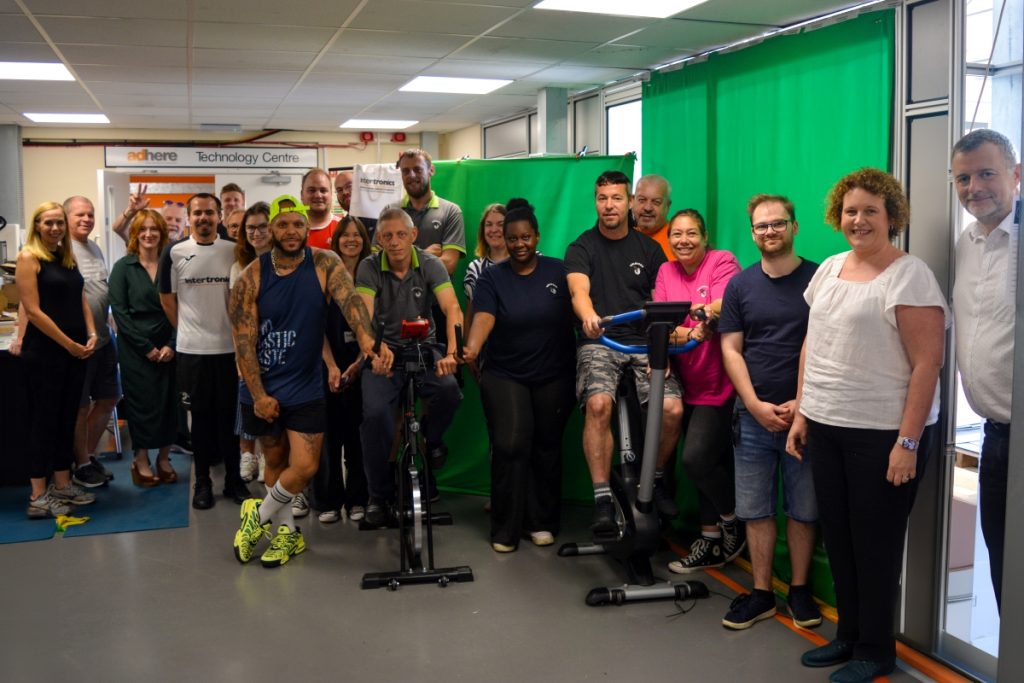
Intertronics raises more than £5,000 for Emmaus Oxford with cycling fundraiser
Joined by suppliers, former colleagues, and friends, our team at Intertronics pedalled away on two stationary bikes for four days straight to cover the distance from Kidlington to Erding in honour of a great local cause. We plotted a real-life route for the virtual event, highlighting milestones and the offices of our suppliers Relyon Plasma, […]
Read More

Management news
I left university and started a company. That was almost 45 years ago, and I have been running and been in sole charge of Intertronics ever since. It has been wonderfully rewarding responsibility. Some of you have already done the maths, and realise that not only is 45 years a long time, but that I […]
Read More

MMA structural adhesives in aerospace: an overview
Important properties for a structural adhesive in an aerospace application are strength, toughness, and flexibility, alongside temperature and environmental resistance. When choosing an adhesive, methyl methacrylate structural adhesives (MMAs) may be a good candidate to test, as these adhesives offer strength, toughness, and ease of use when bonding a broad range of materials, including metals, […]
Read More

Wheeling to Wiesbaden: cycle relay for Emmaus Oxford
We have, for a long time, offered every employee the opportunity to take an extra day of paid holiday to do something charitable, but people have always found it a challenge to find something that you can do as an ad-hoc bit of charity work for just one weekday. So, we have decided to make […]
Read More

THINKY ARE-312: The next generation of high-performance planetary mixers
The THINKY ARE-312 is an industrial planetary mixer that can mix, defoam, and degas liquids, powders, and pastes in seconds to minutes to produce a uniform, homogenous mix. It is the upgrade to our very successful and popular flagship ARE-250, introducing several advancements, including computer connectivity with data logging, an improved user interface, and a […]
Read More
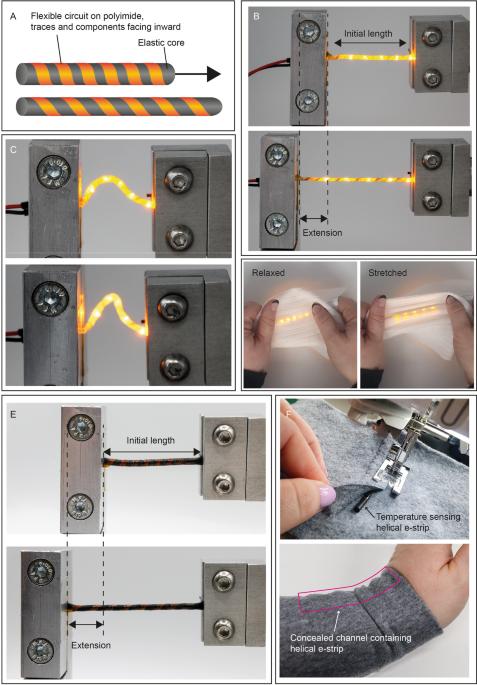
Wearables – adhesives and encapsulants for electronic textiles
Nature is a prestigious, peer-reviewed scientific journal known for publishing high-impact research across a broad range of scientific disciplines. Established in 1869, it is one of the world’s most influential scientific publications, covering fields such as biology, physics, chemistry, earth sciences, and more. Articles in Nature undergo rigorous peer review and are often groundbreaking, contributing […]
Read More
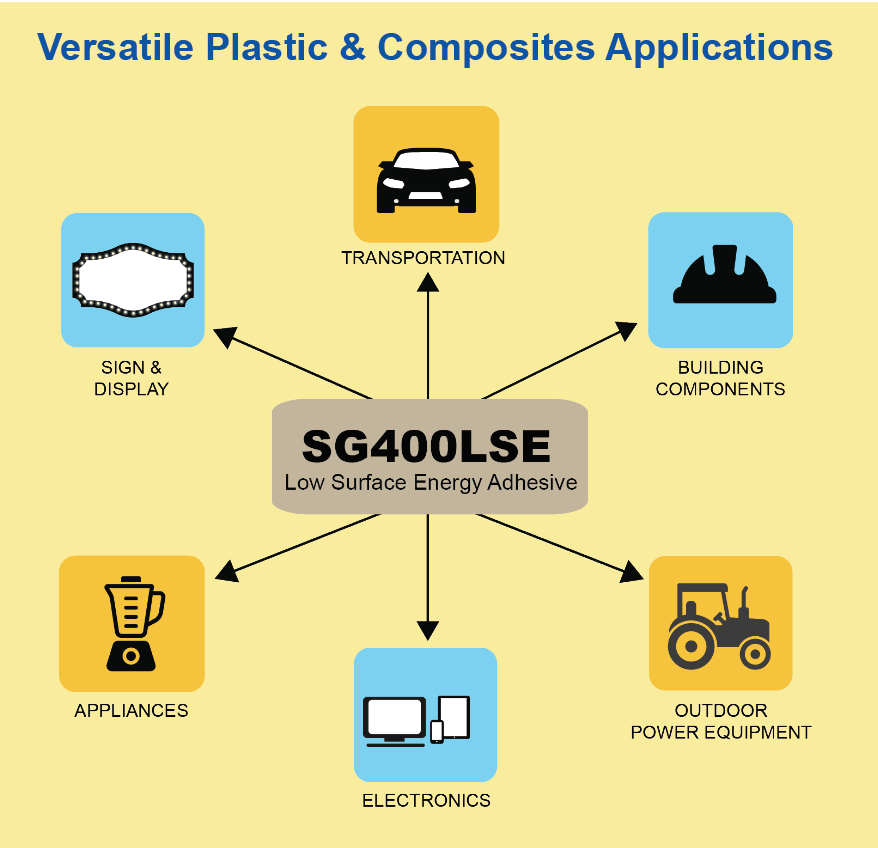
Adhesive for bonding polypropylene, polyethylene and more
Our partners SCIGRIP have announced the new SG400LSE MMA Methyl Methacrylate Adhesive for Low Surface Energy Plastics that creates fast and strong bonds with low surface energy plastics. SG400LSE has been tested on high-density polyethylene (HDPE), ultrahigh molecular weight (UHMW) PE, and homopolymer, copolymer and glass-filled polypropylene (PP) – bond strength testing results in substrate […]
Read More
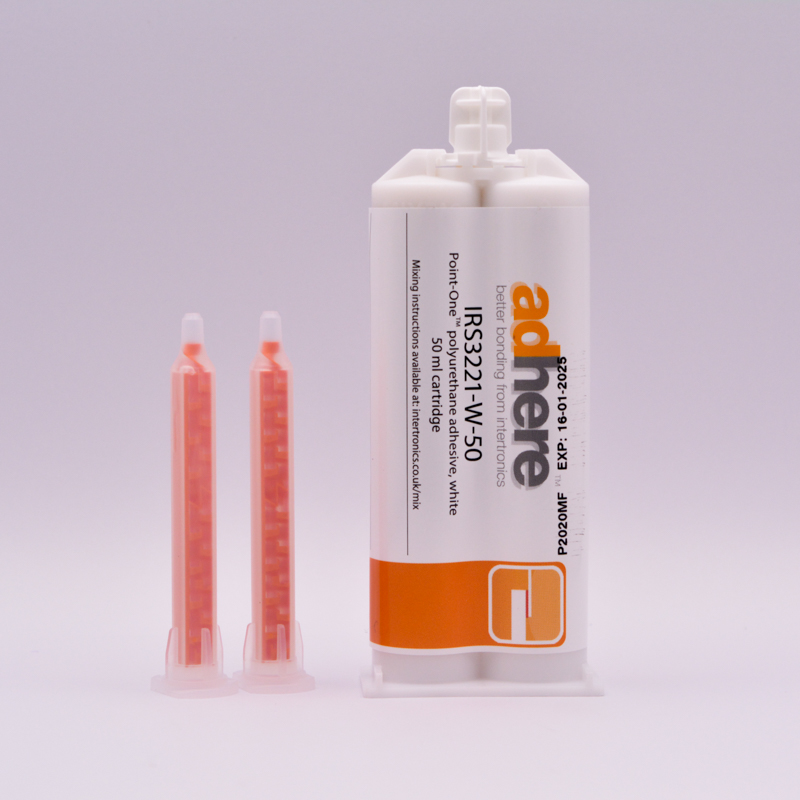
Intertronics academy: storage and packaging of two-part structural adhesives
An adhesive’s data sheet will detail its storage requirements, but most two-part structural adhesives will last their whole specified shelf life if stored at room temperature in a cool dark place. There are some differences between the chemistries that may impact how they are packaged and stored. For example, both components of a two-part polyurethane […]
Read More
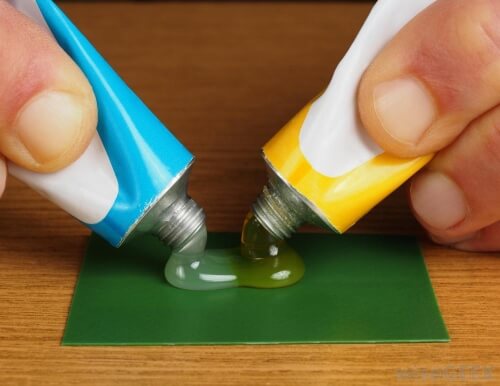
Intertronics academy: handling and processing two-part structural adhesives
It’s common for structural adhesive chemistries like epoxies, polyurethanes (PUs), and methyl methacrylates (MMAs) to have been formulated as two component parts – known as “two-part”, or “2K” adhesives. The two components of these adhesives are generally categorised as the resin (or base) and the hardener (or activator). Mixing the two parts initiates a chemical […]
Read More
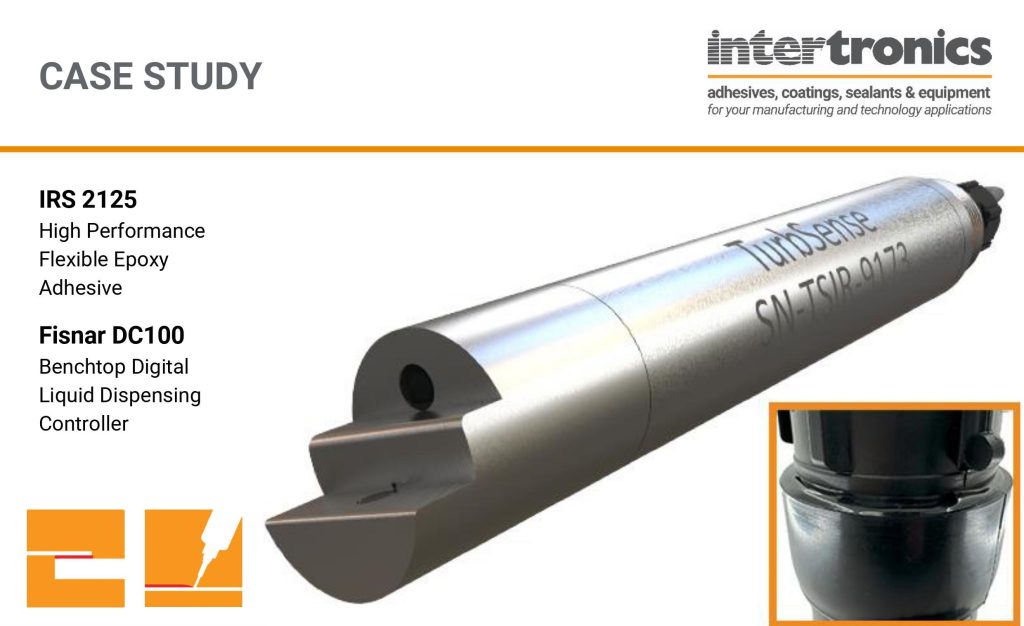
Case study: flexible epoxy drives performance
We are supplying Process Instruments (Pi), a water analyser instrument manufacturer, with our IRS 2125 High Performance Flexible Epoxy Adhesive. This versatile adhesive offered performance benefits as a thread locker on flow cells and an IP68 rated sealant on sensors. Pi manufactures and supplies water analyser instrument solutions that can reliably, continuously, and accurately measure […]
Read More

Innovation & magic
Eight years ago, I wrote about this quote from Arthur C. Clarke: “Any sufficiently advanced technology is indistinguishable from magic.” That quote is still on the wall of our Technology Centre, even though we have moved into a bigger facility since I wrote the blog post. Then, I discussed how we demystify advanced adhesive technologies […]
Read More
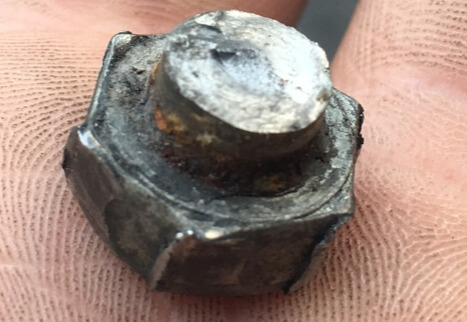
Cyanoacrylate adhesive – a bad nuclear option
This week, I have been entertained on my drive to work by a BBC Sounds podcast called Glued Up: The Sticky Story of Humanity. Mark Miodownik, a materials scientist, engineer, broadcaster and writer at University College London, narrates five 15 minute episodes charting the journey of human progress through the sticky substances that have shaped […]
Read More

Sabbaticals, supportive cultures, and kangaroos – Liam’s story
Our colleague Liam Rogerson has recently returned from a 3-month sabbatical which saw him adventuring around Thailand, Vietnam, and Australia with his partner. Sabbaticals aren’t a common thing around Intertronics, but when Liam approached Teresa Nee, his manager, with the vague idea that he wanted to do a bit of travelling, not only did she okay […]
Read More
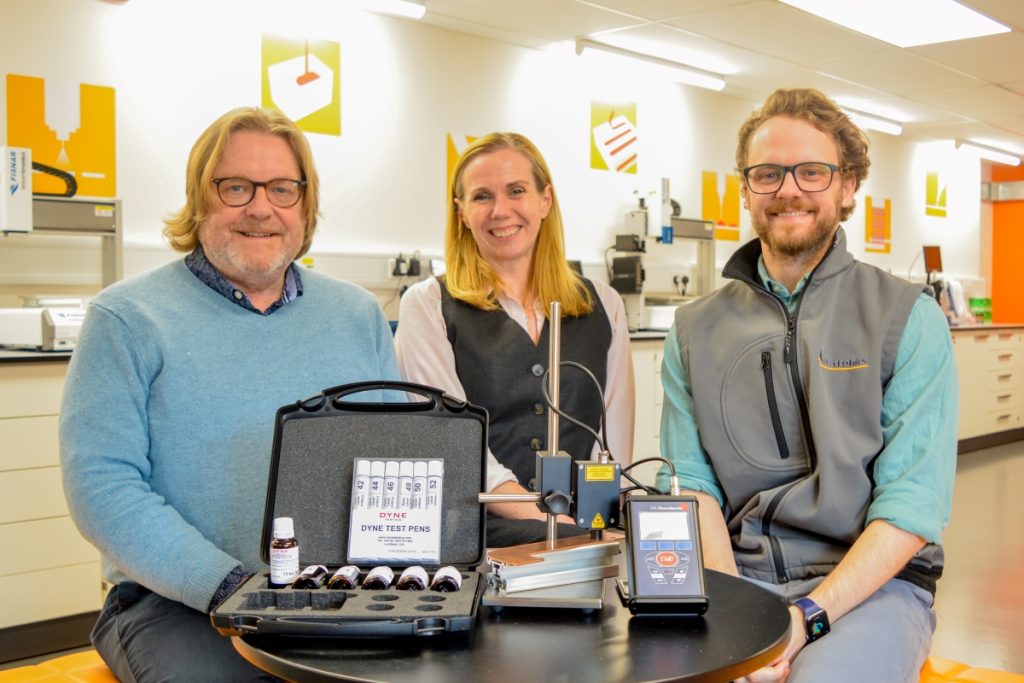
Intertronics acquires Dyne Testing Ltd
We have completed on the purchase of Dyne Testing Ltd, a leading UK manufacturer and supplier of surface measurement technology. Dyne Testing offers a range of measurement equipment for testing surface energy and tension, surface cleanliness, adhesion, and coating thickness, to improve quality and process control in various industrial applications. This aligns with Intertronics’ existing […]
Read More
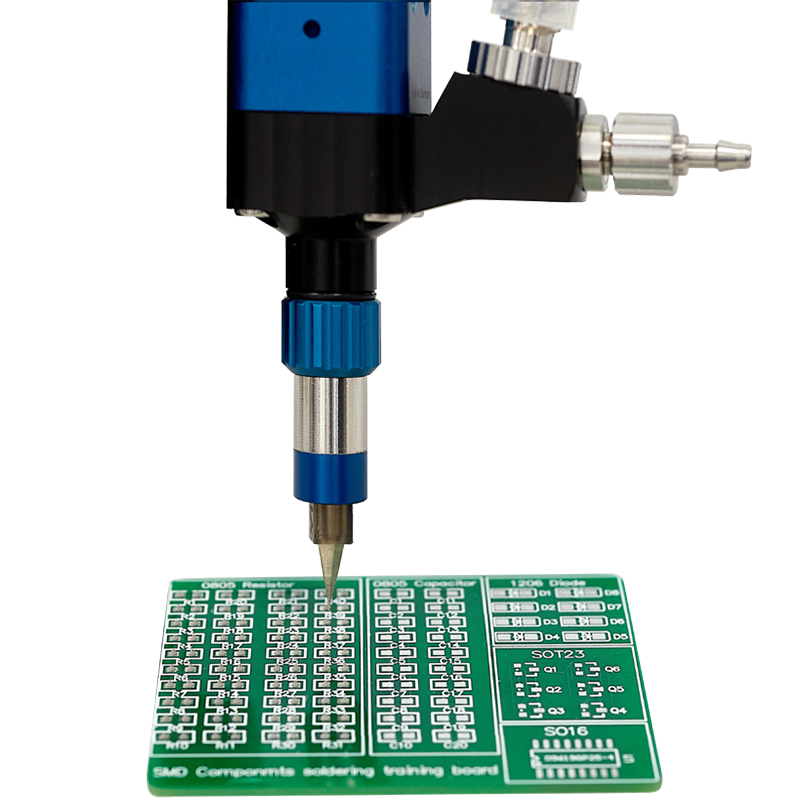
The most precise volumetric liquid dispenser now available
Designed specifically for small volume fluid or liquid dispensing applications, the eco-PEN XS 180 doses highly precise quantities of various materials in the nanolitre and microlitre ranges. The eco-PEN XS 180 is suitable for both line and dot dispensing, with bead widths starting from >0.1 mm, and an adjustable dispensing rate to suit the run […]
Read More
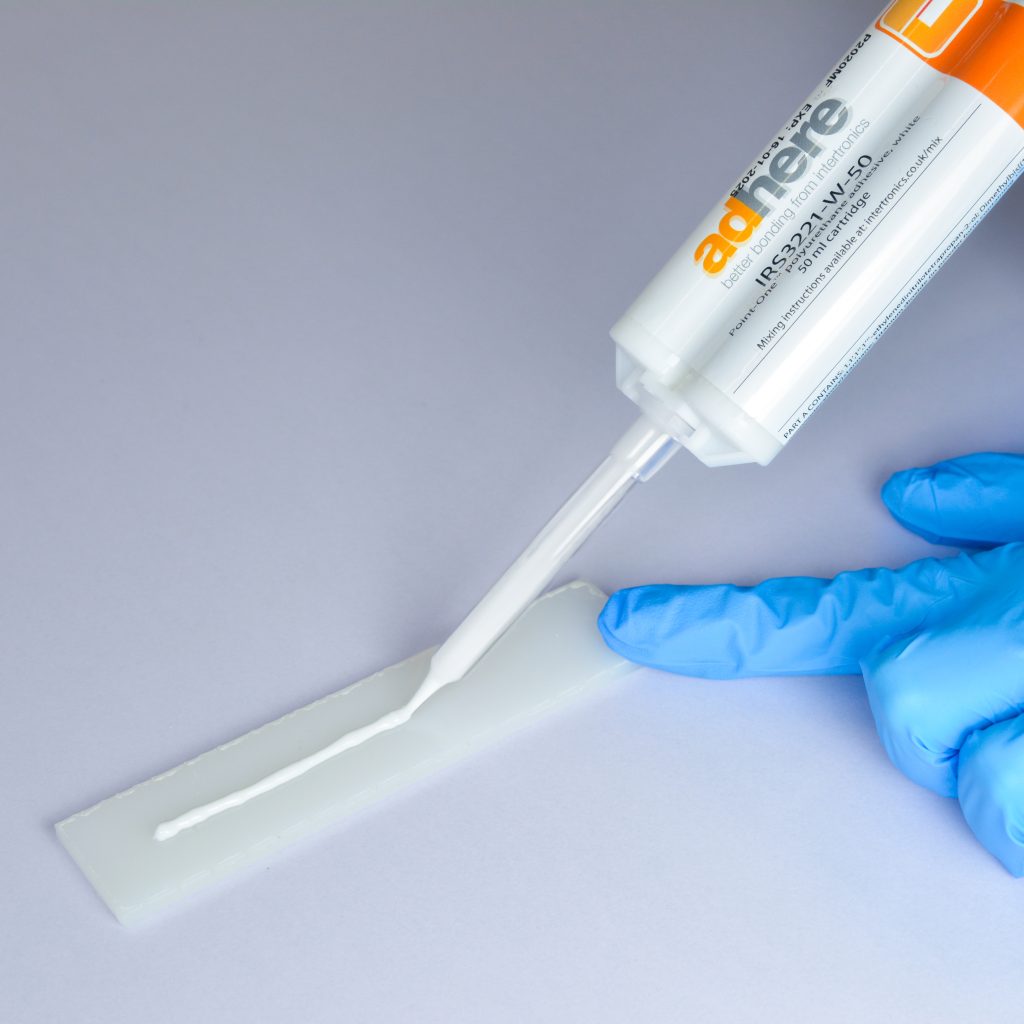
Intertronics academy: how to prepare two-part cartridges for dispensing
Many adhesives, sealants, and potting materials are packaged in two-part side-by-side cartridges, which are convenient for material application on the production line or in the field. Cartridges don’t require you to measure out materials in the correct ratio, and by adding the manufacturer’s recommended static mixing nozzle, fully mixed and homogeneous material can be dispensed […]
Read More
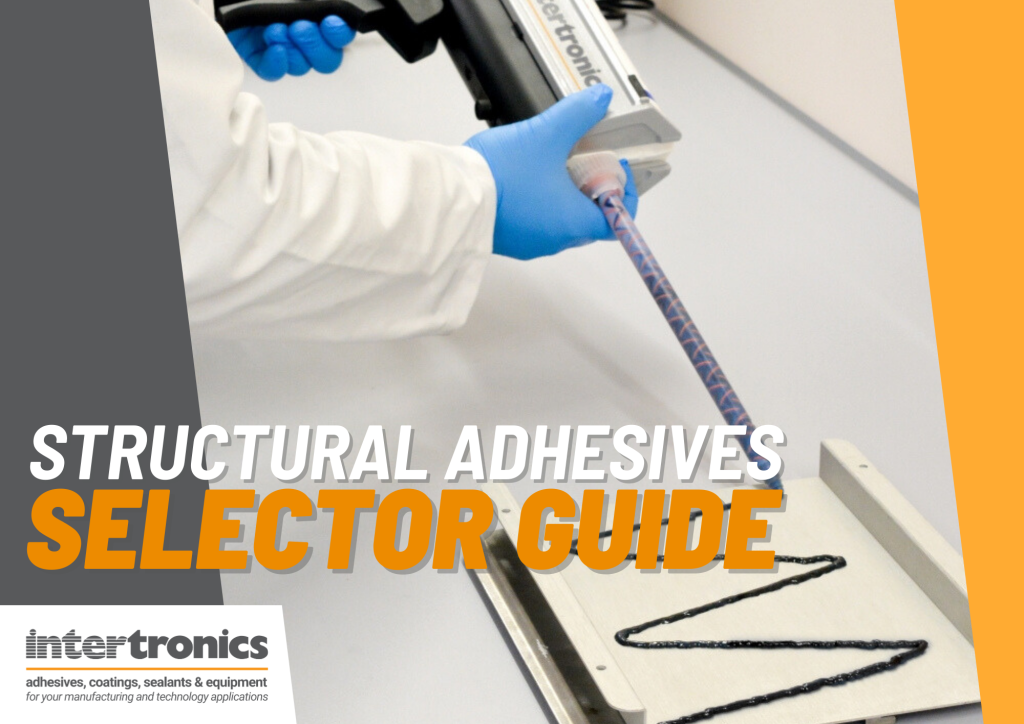
Structural adhesives selector guide now available
To help you find the right adhesive for your manufacturing application, we’ve launched a Structural Adhesive Selector Guide. The guide provides a full overview of five structural adhesive chemistries: methyl methacrylate (MMA), epoxy, polyurethane, UV curing, and cyanoacrylate. It covers 28 materials and their properties, curing considerations, compatibility considerations, and more. We have designed the […]
Read More
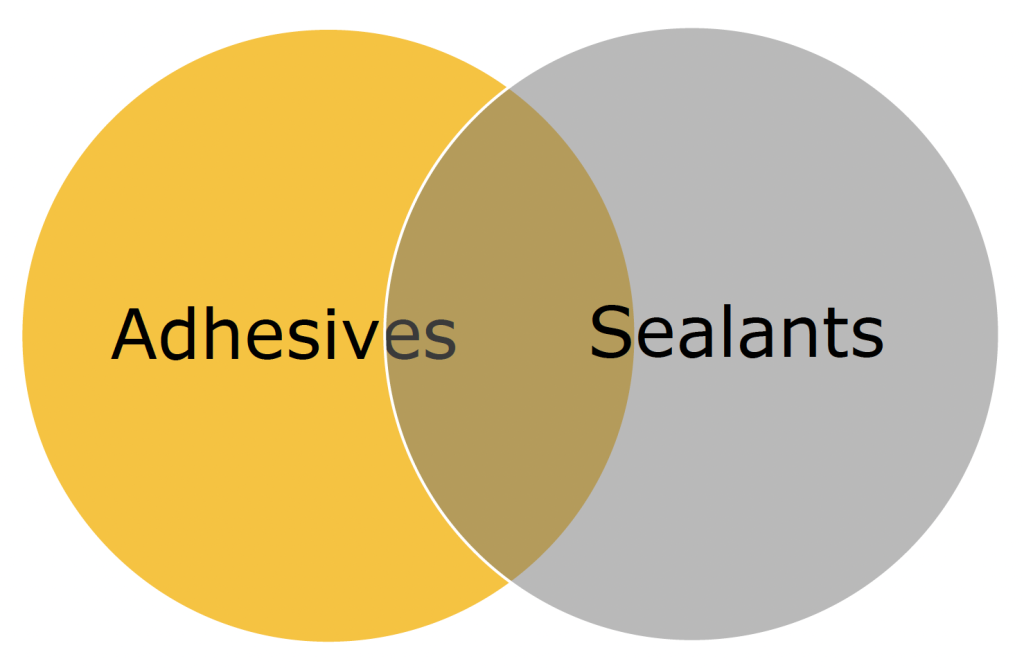
intertronics academy: what is the difference between an adhesive and a sealant?
Our customers often use adhesives and sealants in their products, in a wide variety of applications. They can be seen as quite similar materials, and indeed have overlapping uses. Some adhesives are also used as a sealant; some sealants are also used as an adhesive. We even sell products which are termed “adhesive sealants”. But […]
Read More
Order online at intertronics.shop
For those who find it easier or preferable to order online, we have launched an online shop. Developed in response to customer feedback, intertronics.shop enables you to purchase a select range of our adhesives and consumables online. The online shop sits alongside our traditional consultative sales process — the full Intertronics range remains available by […]
Read More

Happy New Year, supporting our local community
Welcome to 2024. We look forward to working with you this year. At this time of year, our thoughts turn to those less privileged than us. We like to donate to local, smaller charities where what we give can make an appreciable difference. This year, we have donated to High Sheriff Sally Scott’s charitable fund, […]
Read More

15 Years of Learning – Kevin Brownsill
Our Learning and Development Manager, Kevin Brownsill, recently celebrated his 15-year milestone at Intertronics. Over the years, Kevin has seamlessly navigated various sales and technical roles, accumulating a staggering level of knowledge of our adhesives and equipment, including a worryingly encyclopaedic memory of part numbers. To mark his 15 years with the company, Kevin, who […]
Read More
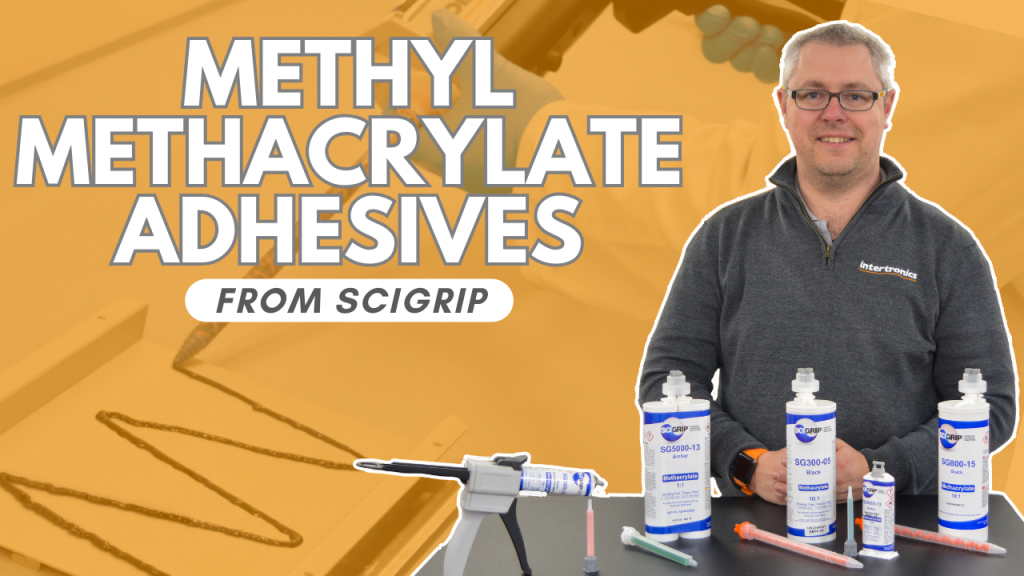
Video: form strong, durable bonds in minutes with SCIGRIP MMAs
We have a new video featuring our Head of Technical: Learning and Development, Kevin Brownsill. He talks about our new range of methyl methacrylate adhesives (MMAs) from SCIGRIP. Catch it here:
Read More

Supporting our local foodbank this Christmas
With almost 90% of foodbanks operating nationwide experiencing increased demand last Christmas amid the cost-of-living crisis, the Intertronics team spurred into action with our annual collection. Throughout the month of December, we encouraged staff and visitors to donate food, toiletries, festive treats, and other vital supplies. Our very own Jimmy meticulously organized, packaged, and delivered […]
Read More
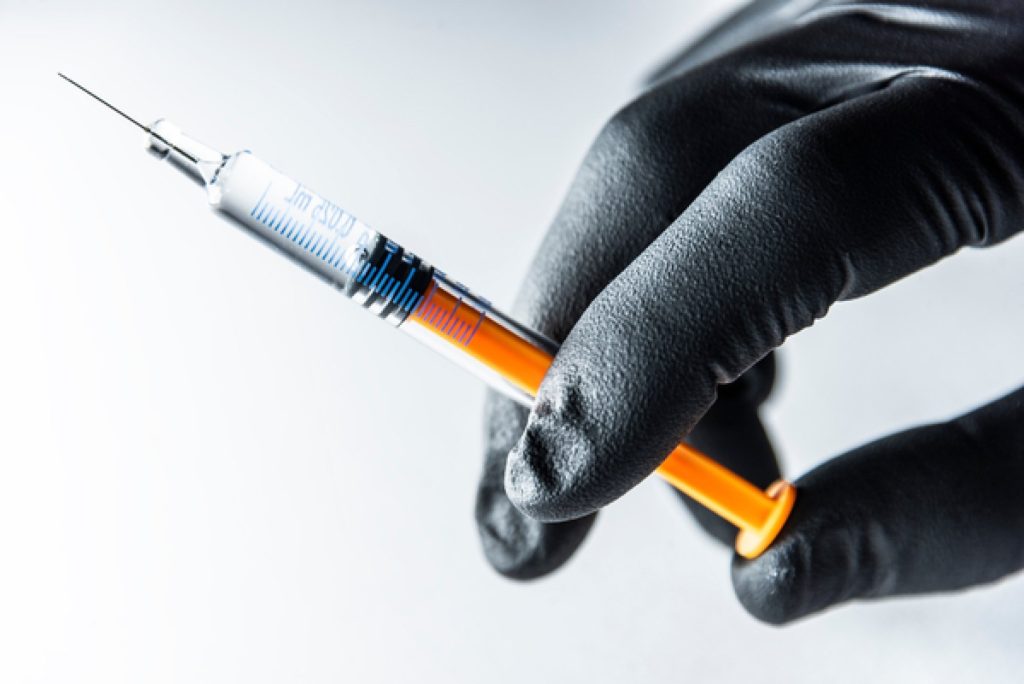
Very low extractables medical device adhesive withstands cleaning and sterilisation
Dymax 1045-M medical device adhesive was specifically formulated for the assembly of glass pre-fillable syringes, pen injectors, auto injectors, wearable injectors, and single-use devices. This very low extractables adhesive provides strong bonds that withstand the harsh cleaning and sterilisation processes pre-filled syringes undergo. Dymax 1045-M is also optimised to cure with LED UV light, providing […]
Read More
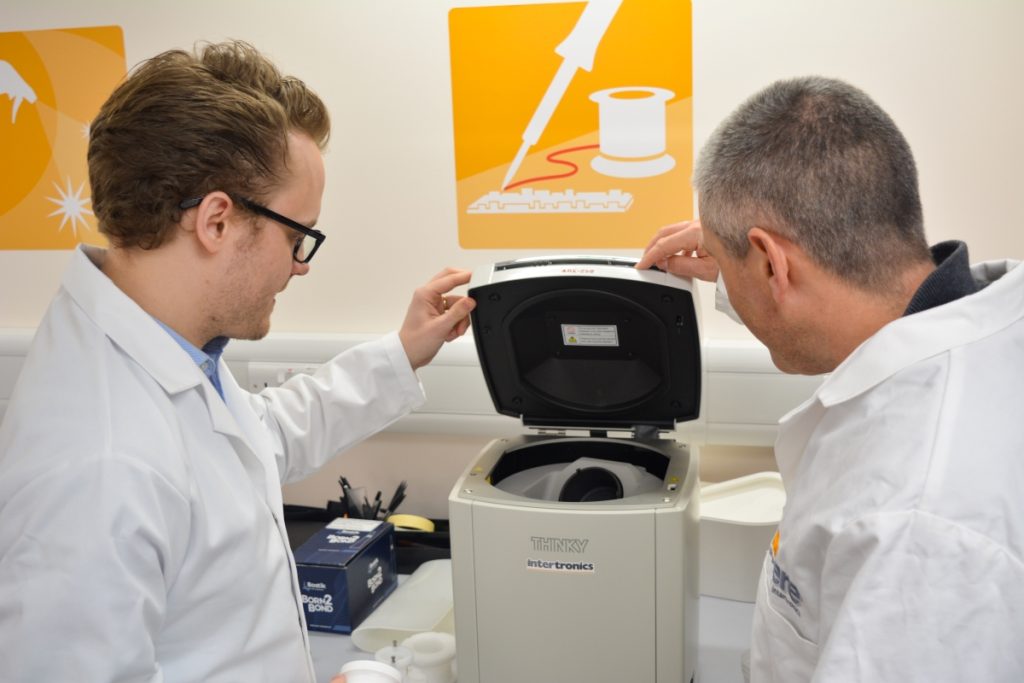
Accurate, repeatable mixers in scientific research
In the scientific community, particularly in universities, THINKY Mixers are becoming more prominent as a way to mix challenging liquids, pastes, and powders in research into nanotechnology, batteries, electronics, pharmaceuticals, and many more applications. A simple Google Patents search for “THINKY” demonstrates the huge number of technology and scientific breakthroughs that relied on the abilities […]
Read More
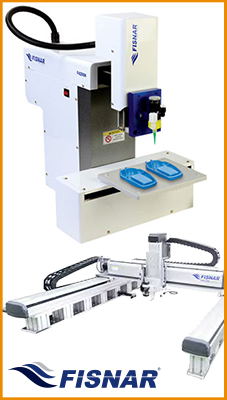
How big a dispensing robot do I need?
Robots are good for productivity, and if you’ve come to the conclusion that you can achieve a good return on investment through a robot purchase, you may find yourself wondering where to start with robot selection. We wrote a quick list of things to consider in our post How to specify a dispensing robot. Having […]
Read More
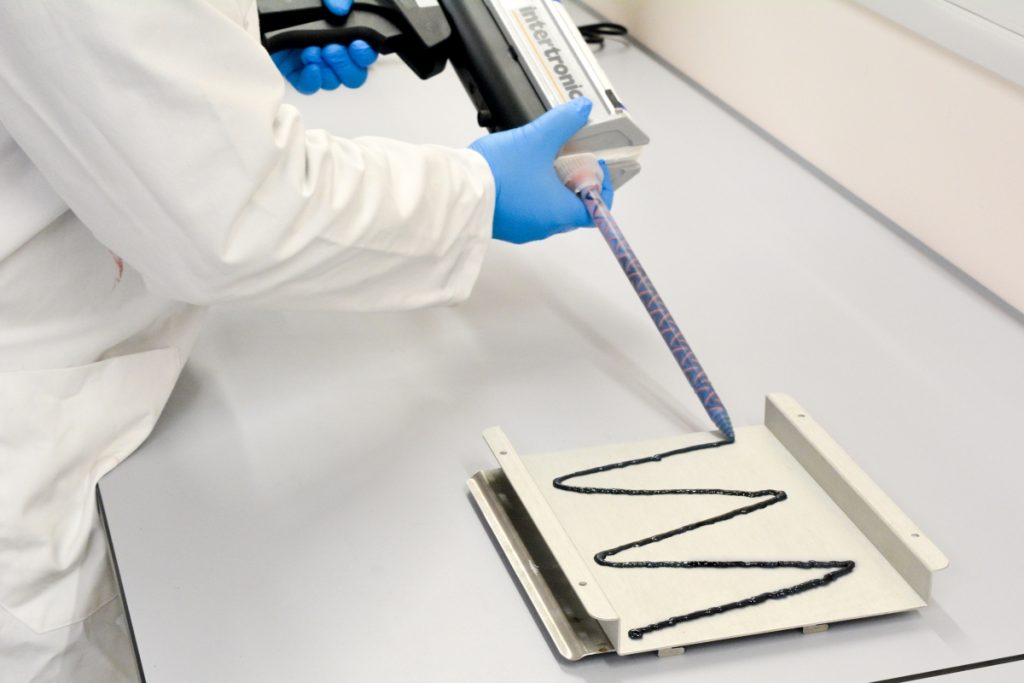
High temperature adhesive for metal bonding in automotive, rail and component manufacturing
SCIGRIP® SG800 High Temperature MMA Methyl Methacrylate Adhesive is a two component structural adhesive for bonding metals, as well as composites and plastics. Designed to withstand temperatures up to 150°C over prolonged periods, SCIGRIP SG800 is suitable for applications like under the bonnet engine bay component assembly and metal bonding prior to paint baking cycles. It displays good strength […]
Read More

Fluorescence in adhesives and coatings
I saw a newsletter article which said that fluorescent animals are much more common than previously thought. Researchers who studied 125 mammal species, including cats, bats, polar bears and wombats (pictured), found that all of them showed some form of fluorescence, and that 86% had fur which actually glowed under UV light. This picture is […]
Read More
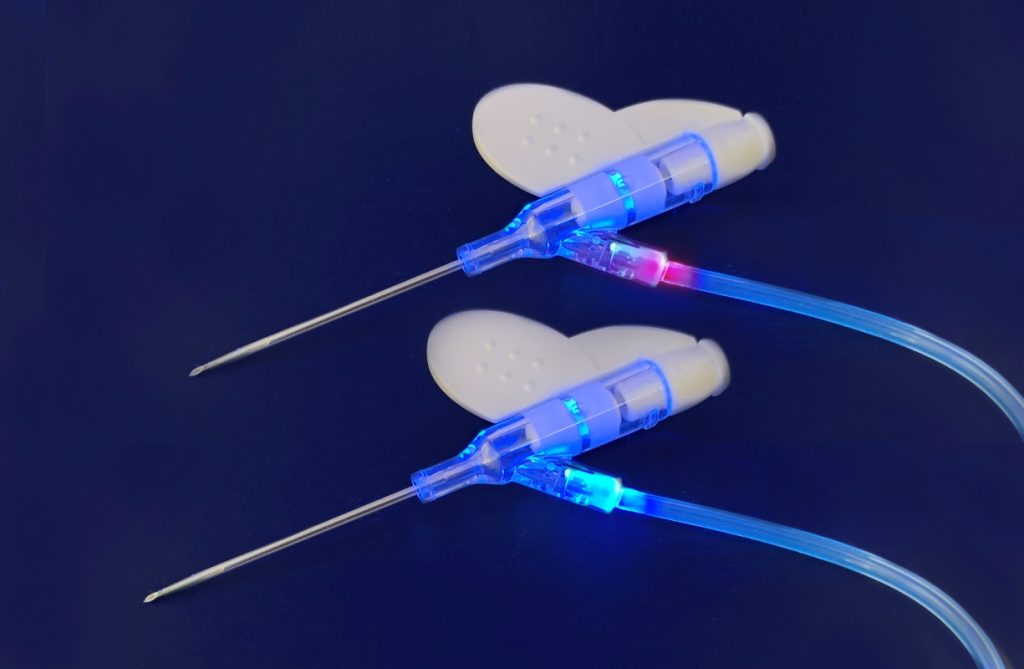
Bonding specialist medical device plastics
Medical device manufacturers are increasingly turning to specialist plastics formulated to resist harsh chemicals and survive environmental end use conditions such as sterilisation. However, the properties that allow these materials to withstand such conditions can also make them difficult to bond with adhesives. Here Kevin Brownsill, our Head of Technical: Learning and Development, shares guidance […]
Read More
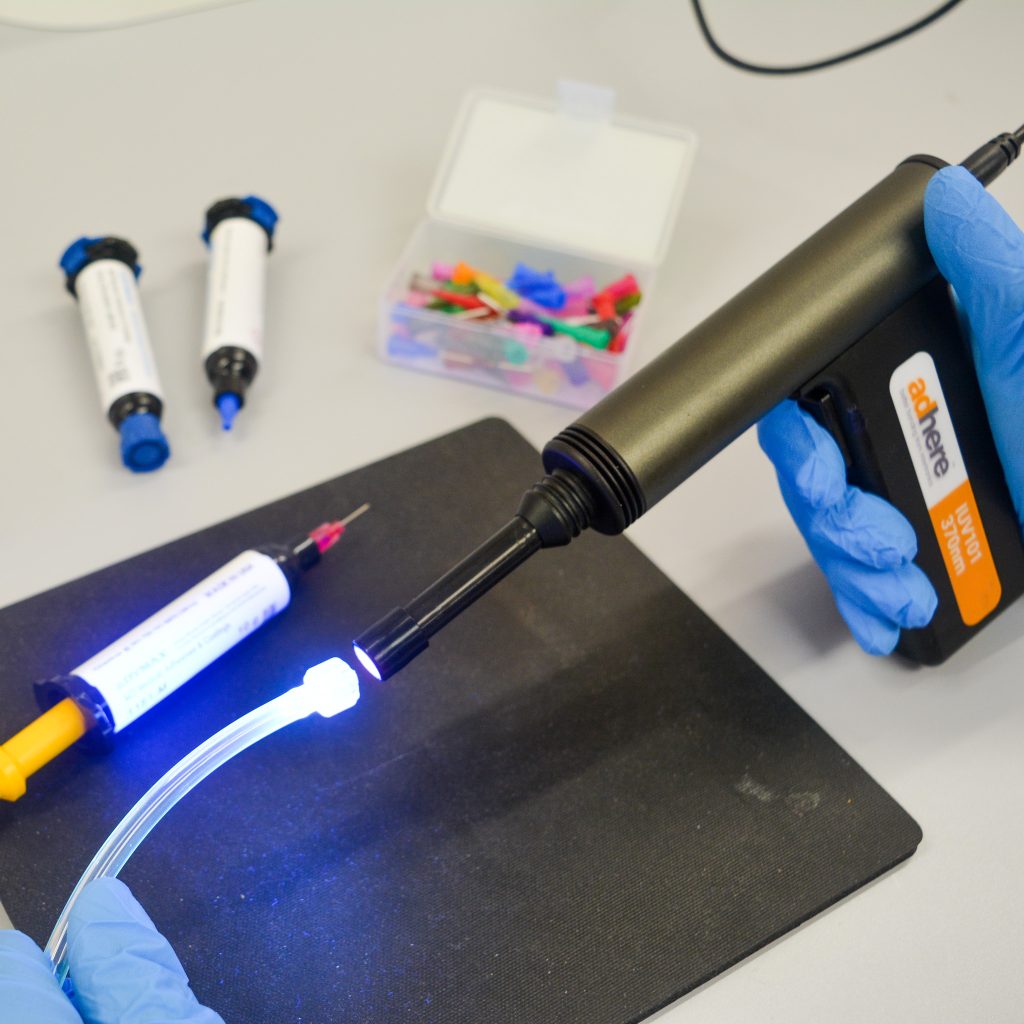
LED UV adhesive evaluation kit for medical device assembly
The IUV101 Medical Kit contains everything a manufacturer needs to start working with UV curing adhesive technology for medical device bonding, including three widely used adhesives in 10 ml syringes, alongside the IUV101 LED UV Spot Lamp for Handheld UV Light Curing. This device has a powerful 2,000 mW/cm2 light intensity, which users can focus on […]
Read More
Intertronics becomes UK distributor of Scigrip MMA adhesives
We’ve partnered with SCIGRIP to distribute its methyl methacrylate adhesives (MMAs) in the UK. MMAs are fast curing, two-part structural adhesives that cure on mix at room temperature to form resilient bonds. They are ideal for structural bonding of metals, plastics, and composites in industries like marine, transportation, rail, automotive, and many others. MMA technology […]
Read More
How will the new REACH diisocyanate regulations impact manufacturers using polyurethane adhesives?
Polyurethanes are polymers composed of organic units joined by urethane links. They are used to make rigid and flexible foams, and also used to make varnishes and coatings, adhesives, potting compounds, and fibres. Their most common application is in foams, which makes up around two thirds of all polyurethane use. Globally, 6% of polyurethane use […]
Read More
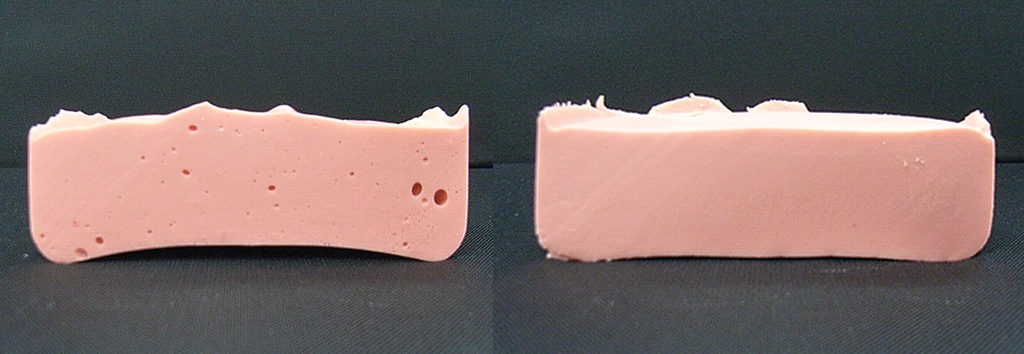
Avoiding voids in aerospace potting applications
Formulators of potting materials for aerospace electronics applications are careful not to supply products with entrapped air. Consequently, entrapped air is usually a processing issue which can compromise thermal conductivity and heat dissipation, or the electrical insulation properties. Voids and delamination can also provide pathways for moisture and other contaminates, weaking the physical structure. If […]
Read More
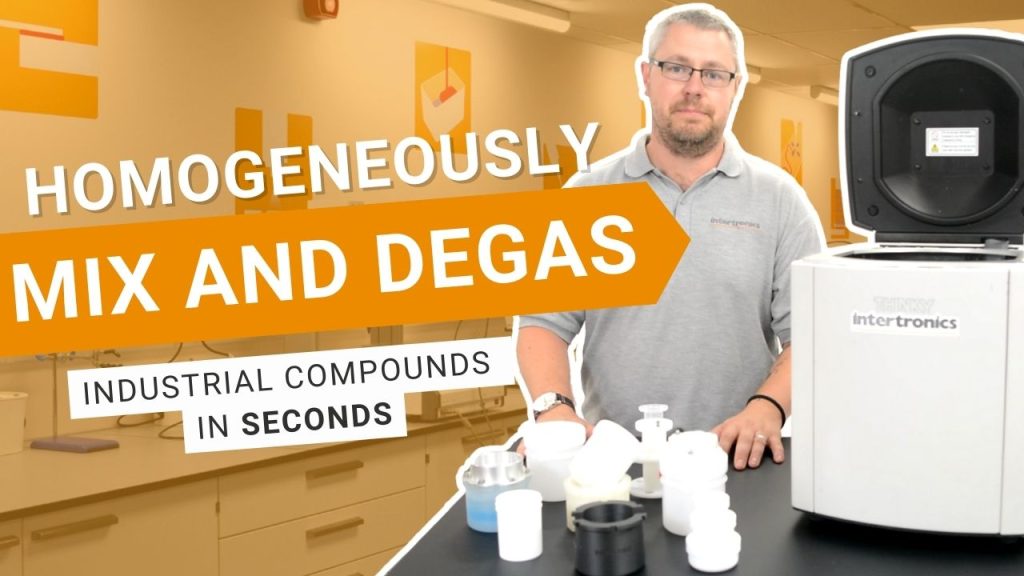
Preparation of advanced coatings on cathode materials using Thinky mixers
A shout out to Ed Harrison, a student at University of Birmingham. In the summer of 2022, the Faraday Undergraduate Summer Experience (FUSE) internship programme provided internships for undergraduate students to undertake paid eight-week placements with battery researchers from partner universities, and Ed was a part of this programme. His poster on Making and Testing […]
Read More
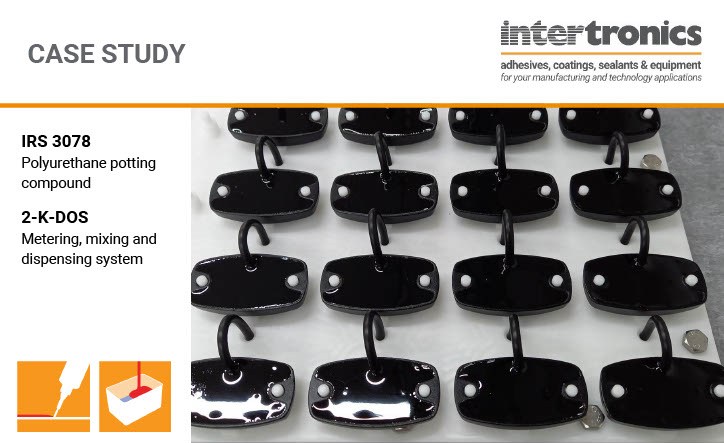
Case study: protecting rugged, outdoor work lights from the elements
Venta Global is a tier one supplier of lighting solutions to vehicle and machinery manufacturers, offering a complete service from custom design to delivery. It has made significant investment into new technology for its UK production facility in Hampshire that deskills processes to enable consistent and reliable results, removes inconsistencies due to operator variance, and […]
Read More
Three worked examples of potting PCB assemblies
Potting is a common method to protect PCB assemblies, which involves filling an enclosure with a liquid material to protect the board and its electrical components. Depending on your application’s needs, there are a wide range of potting compounds available in a variety of formulations, including low density/lightweight, flame retardant, flexible, optically clear, and thermally […]
Read More
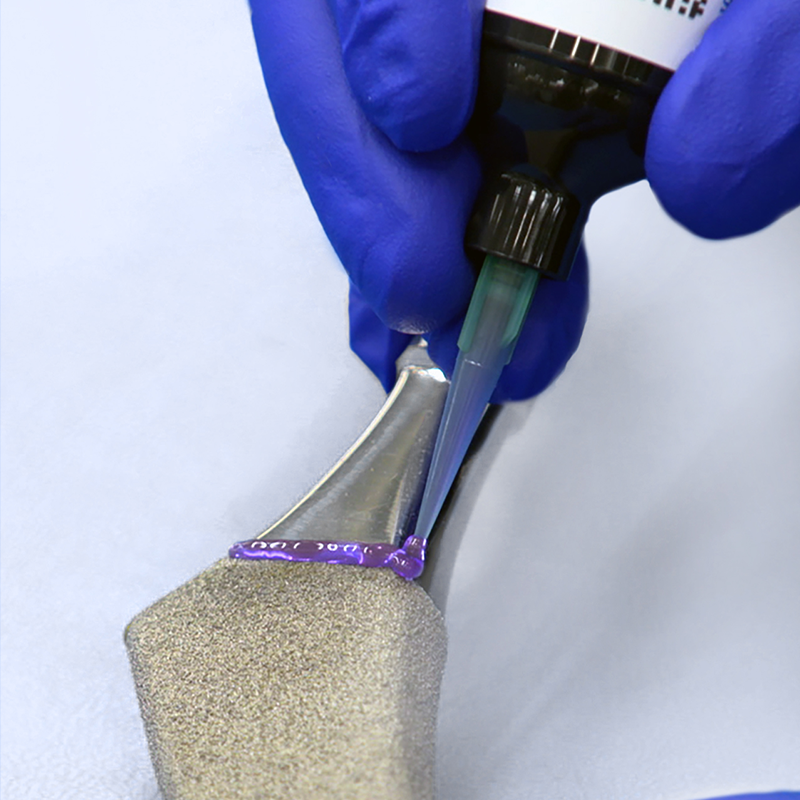
Masking orthopaedic implants effectively
Approximately 200,000 people receive hip or knee replacements in England and Wales every year, and these are typically highly effective. Research from the University of Bristol found that eight out of ten knee implants and six out of ten hip replacements last up to 25 years. To ensure long term success, orthopaedic implants must be […]
Read More
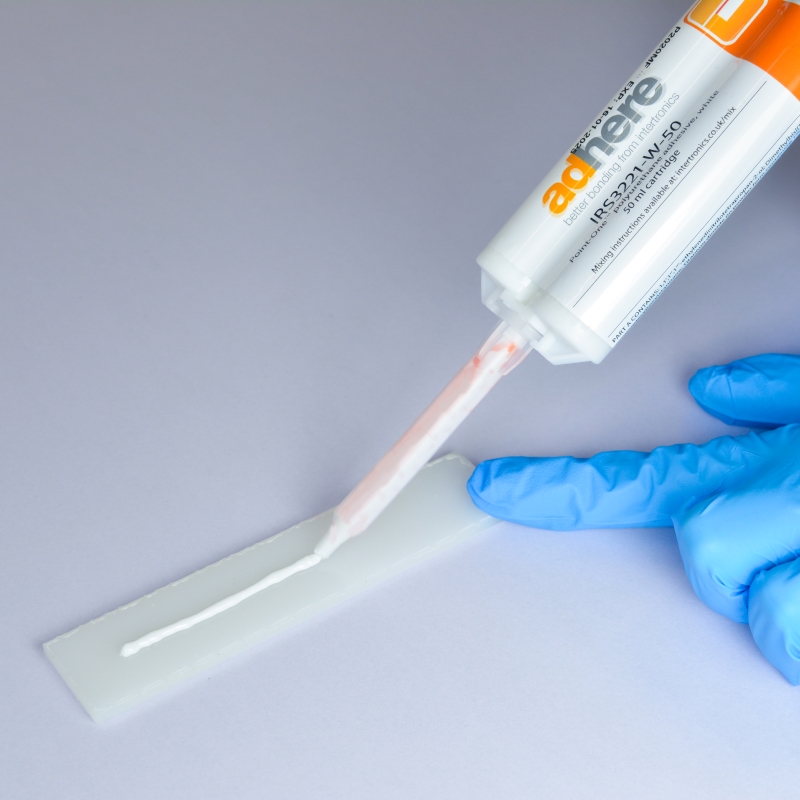
Point-One™ polyurethane adhesives do not require REACH training
The upcoming REACH training and certification requirements for users of diisocyanates are looming ever closer, impacting your use of many polyurethane adhesives in industrial applications. If you haven’t heard about this, read more here. Point-One Structural Polyurethane Adhesives are fast-curing two-part adhesives that form strong, durable bonds in as little as 10 minutes. They are […]
Read More
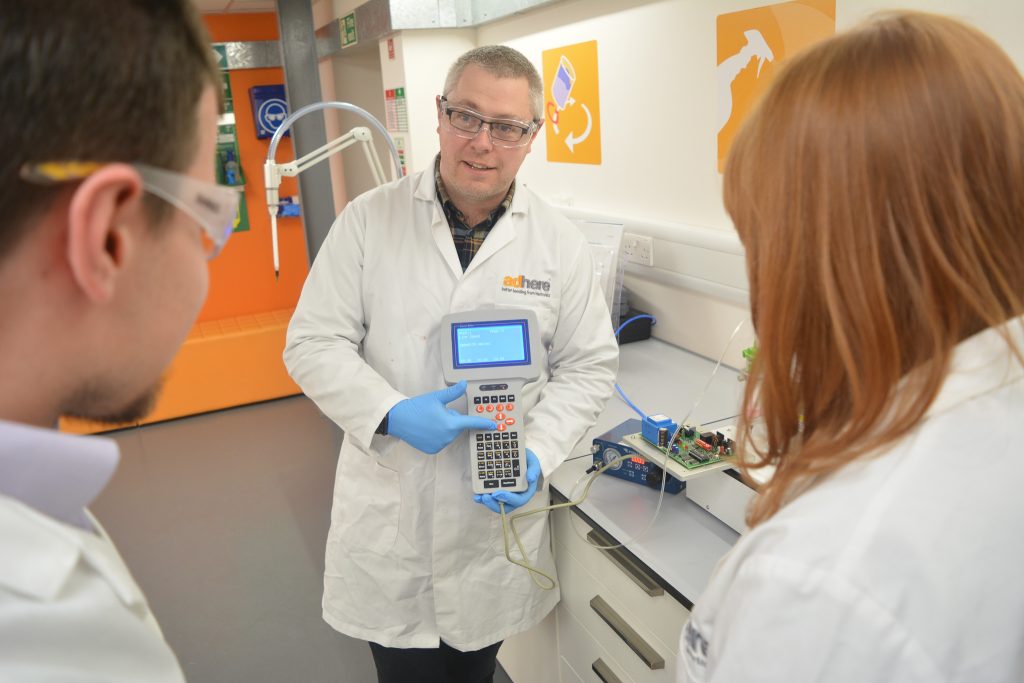
Intertronics academy: adhesive and dispensing technology seminars for you
Having spent more than 30 years working with adhesives and protective materials in technology manufacturing, and with experience of thousands of applications, we have a wealth of knowledge to we want to share. In a bid to help grow your adhesives, dispensing, and curing technology knowledge, we are offering seminars which share our insights, helping […]
Read More
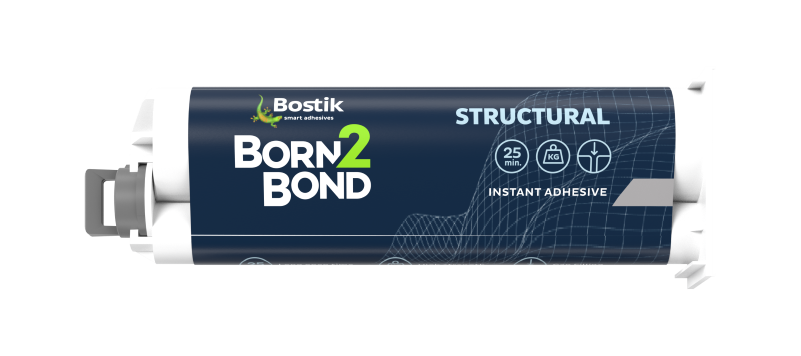
Best cyanoacrylate adhesive for structural bonding
Cyanoacrylate adhesives (CAs) have not traditionally been seen as structural adhesives or “load-bearing” adhesives – in general, their lower performance in terms of moisture and operating temperature resistance will preclude them from many technology applications. But advances in chemistry are improving the functionality and so the versatility of CAs. If you’re seeking an adhesive for […]
Read More
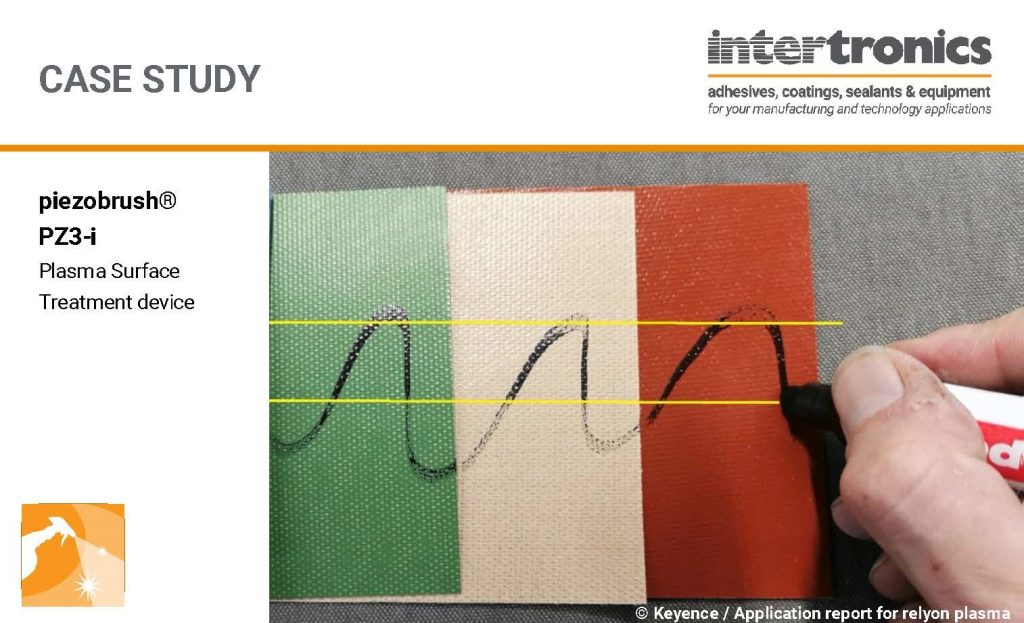
Case study: achieving reliable printing onto PTFE with plasma pre-treatment
Due to PTFE’s extremely low surface energy, it is difficult for materials to wet, and almost no materials or adhesives readily adhere to it. The commonly known brand name of PTFE-based composition is Teflon – yes, the non-stick stuff. However, plasma can be applied to alter the chemical groups on the surface, increase wettability and […]
Read More
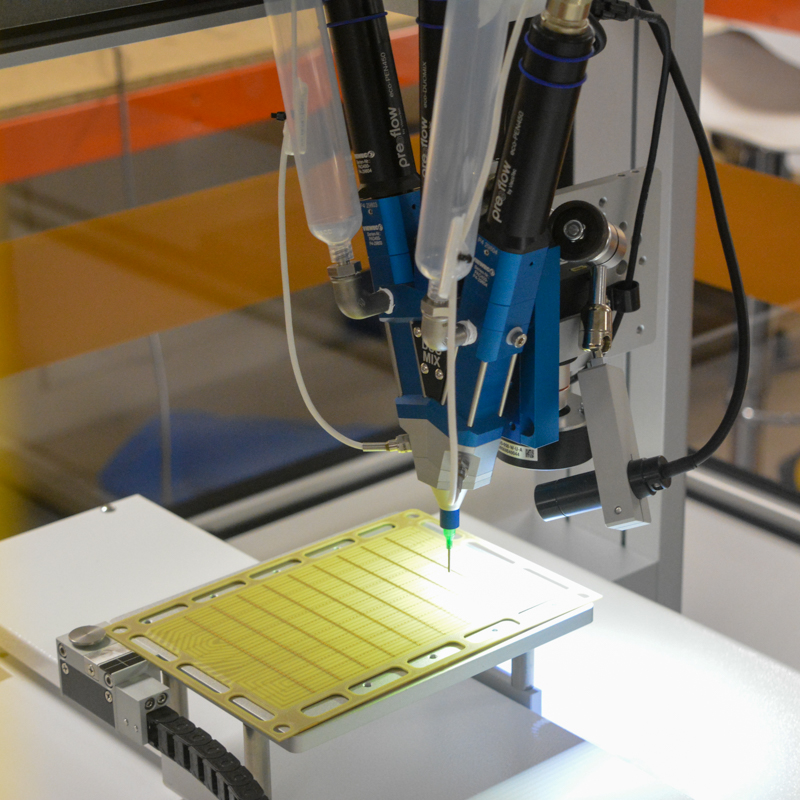
Dispensing robots: what’s the risk?
Robots: the opportunities… or the risks? The application of adhesives, potting compounds, encapsulants or other liquids, fluids or pastes, is something that can often be readily automated with a dispensing robot. Manufacturers that are still performing these processes manually may be concerned about the potential risks of transforming their processes with automation. On the other […]
Read More
New legislation on the use of polyurethane adhesives and potting compounds
As of 24 August 2023, training is required for all professional and industrial users of polyurethane adhesives & sealant products with a total monomeric diisocyanate concentration of > 0.1%. New legislation on the use of polyurethane adhesives and potting compounds Following a review by the European Parliament, the REACH Restriction on aliphatic and aromatic diisocyanates (HDI, MDI, […]
Read More
Busting 10 misconceptions about robotic dispensing
The benefits of robotics are compelling to many manufacturers: improved productivity, efficiency, output, quality, and flexibility. They can also improve health and safety for employees and job satisfaction. The International Federation of Robotics World Robot Report in 2021 found that the UK has a robot density of 101 robots per 10,000 employees, far below the […]
Read More
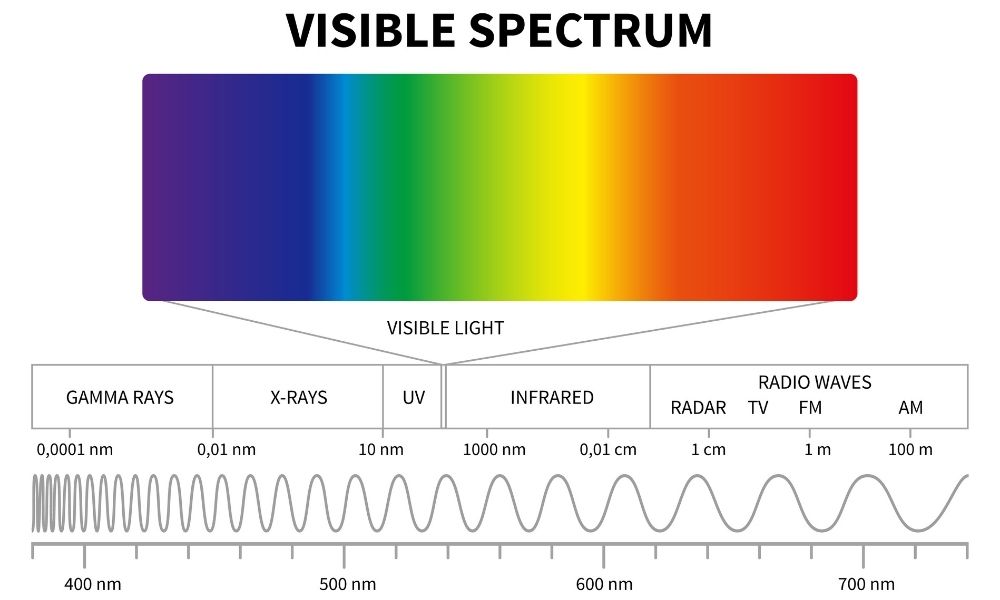
Intertronics academy: can you see UV light?
UV or ultraviolet light is part of the spectrum of electromagnetic radiation, which also includes radio waves, microwaves, infrared radiation, X-rays, gamma rays – and of course, visible light. These different types of radiation are defined by their wavelengths or frequencies. Radio waves have the longest wavelengths, and gamma rays the shortest. By definition, what […]
Read More
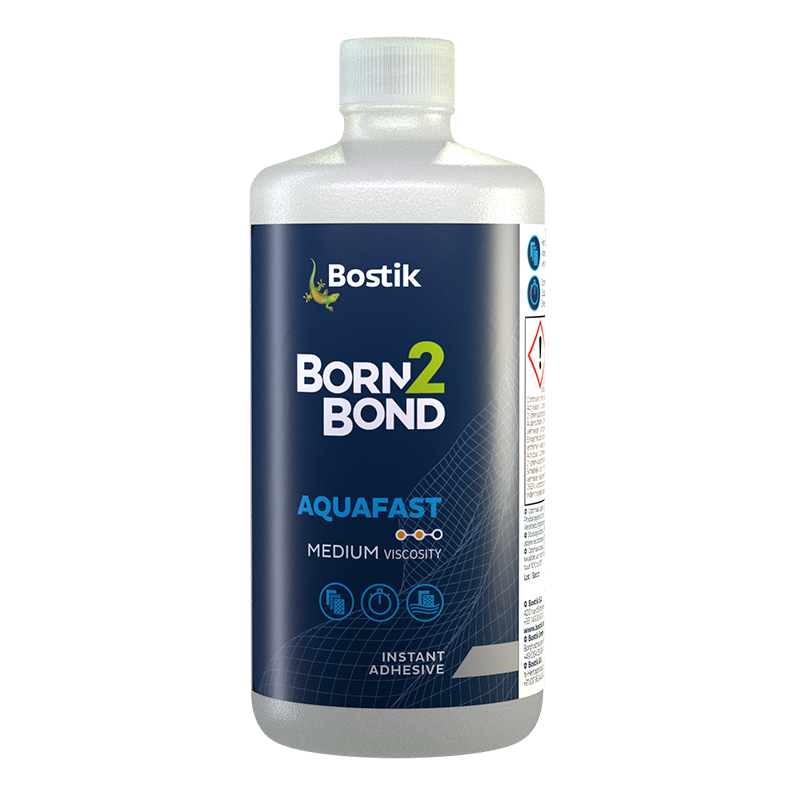
Moisture-resistant cyanoacrylate adhesive increases application potential
Cyanoacrylate adhesives (CAs) are often dismissed when it comes to applications with moisture exposure, let alone involve full submersion. That was until our partners, Born2Bond, developed a new single-part, “instant” adhesive specifically suited for environments with high humidity. Born2Bond Aquafast is a low odour, low bloom, medium-viscosity CA that offers excellent adhesion to a variety […]
Read More
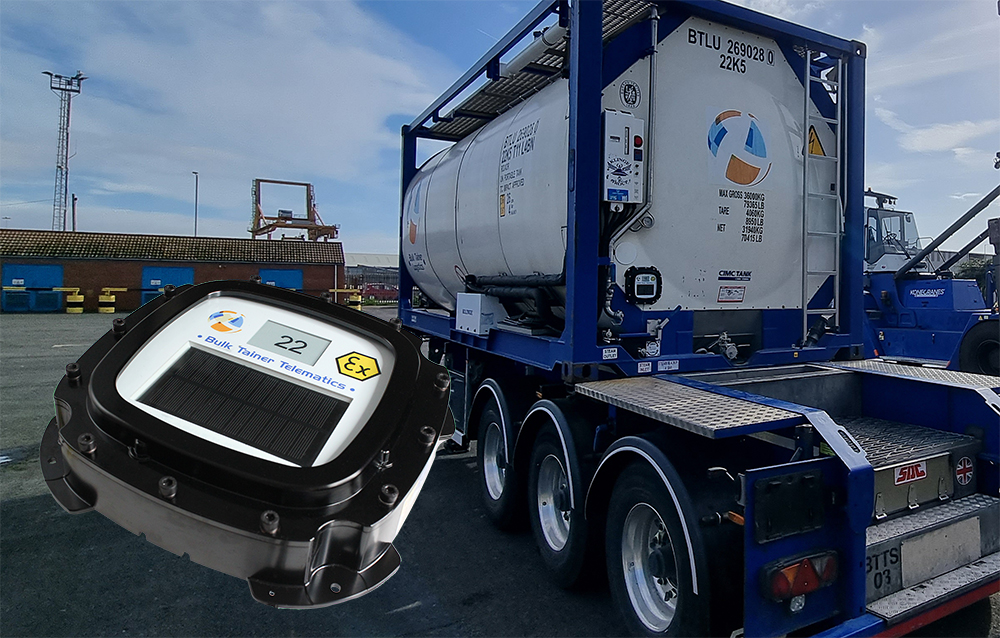
Case study: potting a bespoke telematics system
Bulk Tainer Logistics provides bespoke transport services for the shipment of bulk liquid products globally, operating a fleet of 12,000 chemical, feed, and food grade tank containers. To optimise the performance of its fleet, the company wanted to fit its tanks with smart monitoring devices that tracked the movement of the tanks and the condition […]
Read More
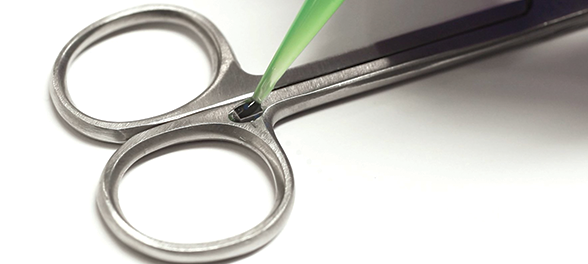
RFID tracking on surgical instruments
British surgeons are getting rather slapdash, according to The Knowledge. The number of “foreign objects” left inside patients after operations hit a record 291 in the year from 2021 to 2022, up from 156 two decades earlier. Swabs and gauzes are the most common items sewn up in patients, but scalpels and drill bits have […]
Read More
Achieving meaningful ROI with robotics
The benefits of robotics are compelling; improved productivity, efficiency, output, quality, and flexibility. In addition to their production benefits, they can also improve health and safety and job satisfaction for employees. However, the International Federation of Robotics (IFR) World Robot Report in 2021 found that the UK has a robot density of 101 robots per […]
Read More
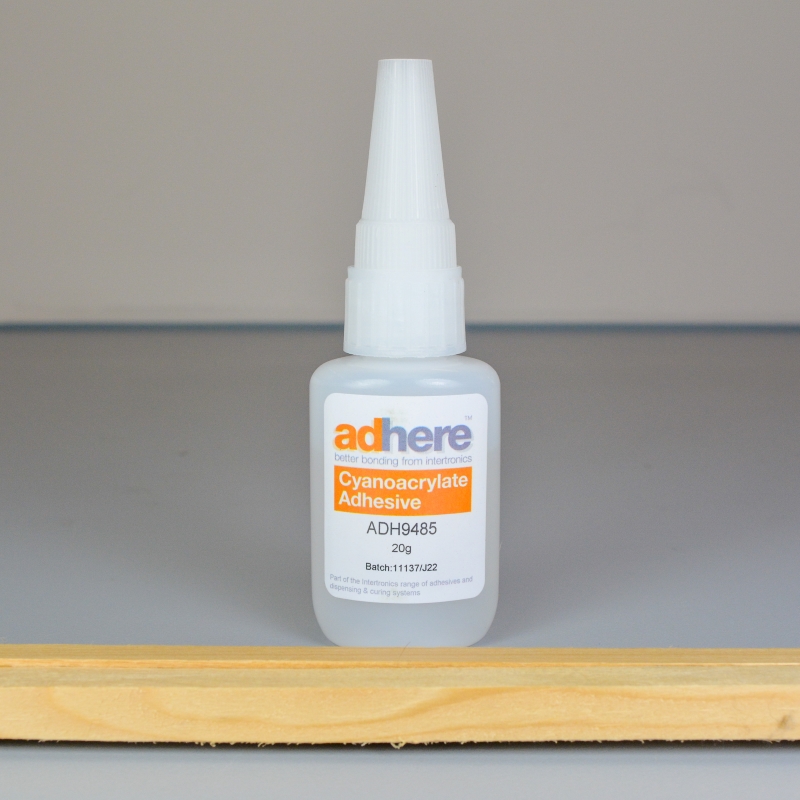
Best cyanoacrylate adhesive for wood, leather, cork or paper
Cyanoacrylate adhesives (CAs) contain an acidic inhibitor which prevents them from curing in the bottle, instead allowing the adhesive to cure upon exposure to low-level surface moisture or alkalinity (see our Adhesive Problem? What’s the Cure? download for more information). With acidic substrates, this cure mechanism can be compromised. If you are working with a […]
Read More
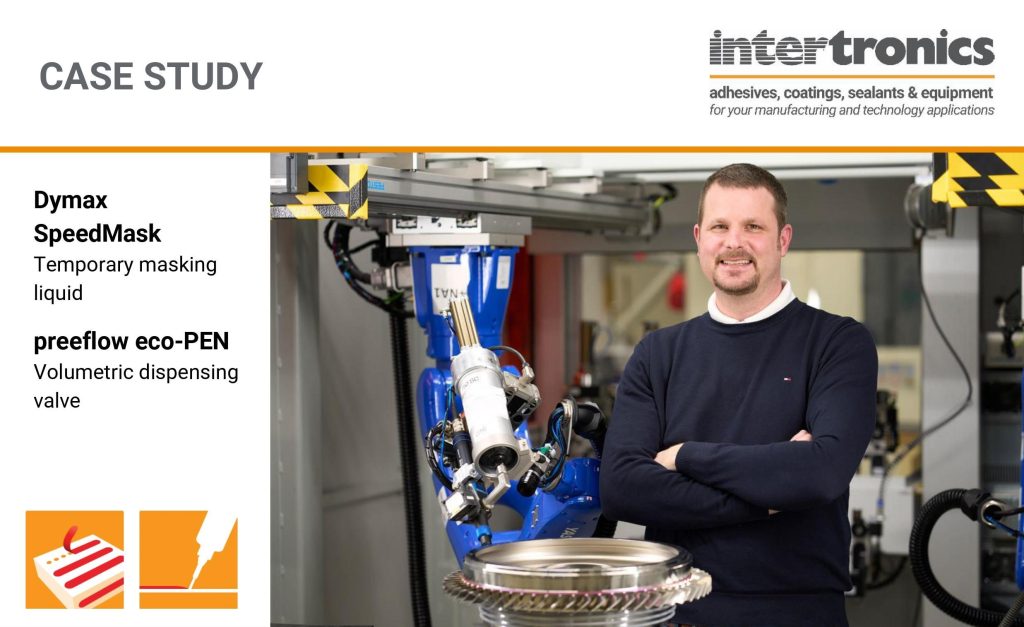
Case study: SpeedMask – application time reduced from 4 hours to 14 minutes
The masking process at MTU Aero Engines, a leading German manufacturer of military and civil aircraft engines, used to involve tapes, silicone rings, masks and metal covers all manually fitted and applied by operators. So when production planner Thomas Kaltenecker discovered and implemented Dymax SpeedMask, a UV-curing temporary masking liquid, alongside an automated dispensing and […]
Read More
Let’s get started by talking about your application
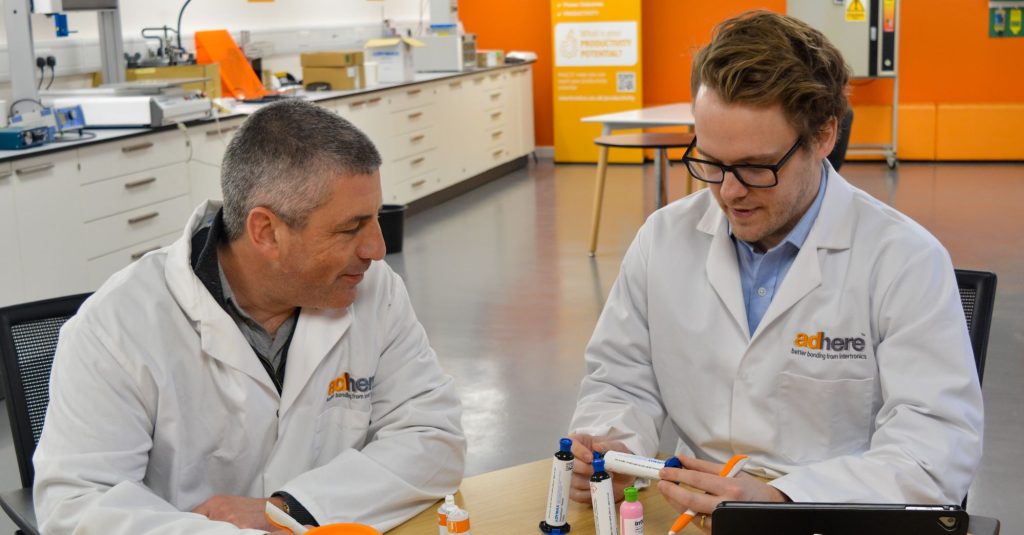
Let’s get started by talking about your application. This is a phrase you’ll see a lot around here, and it sums up our whole approach. We consider ourselves to be your adhesive-savvy team members, and we want to get stuck in to helping you create a product that you’re proud of, both in terms of […]
Read More
Best cyanoacrylate adhesive for shallow potting, encapsulation and bridge bonding
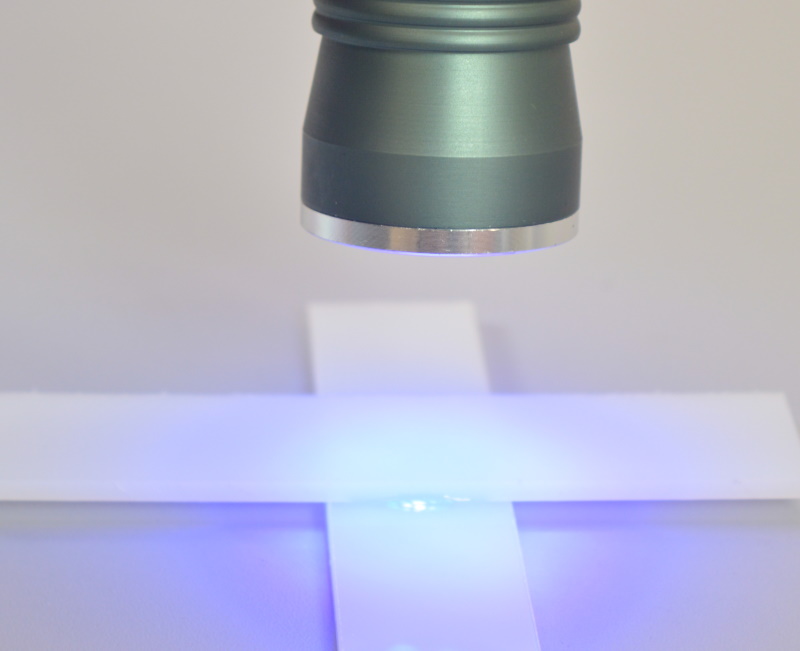
In applications where the adhesive is at least partly exposed (not completely interfacial), Born2Bond Light Lock is worth evaluating. It is a hybrid cyanoacrylate adhesive that reacts to UV light to cure, making it a solid choice for bondline squeeze-out, electronics encapsulation or shallow potting, and bridge bonding applications like wire tacking. Light Lock doesn’t […]
Read More
UV curing intensity – check your distance
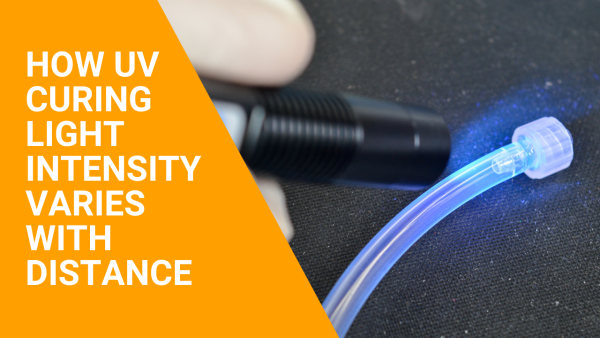
A fundamental element of achieving the correct dose of UV light is ensuring the intensity of your UV curing lamp is understood. UV curing intensity as noted on a lamp’s data sheet is typically measured from a particular distance, so if your lamp is not set up to the same distance as the data sheet […]
Read More

We’re JOSCAR accredited
We are pleased to be accredited and on the JOSCAR supplier register, offering our customers in the aerospace, defence and security industries the confidence of knowing that we meet their high standards of supplier conformance. Using JOSCAR can determine if a supplier is “fit for business”. JOSCAR (Joint Supply Chain Accreditation Registrar) is a collaborative […]
Read More
Best cyanoacrylate adhesive for moist environments
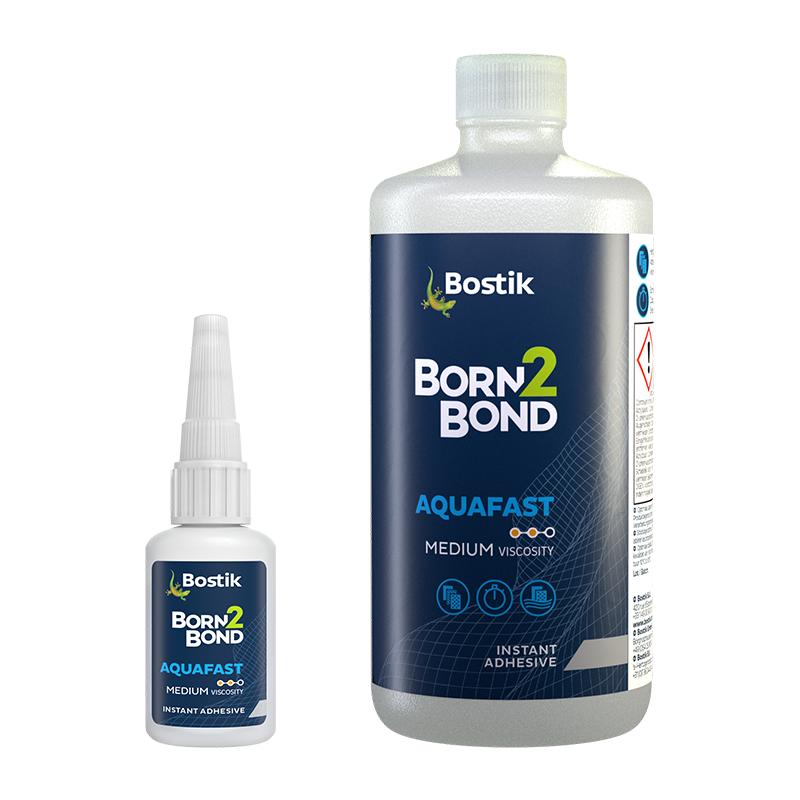
Cyanoacrylate adhesives typically perform poorly in high humidity or wet conditions, but there are exceptions to this rule. If your finished product will be exposed to a moist environment, we recommend trying Born2Bond Aquafast cyanoacrylate adhesive. It offers the standard benefits of cyanoacrylates – quick cure speed, adhesion to a broad variety of substrates, and […]
Read More
25 top tips for optimally dispensing your materials
If your process involves dispensing materials like adhesives, inks, coatings, sealants, lacquers, paint, lubricants, or anything similar, our 25 Top Tips for Dispensing is worth a read – a collection of handy tips covering many dispensing applications which can help you fine-tune what you’re doing for optimal results. Covering dispensing pressures to types of dispensing […]
Read More
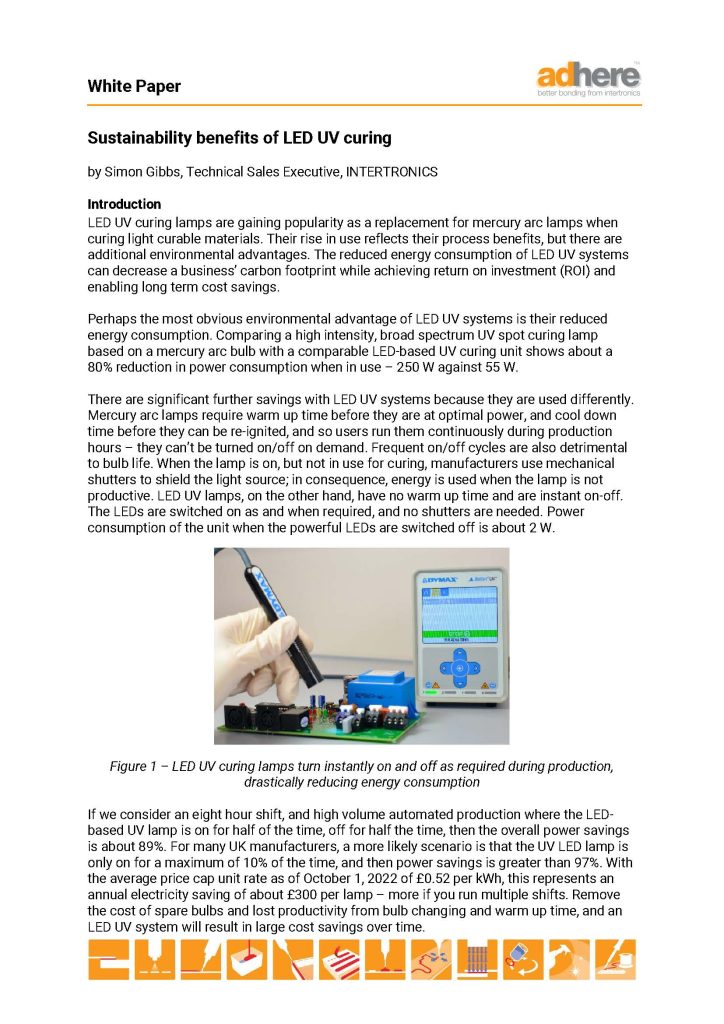
White Paper: Sustainability benefits of LED UV curing
LED UV curing lamps are swiftly gaining popularity as a replacement for mercury arc lamps. Their rise in use reflects their process benefits, such as instant on/off and consistent intensity for thousands of hours. In addition to these, there are environmental advantages at play, such as reduced energy consumption, decreasing a business’ carbon footprint, and […]
Read More
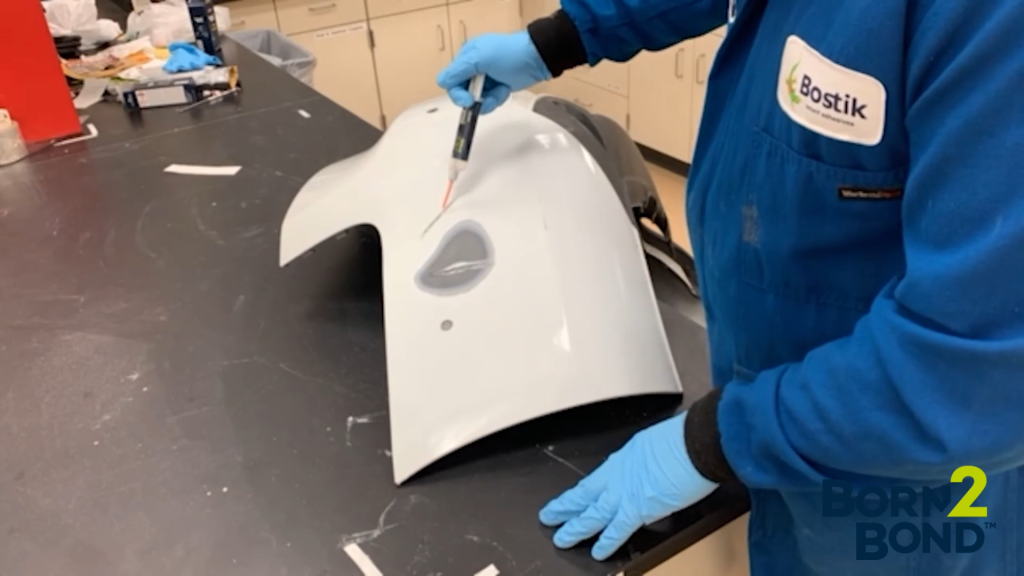
Best cyanoacrylate adhesive for gap filling
Cyanoacrylate adhesives (CAs) are renown for being thin, watery liquids. That is their nature. This doesn’t help when your bondline is wider than ideal, or varies into larger gaps. In these cases, you will want a CA which has an unusually higher, thicker viscosity – and these do exist. CAs are now available in a […]
Read More
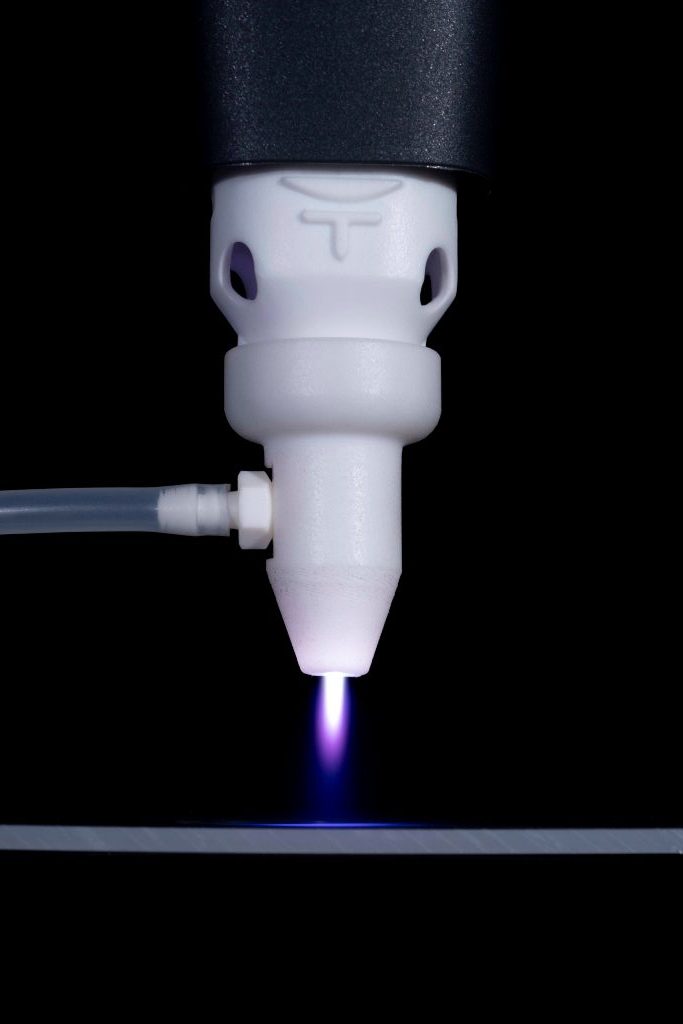
New plasma surface treatment module attachments expand applications
The most hard-to-bond substrates and awkward areas are now treatable with low temperature, plasma surface treatment. Two new modules, released by Relyon Plasma for their popular PiezoBrush PZ3 and PiezoBrush PZ3-i plasma systems, expand the applications which can benefit from activating, functionalising, and cleaning to increase wetting and improve adhesion. Needle Nozzle Cleaning and […]
Read More
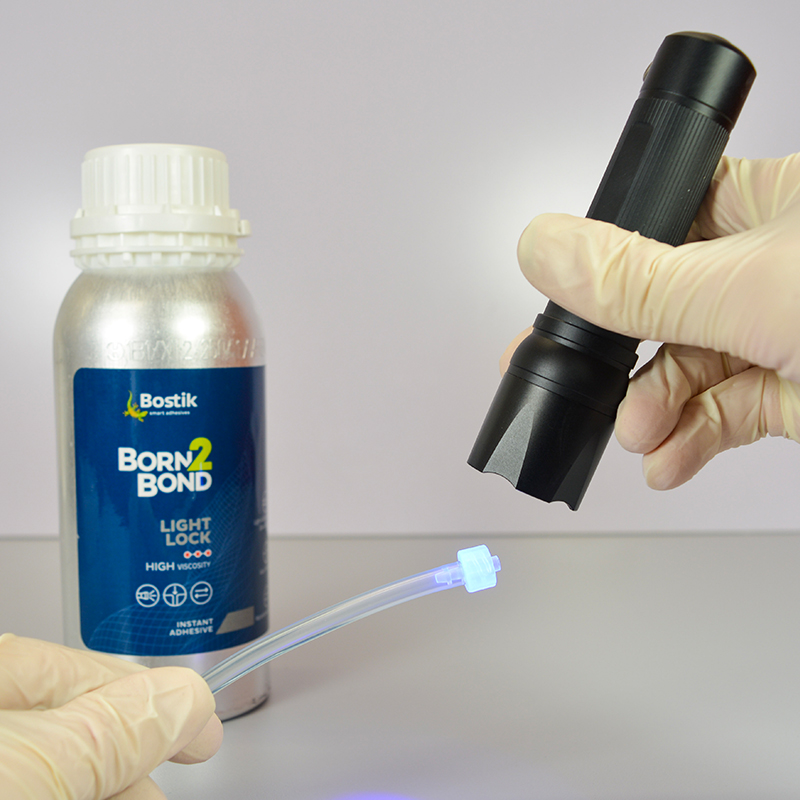
Best cyanoacrylate adhesive for medical device assembly
For a medical device assembly adhesive which also provides the benefits of cyanoacrylate adhesive technology (e.g. single part, fast cure), we recommend you look at Born2Bond Light Lock. Light Lock passes ISO 10993 testing and is also a UV hybrid cyanoacrylate. The UV light curing aspect of Light Lock is useful for a bondline which […]
Read More
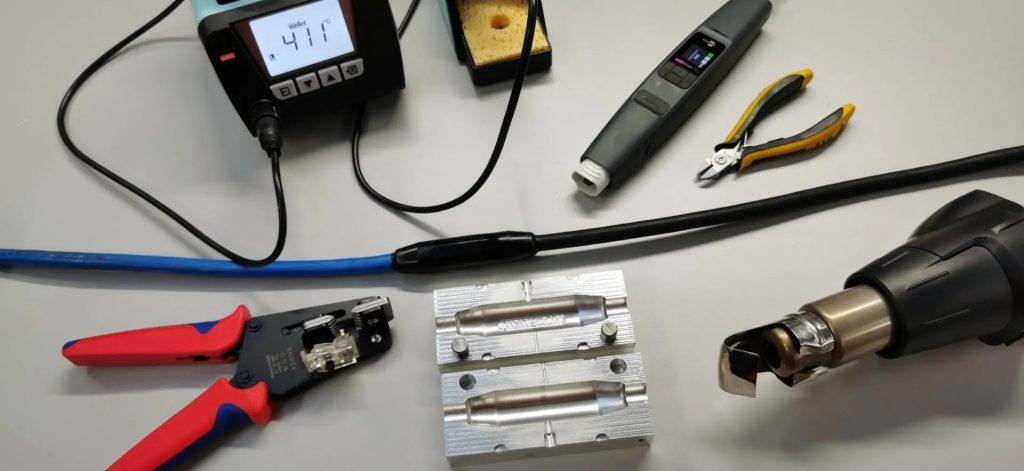
Case study: improving overmoulding adhesion with plasma treatment
Founded in 2020, Wavecon specialises in cable solutions for subsea assemblies, offering a range of options from the supply of replacement cable harnesses and wired assemblies, through to fully designed and manufactured bespoke assemblies for specific applications. From the outset, the company decided to build an end-to-end manufacturing process, using high quality equipment, machinery and […]
Read More
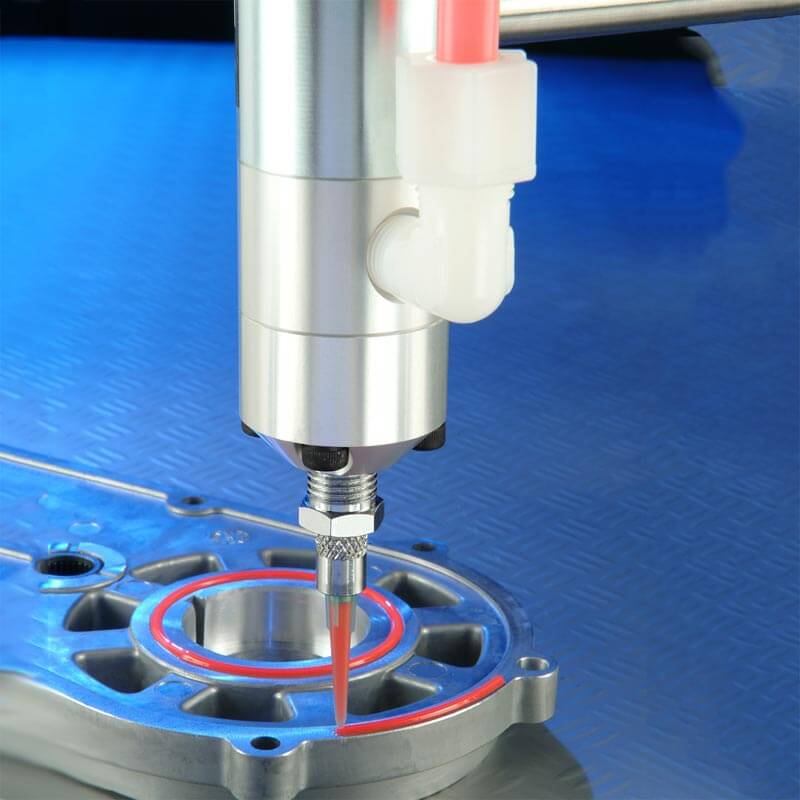
White Paper: Adhesive considerations at the design stage
When it comes to the design and development of new products, and choosing an adhesive to bond them together, an adhesive supplier often finds themselves as the last port of call. This approach can leave you in a position where your list of requirements severely limits the adhesives suitable for your application. Bondline design, substrate […]
Read More
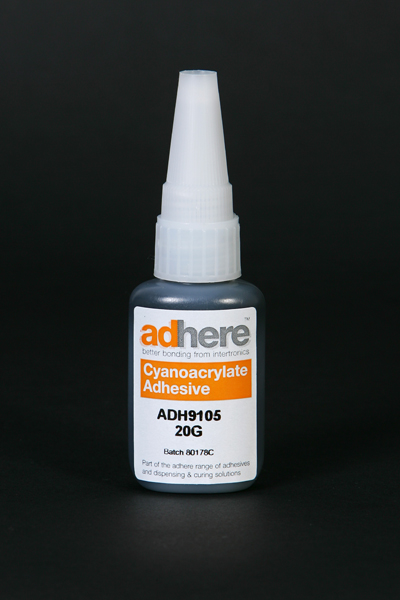
Best cyanoacrylate adhesive for high temperatures
The majority of cyanoacrylate adhesives (CAs) have an operating temperature range up to 80ºC. If your application needs more temperature resistance, and you like the other advantages that CAs can offer, then adhere ADH9105 and adhere ADH9480 rubber-toughened cyanoacrylate adhesives both offer temperature resistance up to 125ºC, making them our most temperature-resistant CAs. Coming in […]
Read More
Dispelling 10 popular myths about cyanoacrylate adhesives
Cyanoacrylate adhesives (CAs) — also known as “superglue” or instant adhesives — are a popular adhesive choice for many applications, both industrially and domestically. Curing at room temperature in seconds, they provide excellent bond strength on a wide range of similar and dissimilar substrates including metals, plastics, elastomers, ceramics, and porous materials. Achieving these throughput […]
Read More

Dispensing automation: an ROI story
“I am the Managing Director of an electronics CEM. We are making 1,000 potted electronics assemblies per week, regularly 200 per day. This is done manually by experienced operators. Pat is my best operator, she’s been with me the longest time. Some weeks, about 2.5% of these are rejected after potting. Each one costs £50, […]
Read More
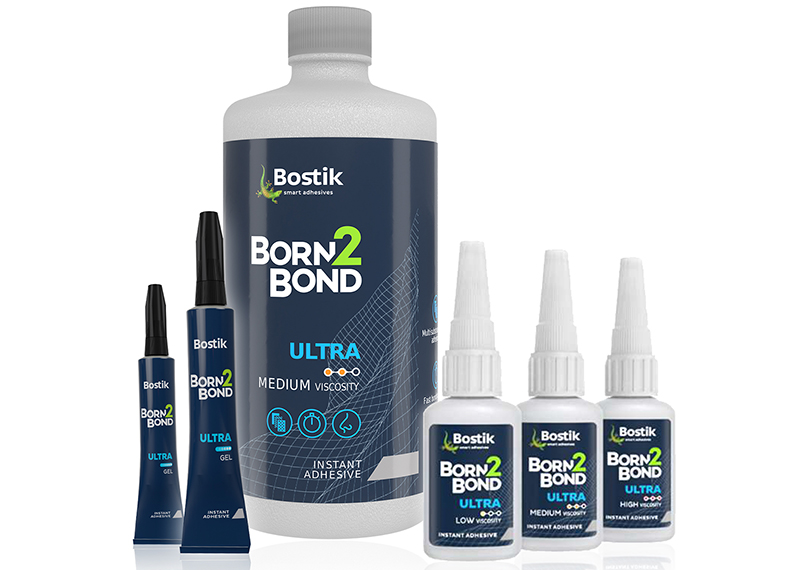
Improved metal bonding performance with Born2Bond Ultra CA
Our partners at Born2Bond have been busy improving the functionality and sustainability of their cyanoacrylate adhesives (CAs). As a result, Born2BondTM Ultra, the fastest-bonding MECA-based CA, now has “significantly improved” performance when used to bond metal substrates such as grit-blasted mild steel (GBMS) and aluminium. The metal bonding improvements can be seen across all viscosities […]
Read More
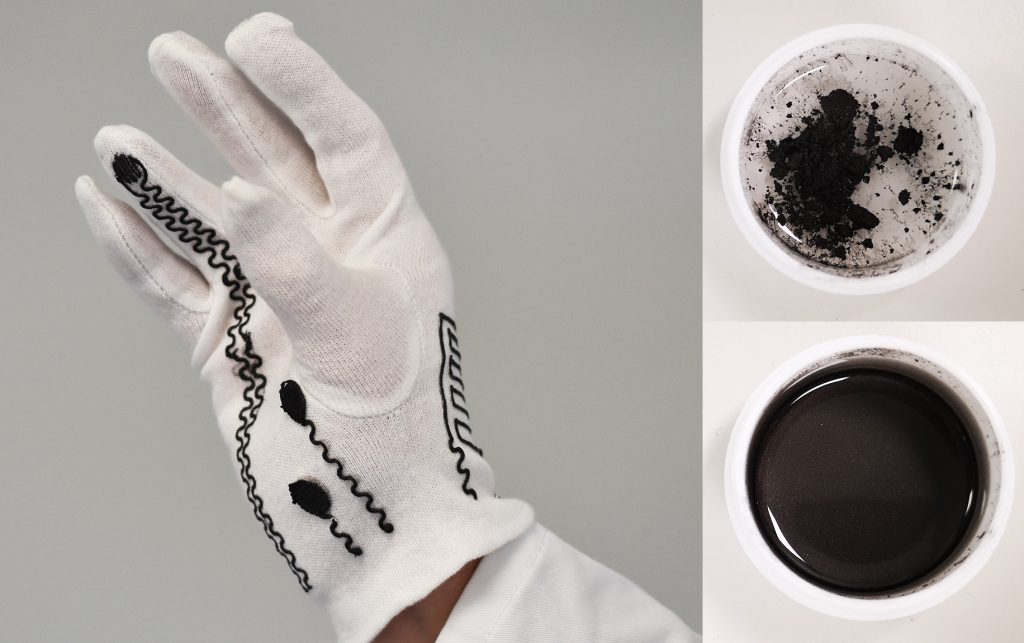
Case study: improving mixing accuracy and repeatability for 3D printed bioelectronics research
To improve the way recovery from injury and the progression of neurological/musculoskeletal conditions are monitored, the Department of Automatic Control and Systems Engineering (ACSE) team at the University of Sheffield is developing a diagnostic glove that includes several flexible bioelectronic sensors. The sensors are formed from elastomers mixed with various conductive nano or micro particle […]
Read More
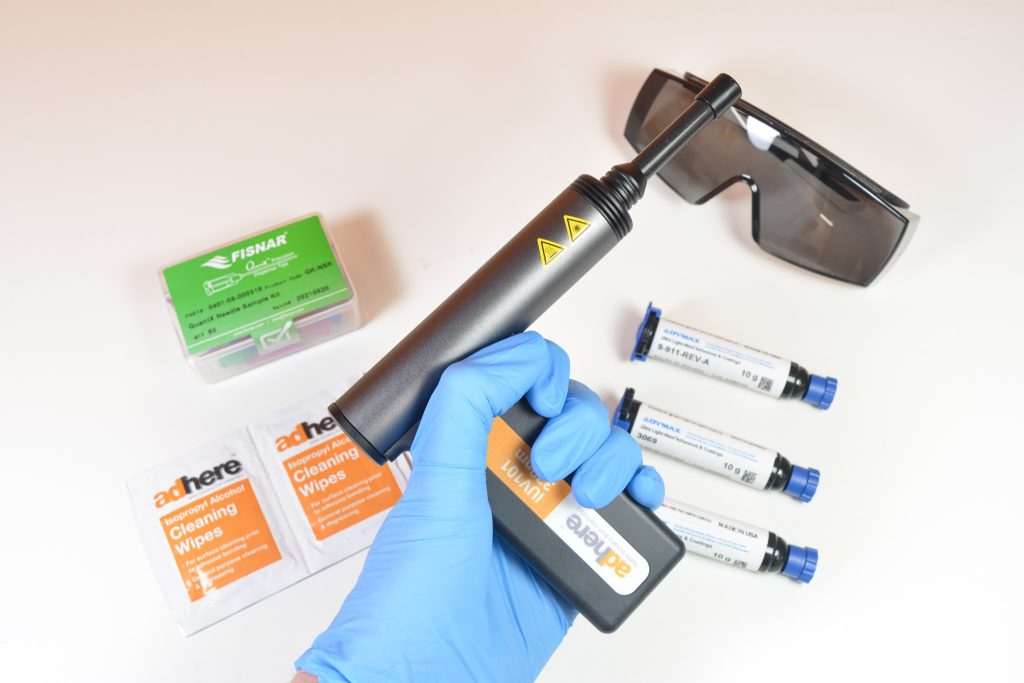
Getting started with UV curing is easier than you think
Attaining the near instant, ‘on demand’ bonding performance of UV adhesives and curing is now even easier with our IUV101 Starter Kit. Incorporating our popular IUV101 handheld LED UV spot curing lamp and three compatible multi-purpose LED UV curing adhesives in 10g syringes, you’ll be able to tackle a multitude of bonding projects as soon […]
Read More

Partnerships – an illustration
Do you know who this couple is? For years I have been using this picture to illustrate one of our presentations. It gets used all the time, and is shown in job interviews, to new colleagues, prospective suppliers, clients, customers, and anyone else we introduce the company to. The slide comes up when I talk […]
Read More

Charity rugby session converts local school pupils to sport – Darren’s story
Being a fan of rugby for as long as I can remember, when the opportunity arose four years ago to coach the under 7’s team at my local rugby club, the Gosford All Blacks, I thought I’d give it ago. Since then, I’ve gone on to lead their schools and communities outreach programme which aims […]
Read More
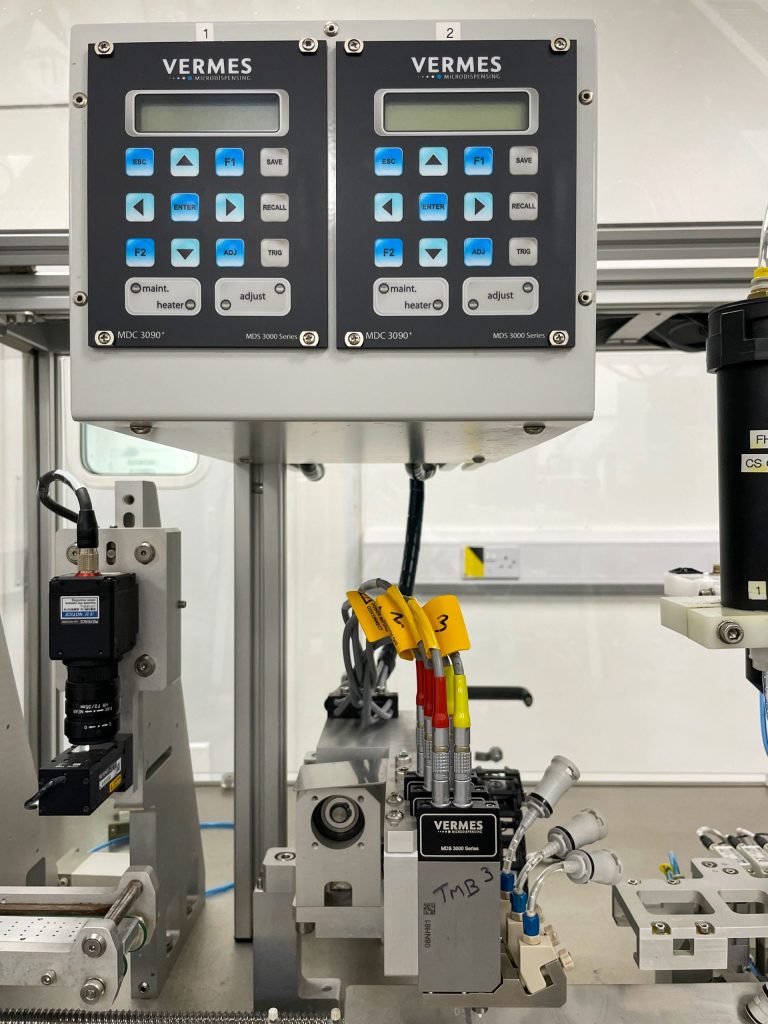
Case study: jet dispensing doubles productivity of water testing kits
To improve the accuracy, repeatability, and manufacturing speed of their key product line Kemio™, a water testing system utilising patented single-use sensor technology, Palintest came to us. Using electrochemical sensors, the product tests the concentration of chlorine, chlorine dioxide, chlorite or peracetic acid in samples, giving a clear pass or fail mark in 60 seconds. Initially […]
Read More

Getting charged up about our electric cars, and yours!
We’re always finding new ways to minimise our environmental impact as a company, from biodegradable packaging, to paperless transactions, to eliminating single-use cups from our water coolers. Our company fleet has been steadily modernising to electric vehicles. To support this, and to encourage employees who may be considering the purchase of their own electric car, […]
Read More
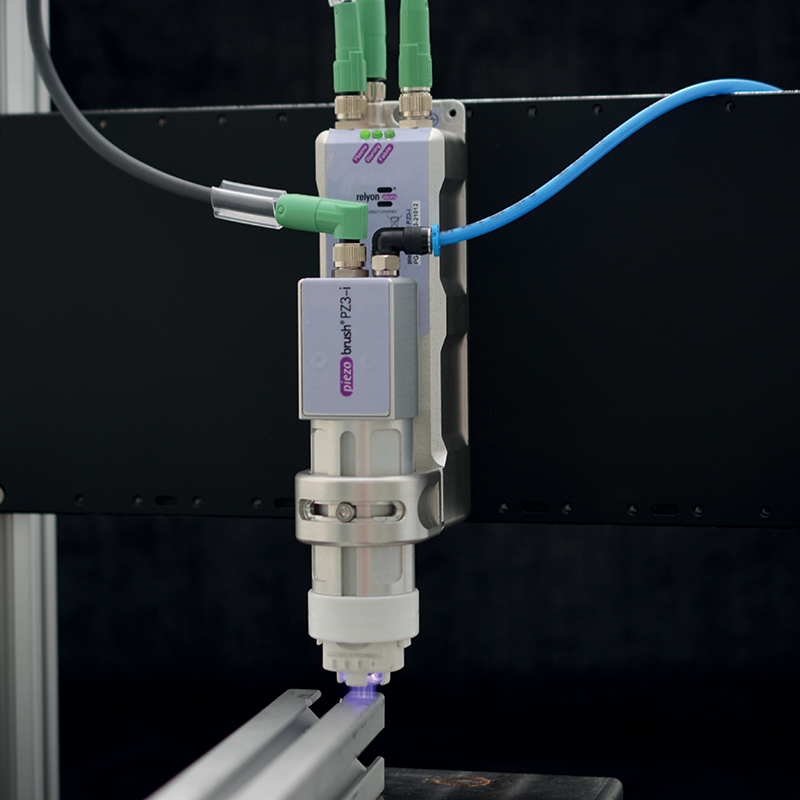
Plasma surface treatment – simple to automate
Providing you with an easy and affordable way to automate plasma surface treatment, the Relyon Plasma PiezoBrush PZ3-i allows simple integration into semi-automated or automated production lines whilst giving you full control over all process variables ─ positioning, power, time, and input gas pressure ─ for a repeatable, controllable, and recordable process. The PiezoBrush PZ3-i is […]
Read More

Stories from our customers – a case history collection
“The ability to mask complex shapes in one application and cure quickly on demand has reduced work in progress, improved quality and increased throughput.” “We have managed to increase production four-fold and enjoyed faster manufacturing time, reduced labour costs, and a consistently high-quality result with no defects or wasted material.” “It has allowed us to […]
Read More
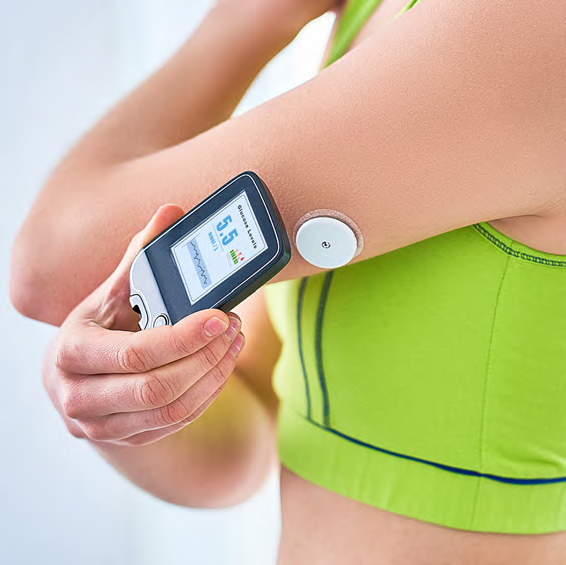
Industry-first adhesives for skin contact wearables
The Dymax 2000-MW series is a range of medical wearable adhesives and encapsulants which help adapt your wearables devices to industry trends and customer requirements. These materials are the first biocompatible, light-curable adhesive product line to be specifically formulated without common skin irritants and materials of concern for medical wearable and electronics applications. All adhesives […]
Read More
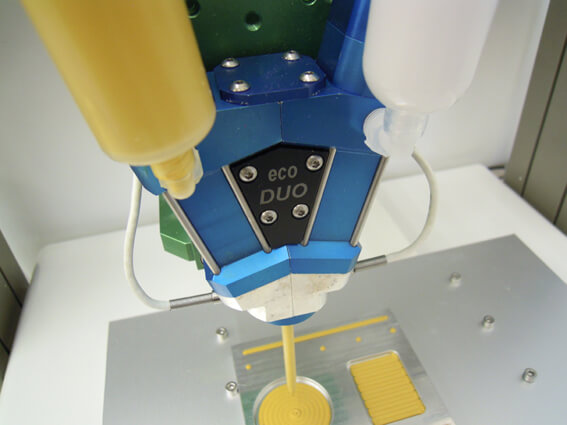
How do you dispense thermal adhesives and pastes?
Thermally conductive materials are often used to enhance the dissipation of heat from an electronic device. They are used to fill the gaps between two or more elements, such as a microprocessor and heat sink, or a battery cell and its casing in electric vehicles. As well as aiding the transfer of heat, some thermally […]
Read More
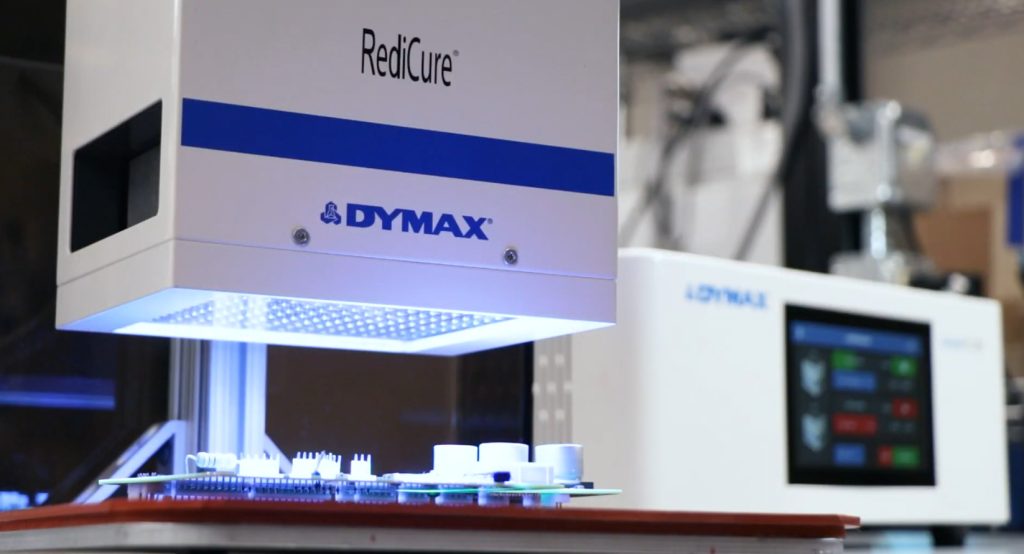
Flood your components with high intensity LED UV light
To help you boost production speed, consistency, and reliability with LED UV curing, we’ve introduced the Dymax BlueWave® FX-1250 LED UV Curing Flood Lamp. The lamp can cure LED matched UV curable adhesives, coatings, and inks in seconds with high uniformity, high irradiance UV light. The combination of great uniformity, high intensity, and large curing […]
Read More
Adhesive for electric vehicle battery potting and bonding
Dymax Ultra Light-Weld® 9501-F is a UV/Visible light-curing adhesive optimized for LED curing at 385nm designed for electric vehicle battery potting and bonding. This material provides a highly reliable bond for cylindrical cells to the base of the battery pack. This colourless adhesive contains no nonreactive solvents and will fluoresce blue upon exposure to low […]
Read More
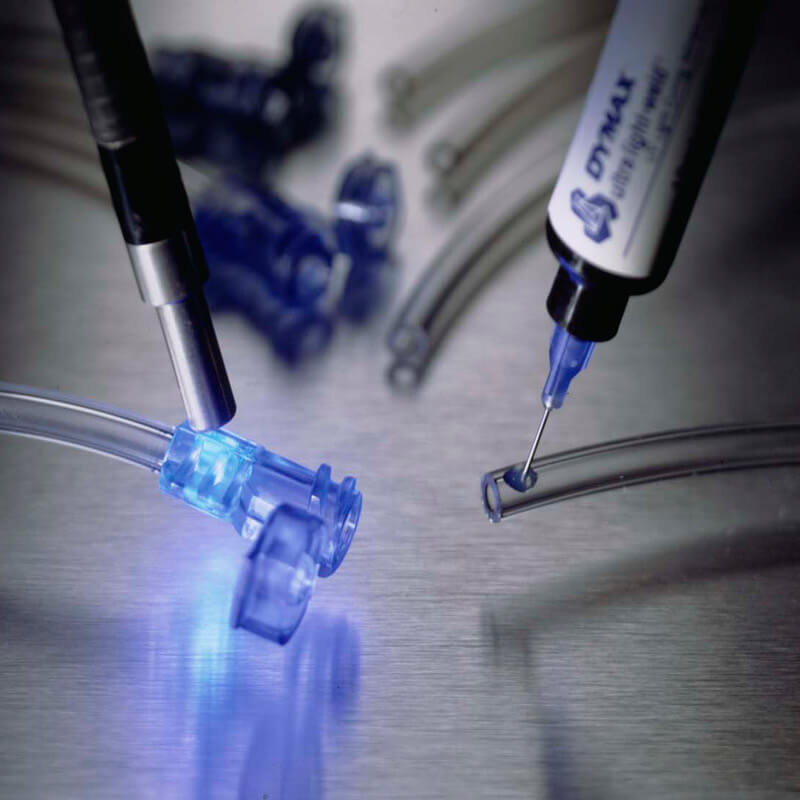
White Paper: Designing in light curing adhesives – a holistic approach to adhesives in medical device assembly
UV curable adhesives grant significant manufacturing productivity benefits, curing in seconds, “on-demand” when exposed to UV light. With grades certified to ISO 10993 and USP Class VI stands available, they are also well-matched to the manufacture of medical devices. To fully realise the potential that this adhesive technology can bring, it is necessary to take […]
Read More
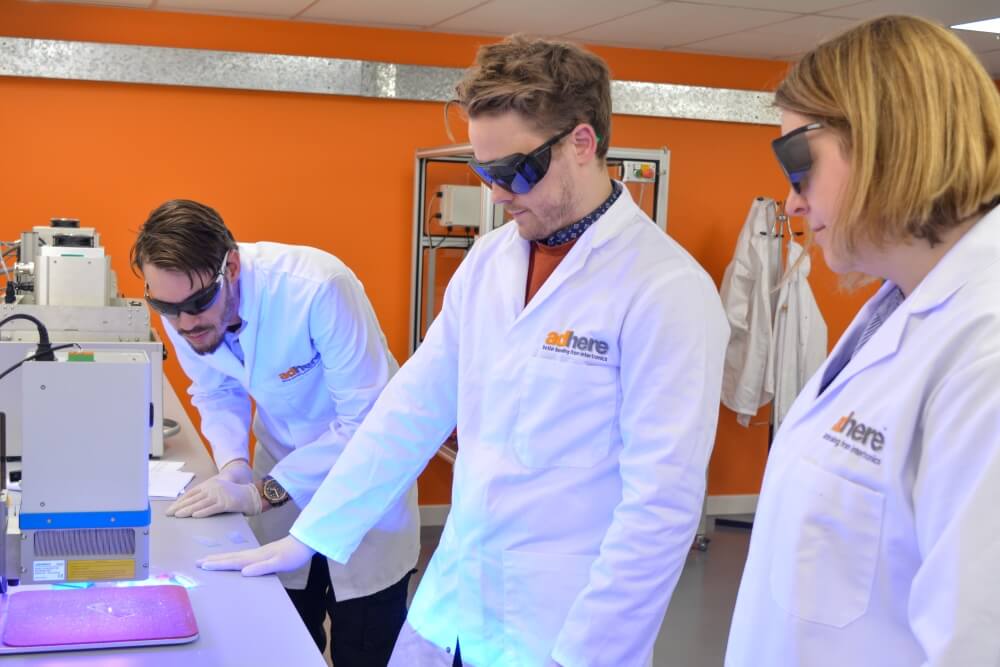
Get hands-on with trials and demos for adhesives and equipment
For years, we have helped our customers develop their production through evaluation and specification of new assembly materials and equipment at our Technology Centre, located in Kidlington, Oxfordshire. Filled to the brim with mixing, surface treatment, dispensing, robots and curing equipment, along with a warehouse full of materials, our Centre allows us to help you […]
Read More
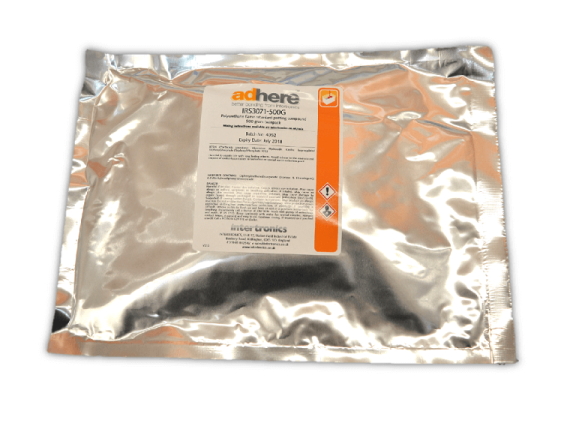
Intertronics academy: what does hygroscopic mean?
Hygroscopic materials attract and absorb humidity from the air. An example is the way granulated sugar gets lumpy in the sugar bowl or salt clumps in the salt shaker blocking the holes when in humid environments like a steamy kitchen. Lots of materials are hygroscopic, including paper, isopropyl alcohol (IPA), and plastics like ABS. Nylon […]
Read More
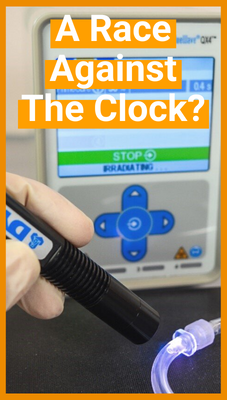
Adhesive selection: A race against the clock?
There are a few considerations when specifying an adhesive for your application, such as how well it bonds your substrates and if it can meet the functional needs of your application. One other important piece of the puzzle are the time-based factors which dictate how materials can be processed. Our technical white paper Adhesive selection: a race against the clock? walks you through the various time-sensitive factors at […]
Read More

Case study: epoxy mixed by THINKY headed to the Moon
It’s been 50 years since the USA softly landed a spacecraft on the Moon’s surface. Something Intuitive Machines, based in Texas, is looking to change. When sending expensive, often delicate, machinery and equipment into the depths of space, achieving the most reliable bonds between components is mission critical. For this very reason, Arnab Roy, Production […]
Read More
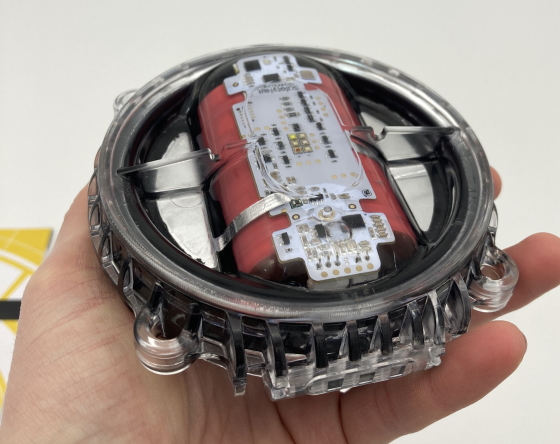
Case study: a clear potting process for a sustainable fishing device
To aid the rapid development of a new deep-sea fishing device, sustainable fishing start-up SafetyNet Technologies (SNTech) reached out to us. In a close collaboration, SNTech specified two materials, Opti-tec™ 4210 and IRS 3071, and developed a reliable assembly process. The new device, Pisces Deep, has since passed pressure tests at 100 bar and is […]
Read More
Autoclave resistant medical device adhesive
Dymax MD® 1040-M is a new, versatile autoclave resistant medical device adhesive, coating, and encapsulant. Resistant to numerous cycles of sterilisation, Dymax 1040-M is suitable for consideration in a range of medical devices and surgical tools. This light curable material cures in seconds on exposure to UV light, and contains no solvents, to deliver a […]
Read More
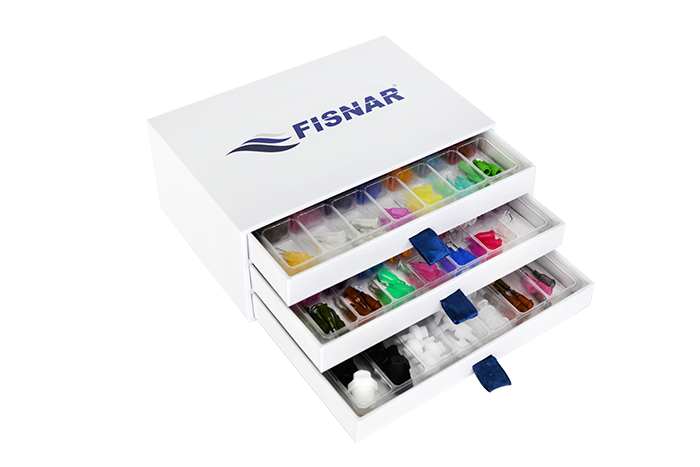
Dispensing needles and consumables at your fingertips
Honing in on your optimal dispensing process often comes down to a degree of trial and error – even experienced operators sometimes choose the wrong tip at first. Material rheology and dispensing behaviour can be surprising. To help you evaluate and establish your dispensing process, we have released the DCK800X dispensing component kit. Containing over […]
Read More
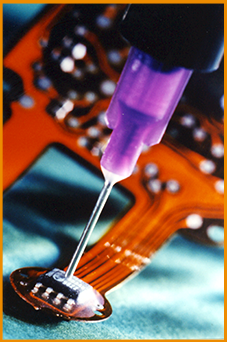
Protect your electronics in seconds with UV light and rapid moisture cure encapsulants
Dymax UV cure electronics encapsulants with secondary moisture cure resolve the challenge of encapsulating chip and component geometries which have shadowed areas under component bodies or leads. The bulk of the material cures in seconds with light, while the balance cures with ambient moisture. Light-curable formulations are becoming increasingly popular due to their significant benefits […]
Read More
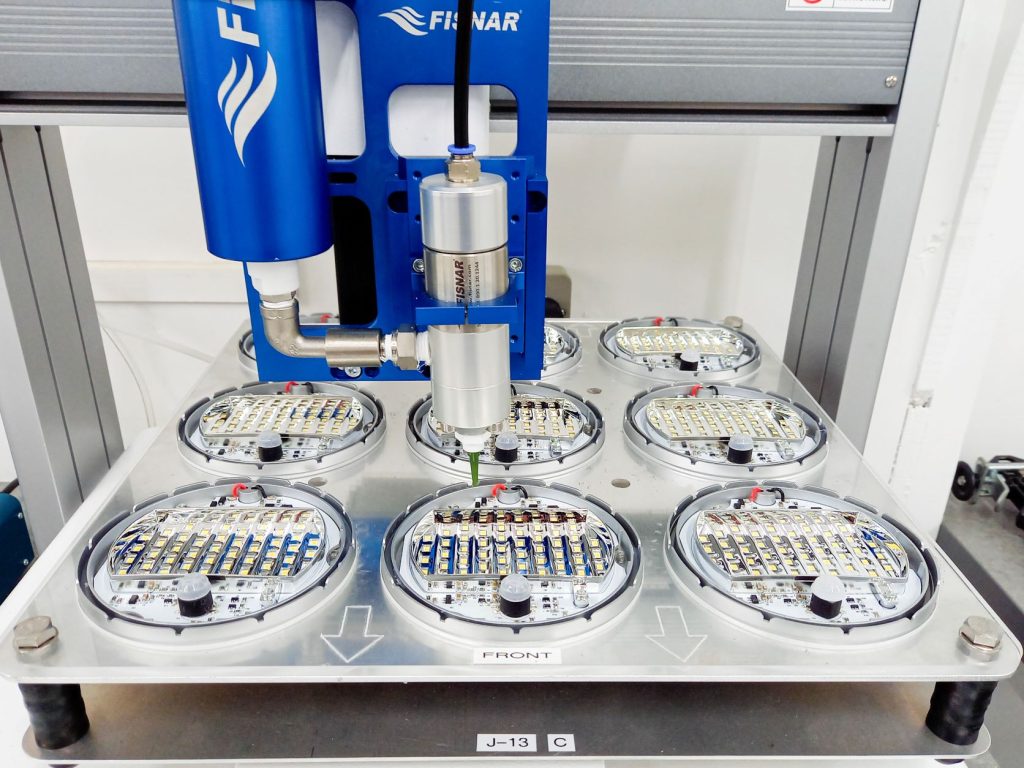
Case study: silicone gasket robotically applied lets lighting manufacturer shine
Providing light where there was once darkness, lighting assemblies have been a staple in modern vehicle manufacture for decades. For many manufacturers, the search for brighter, better-performing systems has led them away from traditional bulbs and lamps towards more complex arrays of LED emitters, with lifespans in the 1000’s of hours. Keeping these assemblies protected […]
Read More
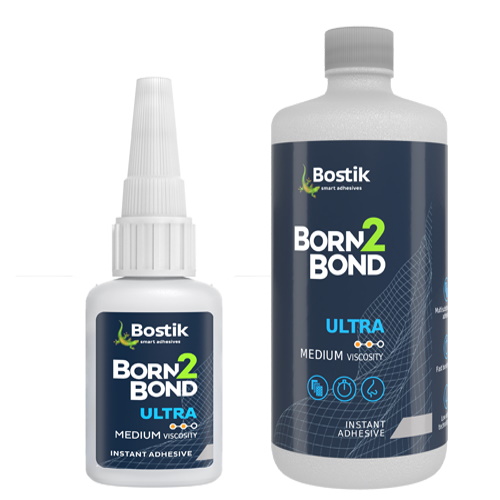
Shock exclusive “superglue” exposé in The Sun newspaper!
We fell upon on this article in The Sun today: Idiot Insulate Britain eco-mob using harmful superglue that’s TOXIC to environment to plaster themselves to roads. We are not habitual readers of this newspaper; perhaps this article is a good example why, as it is hyperbolic, hysterical, inaccurate and badly written. It does inspire us […]
Read More

Case study: increasing product design opportunities with Born2Bond Ultra HV CA
As consumers increasingly prefer smaller, more portable, wearable electronic devices, assembling the intricate components can prove challenging. This challenge is further compounded when considering skin contact material requirements and the bonding issues these materials can pose. Fortunately for a wearable electronic device manufacturer, our Born2Bond™ Ultra HV was able to address their bonding challenges while increasing their […]
Read More
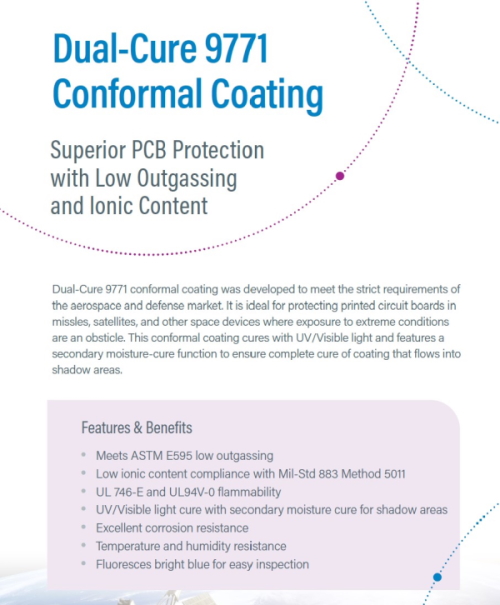
Low outgassing conformal coating meets ASTM E595 & MIL-STD 883
Dymax 9771 Dual-Cure Light and Moisture-Cure Conformal Coating is now available. This low outgassing material is the first conformal coating that meets ASTM E595 and MIL-STD 883 and is therefore suitable for the aerospace and defence markets in applications including missile, satellite, and space critical printed circuit board assemblies. This coating has UL 94 V-0 […]
Read More
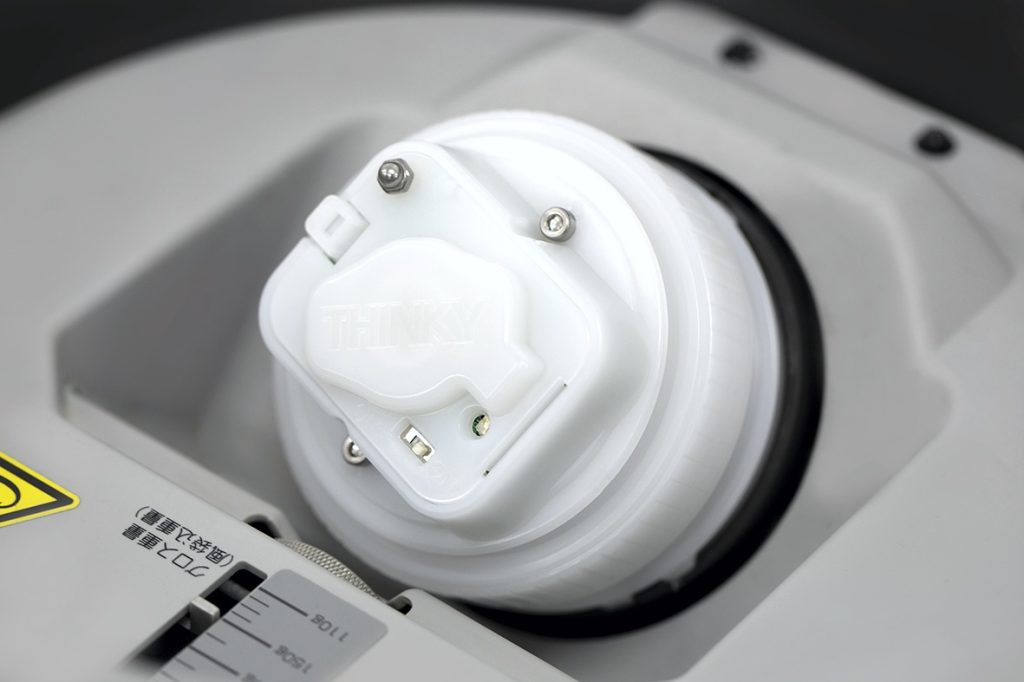
Take the guesswork out of your THINKY mixing process development
Turning your THINKY planetary mixing machine up to 11 for a long period of time may mix most materials homogeneously, but for other, heat sensitive components, it could do more harm than good. To enhance your process understanding and help keep those mixing speeds optimal, our partner, mixing and degassing machine manufacturer THINKY, has created […]
Read More
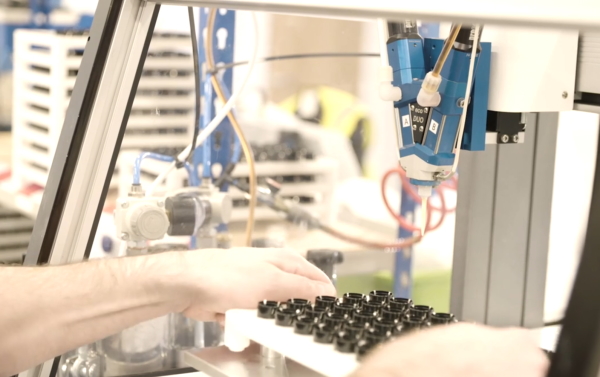
Case study: improving sealing quality while maximising productivity in gas sensor manufacture
When gas sensor manufacturer DD-Scientific wanted to improve the accuracy, repeatability, and productivity of an epoxy sealing process, they asked us. DD-Scientific now benefits from robot-mounted preeflow® eco-DUO precision metering, mixing and dispensing systems, which save the company 23 days of staff time per year, while maintaining the high-quality the company’s products demand. DD-Scientific’s sensors […]
Read More
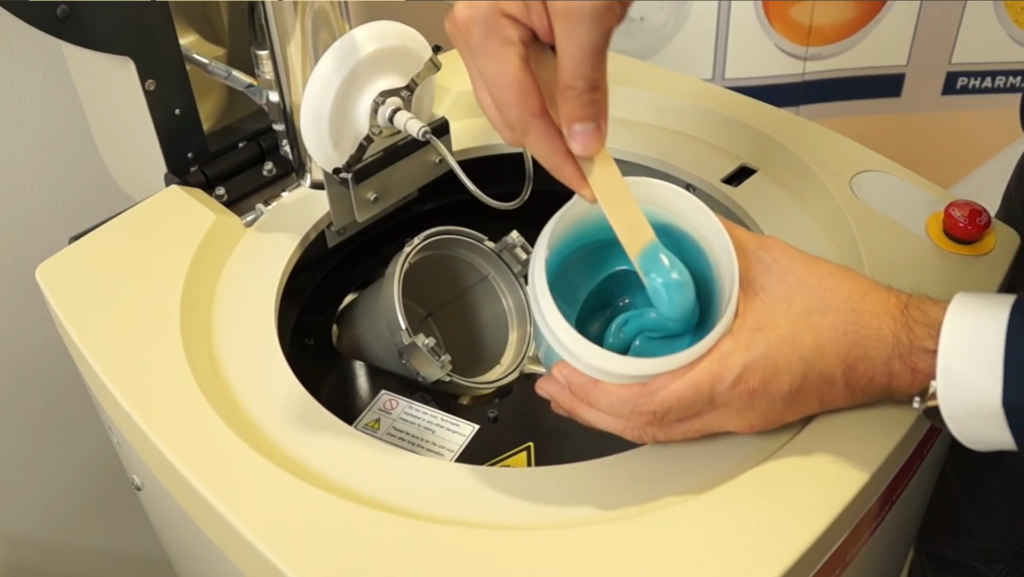
Achieving a fast, repeatable mixing process without air bubbles
Transforming multiple parts of liquids, pastes and powders into homogeneous, ready-to-use materials which are air and bubble free – that’s what our THINKY planetary mixers do. Our newly released Technical Bulletin Achieving a fast, repeatable mixing process without air bubbles summarises the capabilities of these machines: Planetary mixing Degassing Mixing under vacuum Which capabilities you […]
Read More