Wearable MedTech is a booming sector. The technology is breathtaking in its expanse and potential. Products like continuous blood pressure monitors, wearable pulse oximeters, respiratory and spirometry wearables, glucose sensors, insulin delivery pods, neuromodulation wearables, wearable temperature and hydration sensors, cardiac telemetry patches, smart wound-care sensors, activity and gait-analysis wearables used in rehabilitation, EEG headbands – these are just a small number of current examples. The landscape is widening at pace. Each new device generation raises the bar for materials and process choices.
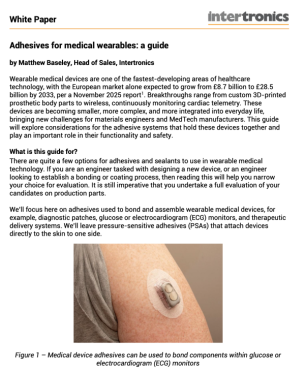 If you are designing or developing in this field, you will know that wearable medical devices have to cope with conditions most electronics assemblies never see. As Matt Baseley puts it in our new white paper, “Wearable devices live in a tricky, messy environment: constant motion, exposure to moisture, sweat, skin oils, and the like. They are designed with complex geometries and from multiple substrate types… and they are often quite small.” You will also know how those factors can turn into bonding, adhesion and assembly challenges.
Matt, our Head of Sales, explains: “I wrote this guide to help with selecting materials for evaluation and hopefully shortening process development and the decision making cycle. Adhesive choice for wearables affects design, validation, and manufacturing, and sometimes teams only see the problems once they are well into the programme.”
The aim of the article is straightforward: to help you think through adhesive options earlier, when changes are still easy to make. It draws on what we have seen in the medical industry and focuses on the practical decisions that shape reliability and process fit.