
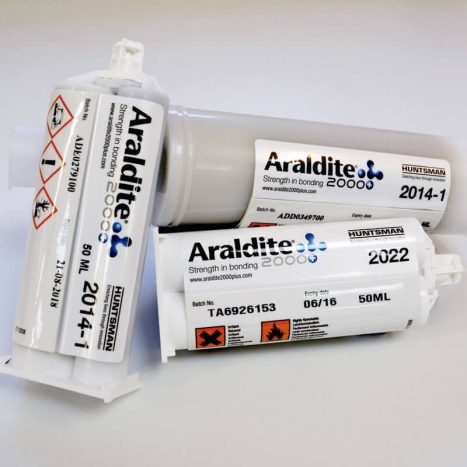
About Araldite 2000+ Structural Adhesives for Engineering
Also available to buy online at 
Araldite® 2000 PLUS is a portfolio of structural adhesives, optimised to help industrial engineers bring complex plastic and metal-based design projects to life.
The Araldite 2000 PLUS structural adhesives are based on key chemistries — epoxy, methacrylate and polyurethane. They are developed to suit the joining of a wide variety of substrates including plastics, metals and composite materials. The range is split into two main areas, dividing products for metal bonding and plastic bonding, which makes it much easier to assess specific performance demands.
The Araldite 2000 PLUS structural adhesives offer high performance and durable long term bonding. The range includes a broad variety of handling and cure times, and the ability to bond a wide range of substrates including metals, composites and plastics. These structural adhesives also cater for particular requirements including heat and chemical resistance and provide a wide range of viscosities to address diverse manufacturing processes.
Ask us for assistance in selecting an adhesive for your application.
Selector Guide
 |
For a comprehensive guide to performance and processing data download: Araldite 2000+ Adhesive Selector Guide |
Key Questions – Answered with the Araldite 2000+ Range
| Epoxy | Methacrylate | Polyurethane | |
| Load bearing adhesives good for metals and composites | Fast setting and resilient for composites, thermoplastics and metals | Flexible adhesive for composites and certain thermoplastics | |
| Do you require a multi-purpose adhesive with a rapid cure? | Araldite 2012 | Araldite 2047-1 | |
| Do you require a multi-purpose adhesives with a long working life? | Araldite 2011 | ||
| Do you require a fast cure adhesive? | Araldite 2012 | Araldite 2021-1 Araldite 2047-1 Araldite 2048-1 |
Araldite 2026 Araldite 2028-1 |
| Do you have large areas for bonding and/or require a long working life? | Araldite 2014-2 | ||
| Do you require high toughness and the ability to bond to different substrates? | Araldite 2015-1 | Araldite 2022-1 Araldite 2047-1 Araldite 2048-1 |
|
| Do you require chemical resistance or performance at high temperatures? | Araldite 2014-2 | Araldite 2052-1 | |
| Do you require an adhesive for gap filling or vertical applications? | Araldite 2014-2 Araldite 2015-1 |
Araldite 2021-1 Araldite 2022-1 Araldite 2047-1 |
|
| Do you require a flexible adhesive? | Araldite 2026 Araldite 2028-1 |
||
| Do you require a transparent adhesive? | Araldite 2026 Araldite 2028-1 |
| Adhesive | Chemical type | Fast curing | Gap filling | Description |
|---|---|---|---|---|
| Araldite 2011 | Epoxy | · Multi purpose · Long working life · Low shrinkage |
||
| Araldite 2012 | Epoxy |  |
· Fast curing · General purpose · Low shrinkage |
|
Araldite 2014-2 |
Epoxy | |
· Grey paste · High temperature and chemical resistance · Low shrinkage |
|
| Araldite 2015-1 | Epoxy | |
· Toughened paste · Ideal for GRP / SMC and dissimilar substrates · Low shrinkage |
|
| Araldite 2021-1 | Methyl methacrylate | |
|
· Rapid curing · Toughened · Suitable for service at temperatures up to 100 °C |
| Araldite 2022-1 | Methyl methacrylate | |
|
· Excellent ratio working time / cure time · Toughened · Gap filling to 4mm |
| Araldite 2028-1 |
Polyurethane | |
· Transparent · Fast curing · UV stable |
|
| Araldite 2047-1 |
Methyl methacrylate | |
|
· Gap filling · Requires minimal surface treatment |
| Araldite 2052-1 | Methyl methacrylate | |
|
· Very high temperature and chemical resistance · Tolerant to “less than ideal” pretreatment · Thixotropic and non sagging |
Plastic Bonding
Araldite 2000 PLUS adhesives for plastics can be used under a broad spectrum of processing and curing conditions and can meet the most demanding performance requirements. The range includes leading-edge epoxy, polyurethane and toughened acrylic technologies providing a complete solution to structural bonding.
Selector Guide
Please contact us for assistance in choosing an Araldite 2000+ adhesive for your application.
| FGRP (UP) |
GRP (EP) |
CFRP | SMC | PVC | PA | ABS ASA SAN |
PC | PMMA | Ceramic | Glass | Rubber | Wood | |
|---|---|---|---|---|---|---|---|---|---|---|---|---|---|
| Araldite 2011 | |
|
|
|
 |
 |
|
|
|
|
|
|
|
| Araldite 2012 | |
|
|
|
|
|
|
|
|
|
|
|
|
| Araldite 2014-2 |
|
|
|
|
|
|
|
|
|
|
|
|
|
| Araldite 2015-1 | |
|
|
|
|
|
|
|
|
|
|
|
|
| Araldite 2021-1 | |
|
|
|
|
|
|
|
|
|
|
|
|
| Araldite 2022-1 | |
|
|
|
|
|
|
|
|
|
|
|
|
| Araldite 2028-1 |
|
|
|
|
|
|
|
|
|
|
|
|
|
| Araldite 2047-1 |
|
|
|
|
|
|
|
|
|
|
|
|
|
| Araldite 2052-1 | |
|
|
|
|
|
|
|
|
|
|
|
|
= Excellent = Good = Moderate
FGRP(UP): Fibre glass reinforced plastic (urethane base)
GRP (EP): Glass reinforced plastic (epoxy base)
CFRP: Carbon fibre reinforced plastic
SMC: Sheet moulded composite
PVC: Polyvinyl chloride
PA: Polyamide – Nylon, Kevlar, Nomex
ABS, ASA, SAN: Acrylonitrile butadiene styrene, Acrylonitrile styrene acrylate, Styrene acrylonitrile
PC: Polycarbonate – Lexan, Makrolon
PMMA: Acrylic plastic, polymethyl methacrylate – Perspex, Plexiglass
| Safety Data Sheets |
|---|
| For the latest SDS for this product, please e-mail msds@intertronics.co.uk |
Metal Bonding
Araldite 2000 PLUS adhesives for metals can be used under a broad spectrum of processing and curing conditions and can meet the most demanding performance requirements. The range includes leading-edge epoxy, polyurethane and toughened acrylic technologies providing a complete solution to structural bonding.
Selector Guide
Please contact us for assistance in choosing an Araldite 2000+ adhesive for your application.
| Mild Steel | Stainless Steel |
Aluminium | Copper | Brass | Galvanised Steel |
Ferrite | |
|---|---|---|---|---|---|---|---|
| Araldite 2011 | |
|
|
|
|
|
|
| Araldite 2012 | |
|
|
|
|
|
|
| Araldite 2014-2 |
|
|
|
|
|
|
|
| Araldite 2015-1 | |
|
|
|
|
|
|
| Araldite 2021-1 | |
|
|
|
|
|
|
| Araldite 2022-1 | |
|
|
|
|
|
|
| Araldite 2028-1 |
|
|
|
|
|
|
|
| Araldite 2047-1 |
|
|
|
|
|
|
|
| Araldite 2052-1 | |
|
|
|
|
|
|
= Excellent = Good = Moderate
| Safety Data Sheets |
|---|
| For the latest SDS for this product, please e-mail msds@intertronics.co.uk |
Other Information
 |
Adhesive Problem? What’s the Cure?
A guide to adhesive bonding, considering structural bonding and the criteria involved for successful assembly. |
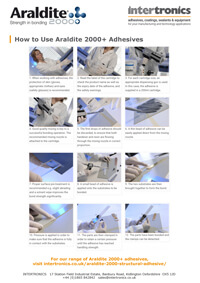 |
How to Use Araldite 2000+ Adhesives
A how-to guide for the correct application of Araldite adhesives |
All Downloads
| Filename | Size | Download |
| Araldite 2000+ Adhesive Selector Guide | 0.95MB |  |
| How to Use Araldite 2000+ Adhesives | 0.28MB | |
| Adhesive Problem? Whats the Cure? | 0.38MB | |
Ordering Information
Packaging
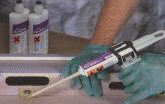
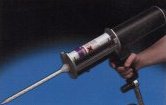
Product performance is complemented by innovative packaging designed to assist the user. The Araldite 2000 PLUS range is available in cartridge or working pack format to suit the individual application. Also available are manual, electric and pneumatic guns designed for use with all the Araldite twin cartridges, and replacement mixer nozzles.
|
|
|
| Part number | Description |
|---|---|
| IDM SMTS4-20 | Static mixing nozzle for 50ml 1:1/2:1 cartridges |
| IDM SMTS9-24 | Static mixing nozzle for 200/400ml 1:1/2:1 cartridges |
| MXPMBQ05-24L |
Static mixing nozzle for ARA2021-1-50ML and ARA2022-1-50ML cartridges |
| MXPMBHX05-16T |
Static mixing nozzle for 50ml 10:1 cartridges |
| IDM SMMF8-18 | Static mixing nozzle for 500ml 10:1 cartridges |
|
|
|
 01865 842842 01865 842842 |
 orders@intertronics.co.uk orders@intertronics.co.uk |